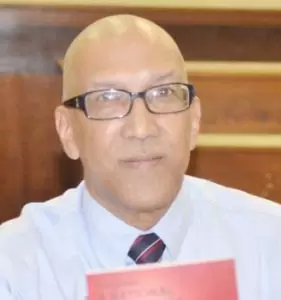
Political commentator GHK Lall has sharply criticised Guyana’s parliamentary opposition, arguing that its lack of visibility and forceful engagement has allowed the governing People’s Progressive Party (PPP) to operate with minimal accountability. In his column Calling the Opposition, Where’s the Opposition…?, published Tuesday in Village Voice News, Lall said the governing party “can afford to be how it is today—controlling, complacent, not give a damn,” because it faces no sustained political resistance.
Lall contended that the PPP government currently enjoys a political environment in which “it is almost as if the opposition in Guyana is in its fold, under its control,” with only “a few lone (John the Baptist) voices crying into the wind” offering challenge. He argued that the President Irfaan Ali–Vice President Bharrat Jagdeo–Attorney General Anil Nandlall–Finance Minister Ashni Singh leadership grouping continues largely unimpeded, describing the situation as a failure of opposition responsibility rather than solely government excess.
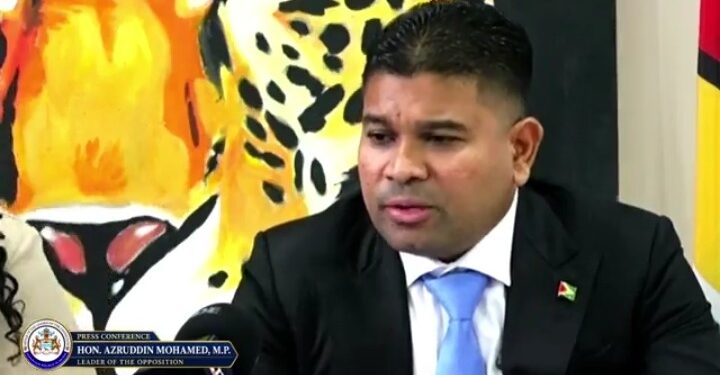
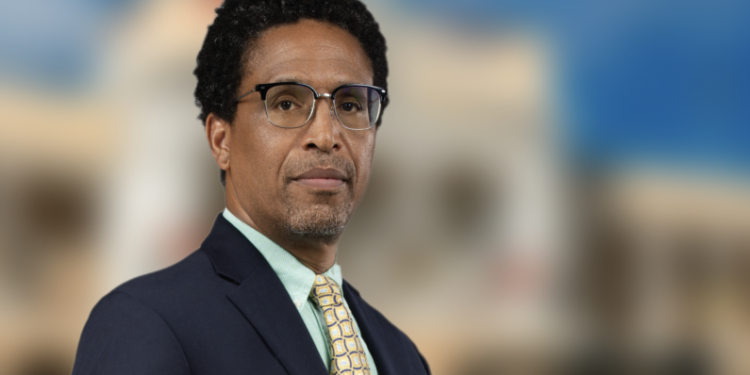
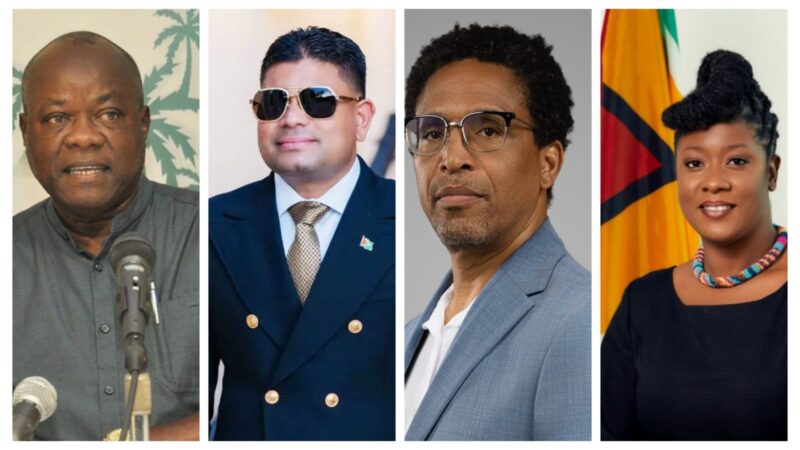
The columnist questioned the public presence and effectiveness of opposition figures, naming People’s National Congress Reform (PNCR) Leader Aubrey Norton, along with Dr. Terrence Campbell, lead parliamentarian in A Partnership for National Unity (APNU), which has 12 seats; Amanza Walton-Desir, the lone parliamentarian for the Forward Guyana Movement (FGM); and Azruddin Mohamed, leader of We Invest in Nationhood (WIN), which holds the opposition majority with 16 seats.
“If the opposition is voiceless, then it might as well be existence-less,” Lall wrote, dismissing claims that meaningful work is being done out of public view. He urged opposition leaders to “get out from behind the scenes… behind the cameras… behind the podium and microphone,” insisting that Guyanese are not seeing active representation.
Speaking for himself—and perhaps many—Lall said he prefers to “see an opposition that is struggling, hustling, bawling for the people and with the people. Mud on the shoes. Sweat on the brow,” fighting for the people and providing robust representation.
To this end, he expressed concern that “the new opposition looks too much like the old opposition. Tired. Sluggish. Sloppy.”
The columnist charged the opposition to “pick an issue. Parliament. Pick a man. Speaker,” questioning why it has not gone after Speaker Manzoor Nadir, “shaking him lovingly… figuratively, of course.”
Lall’s comments may be in reference to the non-sitting of Parliament and the non-election of the Leader of the Opposition, in accordance with Article 184(1) of the Constitution of Guyana—a process halted in large part by an apparent collaboration between the PPP-elected Speaker and the government.
The President, Vice President, and other leading ministers have expressed personal animosity toward the presumptive Leader of the Opposition, Azruddin Mohamed, who is also embroiled in an extradition case. However, Guyana practises common law principles, including the presumption of innocence until proven guilty—a principle the National Assembly and Executive conveniently ignore.
Lall contrasted the opposition’s perceived inertia with what he described as the PPP government’s aggressive push on development, citing oil revenues and projects such as Silica City, Georgetown modernisation, an AI hub, and a deep-water port. “It is good to be in government,” he wrote, adding that the administration is “barrelling ahead, having a blast,” while repeatedly returning to his central question: “Where is the opposition?”
He also criticised the opposition’s response to government cash grant initiatives, questioning why what he described as “the taking of poor people for a ride, then mocking them,” had not provoked sustained public outrage. According to Lall, the opposition has been “too quiet,” appearing detached from “the pain of ordinary Guyanese.”
In concluding his commentary, Lall warned that the absence of a clearly defined, confrontational opposition risks erasing political distinctions altogether. “Who is PPP? Who is PNC? Where’s the difference?” he asked, arguing that if no “authentic, courageous, sagacious, resourceful” opposition exists, the public deserves to know. He said the current political landscape has left him “seeing double,” as he continues to observe emerging political actors for signs of genuine alternative leadership.