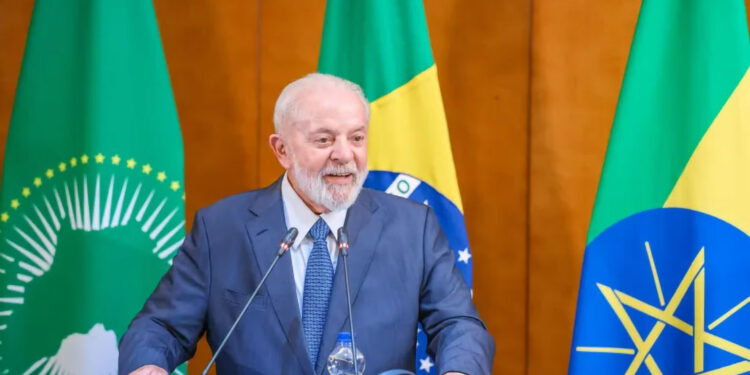
Today we address this nation grounded not in opinion or political rhetoric, but in the findings of an independent international assessment of our electoral system. What has been outlined in the European Union Election Observer Mission report is deeply concerning, not simply because of what was observed, but because of what continues to be ignored.
The European Union Election Observer Mission report makes it clear that our electoral environment is affected by serious structural weaknesses that, if left unaddressed, will continue to erode public trust and weaken democracy in Guyana. This is not something that can be brushed aside or politicised. It requires action, and it requires action now.
One of the most troubling issues identified is the abuse of state resources and the unfair advantage of incumbency. The lines between government and political campaigning have become dangerously blurred, with public projects, state platforms, and government influence being used in ways that benefit the ruling party. This is fundamentally wrong. Public resources belong to the people of Guyana, not to any political organisation. We are therefore calling on the Government to immediately implement clear and enforceable rules governing campaign conduct, including strict limitations on the use of state assets during elections. If this is not addressed, then fairness in our elections will remain nothing more than a slogan.
The issue of campaign finance is equally alarming. The current system is outdated, ineffective, and lacks any meaningful enforcement. Spending limits are unrealistic, oversight is weak, and transparency is virtually nonexistent. This creates an environment where influence can be bought, where accountability is avoided, and where the playing field is tilted. APNU is calling for the urgent establishment of an independent body to oversee campaign financing, along with modern legislation that ensures full disclosure of political funding and spending. The Guyanese people deserve to know who is financing political power and how that power is being sustained.
The media environment also demands immediate attention. State media, which is funded by taxpayers, has not been operating in a fair and balanced manner. Instead of serving all citizens equally, it has been used in a way that disproportionately benefits the ruling party while limiting the visibility of others. This undermines the democratic process by restricting access to balanced information. We are calling for binding rules that guarantee equitable airtime and fair access for all political parties, particularly on state-owned platforms. Democracy depends on informed citizens, and informed citizens require access to diverse and unbiased information.
Another issue that cannot be ignored is the misuse of personal data. There are serious concerns about how citizens’ information has been handled and potentially used for political purposes. This is a direct violation of trust. The Government must move immediately to fully implement the data protection framework and ensure the establishment of an independent and accountable body to oversee it. The protection of citizens’ personal information is not optional; it is a fundamental responsibility.
Concerns surrounding the credibility of the voters list also remain unresolved. Questions about its accuracy and transparency continue to cast doubt on the integrity of the electoral process. APNU is calling for a comprehensive and transparent update of the voters list, using all available and relevant national data. Confidence in elections begins with confidence in the list, and without that foundation, the entire process is compromised.
Finally, the need for meaningful constitutional and electoral reform cannot be overstated. While a Constitutional Reform Commission exists, progress has been slow and insufficient. This country cannot afford delay when it comes to strengthening its democratic systems. We are calling for the immediate advancement of this process with the inclusion of proper expertise, clear timelines, and genuine public engagement so that reforms are not only discussed but implemented.
Let us be clear, these are not abstract ideas or distant recommendations. These are practical, necessary actions that can be taken now to improve governance and restore confidence in our democratic institutions. If the Government chooses not to act, then it must also accept responsibility for the continued erosion of trust and fairness in our system.
APNU will continue to stand firm in demanding accountability, transparency, and reform. We will continue to advocate for a system that serve all Guyanese, not just a few. Democracy is not the property of any government, it is the right of the people, and it must be protected at all costs.
THIS TIME IT IS A FUEL SHORTAGE: PPP/C’S PERSISTENT FAILURE TO PLAN STRATEGICALLY
The recent fuel shortage is not an accident. It is the predictable result of the PPP/C Government’s sustained failure to plan strategically in the face of clear global indicators, even as Guyana experiences unprecedented oil revenues.
In an oil-producing nation, fuel scarcity is a policy failure, plain and simple. This fact is undeniable.
Guyana still lacks adequate bulk fuel storage capacity, leaving the country exposed to supply disruptions. A critical national storage project to be built by Curlew Midstream, intended to secure domestic fuel needs, has already missed its deadline and remains unresolved.
Despite producing oil, Guyana remains heavily dependent on imported refined fuel, exposing the country to global shipping disruptions and external shocks. During the current crisis, gas stations closed, rationing took hold, and the Government responded only after shortages became widespread, confirming weak forecasting, poor coordination, and the absence of strategic and contingency planning.
At the same time, delays in energy infrastructure, including the gas-to-shore transition project, have prolonged dependence on diesel and imported fuels, increasing vulnerability.
Instead of building resilience, the Government has focused only on price controls and subsidies, prioritising affordability while neglecting availability and long-term supply security.
This crisis is part of a wider governance failure. Oil wealth is not being translated into economic diversification, leaving Guyana exposed to a resource-dependent future. Changes to the Natural Resource Fund have raised concerns about short-term withdrawals over long-term national planning. Infrastructure development is proceeding without coordination, as congestion, flooding, and drainage failures persist. Housing expansion continues without proper urban planning or supporting services. The Government’s energy strategy remains contradictory, with fossil expansion alongside unclear renewable timelines. Public sector execution gaps, delays, inefficiencies, and weak oversight continue to undermine delivery. Workforce and education planning remain misaligned with the demands of a transforming economy. Local content policies risk short-term political gain at the expense of long-term competitiveness. Climate and environmental planning remain inconsistent with development pressures. Taken together, these are not isolated issues; they reflect the absence of a coherent, long-term national development strategy.
The question facing the nation is unavoidable: how can a government entrusted with managing vast oil resources fail to guarantee a basic fuel supply? Guyana cannot afford governance that is reactive, fragmented, and short-sighted.
APNU calls for an independent investigation into the current fuel shortage, immediate action to establish strategic fuel reserves and storage capacity to last months, a clear, integrated national energy security strategy, full transparency and accountability in the management of the oil and energy sectors.
Guyana’s future cannot be built on excuses. It requires planning, discipline, and leadership. The PPP/C continues to govern by reaction when Guyana demands governance by strategy.
GOVERNMENT’S BERBICE BRIDGE PROJECT RISKS MARGINALISING NEW AMSTERDAM
The APNU Coalition has taken note of the Government of Guyana’s ongoing plans to construct a new Berbice River Bridge and associated highway network. While we support modern infrastructure and improved connectivity, we are deeply concerned that the current approach appears designed to effectively bypass New Amsterdam, with serious economic and social consequences for the town and its residents.
The Government has confirmed that the new bridge will be a high-span, fixed structure linked to major highway expansion, including a four-lane road from Palmyra to Moleson Creek and integration with wider regional trade corridors.
Additionally, land acquisition on the eastern side of the river and the concentration of major development projects in Palmyra signal a deliberate shift of economic activity away from New Amsterdam.
Taken together, these developments point to a clear outcome: the diversion of through-traffic and commercial flow away from New Amsterdam, transforming it from a central hub into a peripheral access point.
Our Concern is that New Amsterdam, the regional capital and a historic commercial centre, stands to lose vital economic activity as traffic is redirected. Reduced vehicular flow will directly impact small businesses, vendors, transport operators, and service providers who rely on pass-through trade.
The Government’s heavy focus on Palmyra risks creating an imbalance where growth is concentrated in new enclaves while existing communities are left behind. There has been insufficient public disclosure of the final alignment, access roads, and mitigation plans for New Amsterdam. Residents and stakeholders have not been meaningfully engaged in discussions about how this project will affect their livelihoods.
Without deliberate planning, New Amsterdam could face gradual economic stagnation, as has occurred in other regions where bypass infrastructure was introduced without supporting urban revitalisation strategies.
We believe infrastructure must unite development, not displace it. Accordingly, we call on the Government to: publish the full route alignment and traffic impact assessments for the new bridge and highway system; develop a comprehensive economic protection and revitalisation plan for New Amsterdam, including incentives for business retention and growth; ensure direct, high-capacity access links into New Amsterdam from the new bridge and highway corridor; engage in structured consultations with residents, businesses, and local authorities before final decisions are implemented.
The APNU Coalition supports progress, but not at the expense of communities. The new Berbice River Bridge must be a catalyst for inclusive development across Region Six, not a project that sidelines New Amsterdam and undermines its future.
We urge the Government to correct course and ensure that Berbice’s development is balanced, transparent, and people centered.