

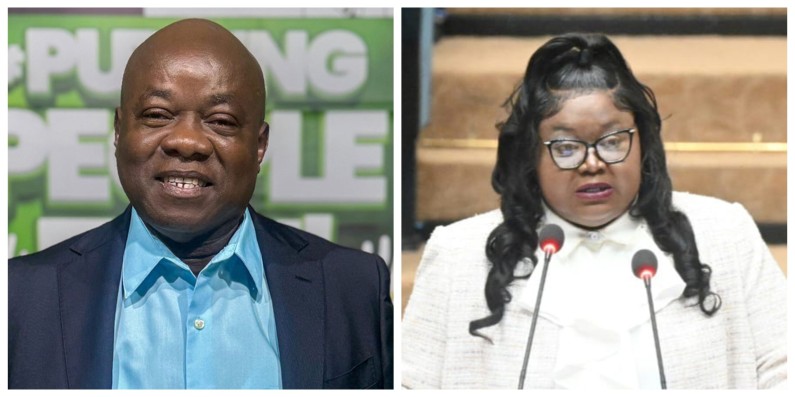
Leader of the People’s National Congress Reform (PNCR) and Chairman of A Partnership for National Unity (APNU), Aubrey Norton, has escalated a bitter political dispute into a legal showdown, filing a defamation lawsuit against We Invest in Nationhood (WIN) General Secretary and Member of Parliament Odessa Primus in a move he says is aimed at defending his integrity and public reputation.
Speaking at a PNCR press conference on Friday, Norton made it clear that he intends to vigorously challenge what he described as false and damaging allegations. He insisted that his political career has been grounded in integrity and transparency and warned that he will not tolerate claims suggesting financial impropriety.
Dismissing the accusations as “absolute garbage,” Norton said there is no basis for suggestions that he has received payments from any political figure or entity. He stressed that no one can credibly claim to have influenced him through financial means.
The legal battle stems from a January 30, 2026 social media post by Primus, which Norton’s attorneys argue implied that he was receiving money from Vice President Bharrat Jagdeo. In a February 24 letter, Norton’s legal team, led by attorney Dexter Smartt, described the post as “false and malicious” and demanded its removal, a public apology, and $500,000 in compensation.
The letter further contends that the statements have caused serious reputational harm and could negatively affect Norton’s professional standing.
However, Primus has refused to back down. Through her attorney Eusi Anderson, she has rejected the defamation claims outright. In a March 17 response, Anderson argued that the offending statement—“Tell your people who collecting Bharat money?”—was a rhetorical question, not an allegation of wrongdoing. He maintained that the comment was intended to promote “accountability and transparency,” and made clear that Primus will neither apologise nor pay any compensation.
Norton has framed the lawsuit as a matter of principle rather than profit, indicating that any damages awarded by the court could be directed toward charitable causes. He also used the moment to criticize what he described as a growing culture of reckless and unverified commentary in the public space, particularly on social media.
He warned that individuals who make such statements must be prepared to defend them in court, signaling his intention to pursue the matter fully.
With both sides entrenched and unwilling to concede, the dispute is now poised for a courtroom battle that could have wider implications for political speech, accountability, and defamation law in Guyana.





![Rohingyas are seen on a ship as they are moved to Bhasan Char island [Reuters]](https://villagevoicenews.com/wp-content/uploads/2020/12/Rohingyas.jpg)


