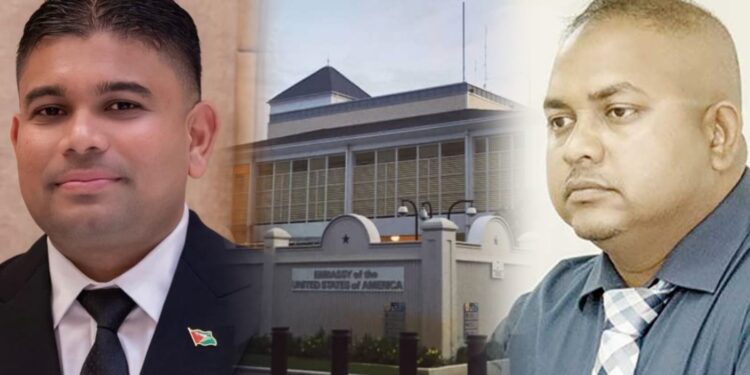
General Secretary of the Guyana Trades Union Congress (GTUC), Lincoln Lewis, has argued that the government is fuelling division between minibus operators and commuters instead of bringing stakeholders together to address the economic realities driving calls for higher transportation fares.
In his Eye on Guyana column published on May 24, 2026, Lewis argued that the ongoing dispute over public transportation fares is not fundamentally about operators seeking higher earnings or commuters resisting increased costs. Rather, he said, it reflects a broader governance problem in which decisions are imposed on citizens without meaningful consultation.
“The controversy surrounding minibus fares is not merely about whether operators should charge more or whether commuters can afford to pay more,” Lewis wrote. “It is about a government that has become accustomed to deciding who gets what, when they get it and how much they should receive, while disregarding the requirement for meaningful engagement with those affected by its decisions.”
Lewis’ comments come against the backdrop of growing debate over transportation costs and the government’s rejection of fare increases.
In a statement issued on May 19, 2026, Public Works Minister Juan Edghill said the Government had not approved or sanctioned any increase in fares across any mode of public transportation, including minibuses, hire cars and speedboats. The ministry warned operators against implementing unauthorised fare hikes and urged commuters to report violations.
While acknowledging the government’s authority to regulate fares, Lewis said the administration has failed to address the underlying economic pressures affecting both operators and passengers.
“The minibus operators did not wake up one morning and arbitrarily decide they wanted higher fares,” he wrote. “Their demand arises from the same economic realities confronting every Guyanese family.”
According to Lewis, operators are facing rising costs associated with fuel, tyres, spare parts, insurance and vehicle maintenance, all of which affect the viability of keeping vehicles on the road. At the same time, he noted, commuters are grappling with the high cost of living, including food prices, housing expenses, utility bills and educational costs.
“An increase in transportation costs would undoubtedly add another layer of hardship to households already stretched to the breaking point by the high cost of living,” he said.
The veteran trade unionist argued that these competing pressures should have prompted a national dialogue involving operators, commuters, trade unions, consumer advocates and government officials.
“The above realities should have compelled the government to bring all parties together around a table,” Lewis stated.
Instead, he said the administration has created an adversarial environment in which operators are portrayed as profiteers and commuters as victims, while the government positions itself as the defender of the public interest.
“Rather than bringing stakeholders together to find common ground, the regime has chosen to inflame tensions and manufacture conflict,” he wrote.
Lewis further argued that the dispute highlights a failure to uphold the principles of inclusive governance enshrined in Article 13 of Guyana’s Constitution, which provides for citizen participation in the management and decision-making processes of the State.
Article 13 of the Constitution of Guyana states:
“The principal objective of the political system of the State is to establish an inclusionary democracy by providing increasing opportunities for the participation of citizens, and their organisations in the management and decision-making processes of the State, with particular emphasis on those areas of decision-making that directly affect their well-being.”
“That is the real crisis before us,” he wrote. “Not simply a dispute over fares, but a persistent disregard for citizens’ rights, constitutional governance and the rule of law.”
The GTUC official acknowledged that the government has provided concessions to transportation operators through the removal of certain duties, excise taxes and customs charges. However, he said these measures should not be the sole consideration when determining whether current fares are sustainable.
“What are the actual operating costs? What is a reasonable return for operators? What can commuters realistically afford? What role should government play in supporting public transportation? These are the questions mature societies ask,” Lewis said.
Guyana’s public transportation sector remains heavily dependent on privately owned minibuses, which serve as the primary means of transportation for thousands of commuters each day. Unlike many countries where public transportation receives substantial government subsidies, operators in Guyana largely bear the costs of maintaining and operating their vehicles.
Lewis argued that government should focus less on issuing directives and more on developing comprehensive transportation policies that address the needs of both operators and the travelling public.
“The state possesses substantial financial resources,” he wrote. “The question is whether those resources are being utilised to improve the lives of ordinary citizens or simply to strengthen political control over national discourse.”
He concluded by calling for dialogue rather than confrontation, warning that economic progress cannot be sustained if social divisions continue to deepen.
“Consensus-building is not weakness. Consultation is not surrender. Dialogue is not defeat,” Lewis said.
“This nation cannot advance economically while social tensions are deliberately aggravated and citizens are encouraged to see one another as adversaries. Progress requires peace. Development requires harmony. Stability requires trust.”