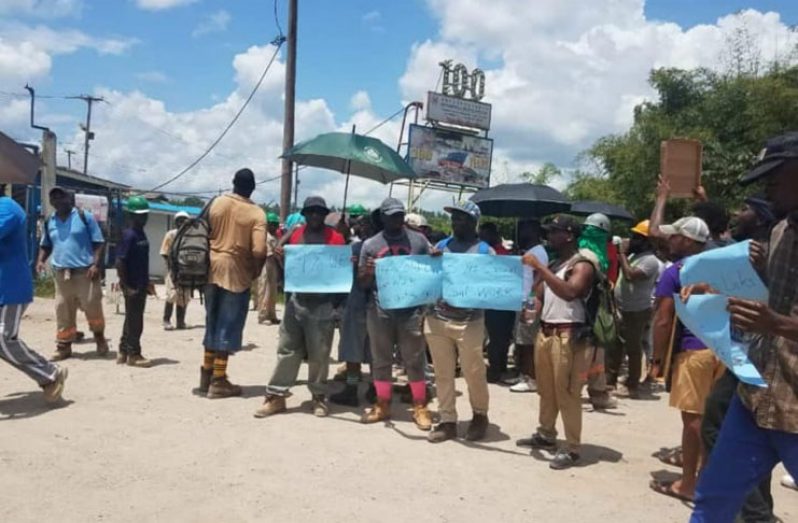
A tense labour standoff at BOSAI Bauxite Mining Company has been temporarily defused following urgent intervention by the Ministry of Labour and Manpower Planning. The strike, which brought operations in Guyana’s bauxite belt to a grinding halt, has been called off—at least for now—after the Ministry brokered a Terms of Resumption agreement between the company and the workers’ union.
The agreement, reached on Thursday, September 25, was the result of a high-stakes meeting chaired by Chief Labour Officer Dhaneshwar Deonarine, who convened representatives from BOSAI and the National Association of Agricultural, Commercial and Industrial Employees (NAACIE). Under the terms, the union agreed to immediately suspend industrial action, all employees are required to return to work on Friday, September 26, and both parties committed to no victimization as the “status quo ante” is reinstated.
Despite the breakthrough, the Ministry acknowledged that the resolution is temporary, describing the agreement as a “constructive step toward industrial peace.” The real test lies ahead on Monday, September 29, when all parties will return to the table for formal conciliation talks. Central to the negotiations are workers’ longstanding concerns over wages, occupational safety, and fair treatment—issues that have plagued the mining sector for years.
Meanwhile, the strike has drawn national attention and political support. Incoming Leader of the Opposition Azruddin Mohamed, speaking on behalf of the We Invest in Nationhood (WIN) Party, issued a strong statement backing the workers and their demands.
“Issues such as unsafe machinery, sick leave, lunch breaks, fair wages, and adherence to labour laws are not privileges; they are basic rights,” Mohamed declared.
Workers have cited hazardous equipment, inadequate sick leave, shortened breaks, and low wages as key grievances—conditions they say not only violate workplace norms but breach basic human rights and labour standards. The WIN Party has called for renewed, principled dialogue involving all stakeholders, urging the Ministry and BOSAI management to take worker welfare seriously.
“This is not just about HR policy—it’s about dignity, fairness, and the structural treatment of workers in one of our most vital industries,” Mohamed added.
With Linden’s mining operations now back online, attention turns to next week’s talks—where hopes for a lasting solution will be weighed against years of unresolved tensions. The outcome may not only determine the fate of BOSAI’s workforce, but also set the tone for labour relations in Guyana’s broader extractive sector.