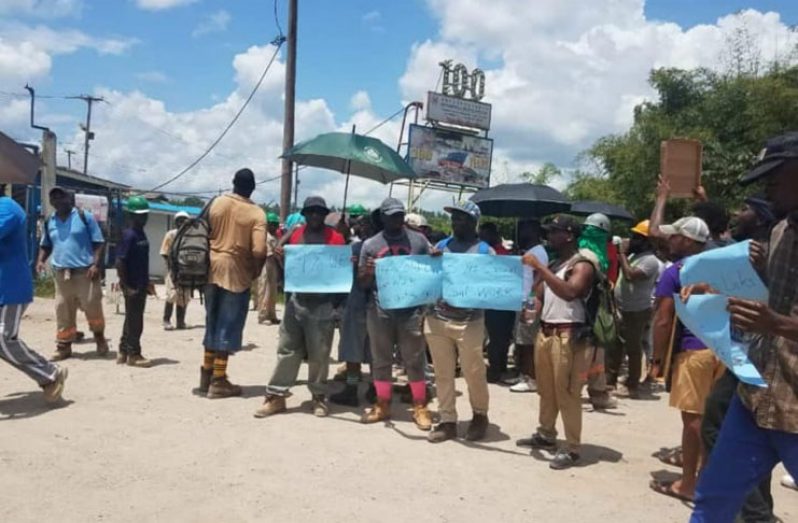
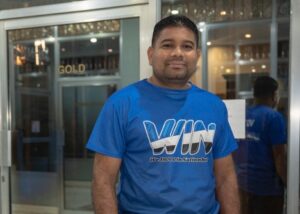
By Mark DaCosta- In a stirring display of solidarity, incoming Leader of the Opposition, Azruddin Mohamed, has voiced strong support for the ongoing strike by workers at BOSAI Mineral Group (Guyana) Inc. This protest highlights pressing issues revolving around workplace safety, fair remuneration, and the fundamental rights of workers in our nation’s volatile mining sector. As workers raise their concerns, the, We Invest in Nationhood (WIN) Party has insisted on the urgent need for effective dialogue among BOSAI’s management, unions, and the Ministry of Labour.
BOSAI, which operates as a pivotal player in the mining industry, particularly in the bauxite sector, has been an integral part of our country’s economic framework since its establishment. With rich mineral deposits, the extraction and processing of bauxite have been crucial for local employment and have significantly contributed to our national wealth.
However, this wealth has not always translated into fair treatment for the labour force, which forms the backbone of this industry. Recent events have exposed glaring deficiencies in workplace environment and conditions that raise serious concerns about the welfare of the workers.
The current strike has centred around a multitude of complaints that resonate deeply among the workforce. Workers at BOSAI have reported issues including hazardous machinery, lack of adequate sick leave, insufficient lunch breaks, and wages that struggle to meet basic living standards. These are not merely grievances; they are the essential rights of workers recognised by law and international labour standards. The failure to uphold these rights is not just a human resources mismanagement issue; it represents a larger systemic neglect that underlies the treatment of workers in our country.
Azruddin Mohamed has emphatically stated, “Issues such as unsafe machinery, sick leave, lunch breaks, fair wages, and adherence to labour laws are not privileges; they are basic rights.” This assertion underscores a fundamental truth that the various stakeholders — BOSAI, trade unions, and the Ministry of Labour — must acknowledge. The WIN Party has called for renewed commitment to dialogue that is not only constructive but also prioritises the welfare of the workers, reigniting a path towards a fair resolution that upholds the dignity of those employed in this vital sector.
Despite the richness of our country’s mineral resources, the workers who facilitate the extraction and processing continue to feel like “second-class citizens.” This alarming sentiment not only erodes morale but diminishes the overall productivity of an industry that is, ostensibly, a cornerstone of our economic stability. While the mining sector in Region 10 has provided numerous opportunities, the welfare of the workers has often been conspicuously overlooked.
The pressing appeal from the WIN Party serves as a reminder that the future of our nation is inexorably linked to the treatment of its workforce. In a sector as crucial as mining, the notion of workers’ dignity and recognition cannot simply be rhetoric; it must translate into tangible action and policy. The stakes are particularly high in Region 10, recognised as the heartbeat of our nation’s mining industry, where the livelihood of countless families and the sustainability of local economies depend on the fair treatment of workers.
As the strike continues, the pressure on BOSAI and its associates mounts. The call for fairness is not a mere demand; it is a call for justice that echoes the aspirations of our citizens for a more equitable and humane working environment. The WIN Party’s advocacy for stronger representation and labour rights aims to empower workers not only in the bauxite sector but throughout our diverse economy.
Our country can no longer afford to ignore the plight of its workforce. It is time for all relevant parties to engage in genuine discussions aimed at remedying these injustices, ensuring that the rights and welfare of every worker are not just preserved but championed. The call to action is clear: the dignity of the workers must be restored, and fair labour practices must be steadfastly upheld.