Benefits
Laxative / Constipation
Cascara Sagrada is classed as a stimulant laxative – it is rich in phytochemicals known as anthraquinones which react with bacteria in the intestines to stimulate the bowels. It causes muscle contractions in the intestines which enables stools to move more smoothly through the bowels to trigger the onset of a bowel movement. This herb will usually stimulate a bowel movement within six to eight hours of consumption.
Anthraquinones also inhibit reabsorption of electrolytes and water from the colon, producing a softer, quicker bowel movement. It is important to drink lots of water to stay hydrated whilst using Cascara Sagrada. It is only recommended that this herb is used for 1 week at a time, otherwise it can cause side effects such as abdominal cramps and electrolyte imbalances.
Digestive Health
Cascara Sagrada is classed as a “bitter herb” and a tonic for the digestive system. Herbal bitters cause the “bitter reflex” which begins a cascade of actions in the body to prepare the digestive system for food.
The taste of bitter on the tongue stimulates the brain to release the digestive hormone gastrin. This begins a chain of neural and endocrine actions including; appetite stimulation, the release of digestive enzymes from the pancreas, duodenum, and liver, stimulation of the smooth muscle of the stomach to increase the rate of gastric emptying and contraction of the oesophageal sphincter to prevent the movement of acidic stomach contents back upwards into the oesophagus, aiding the liver in detoxification and an increase in the flow of bile, regulation of secretion of pancreatic hormones that regulate blood sugar, insulin and glucagon, stimulating mechanisms to repair the gut wall.
Anti-parasitic / Anti-microbial
The bark of the Cascara tree is also rich in the compound, emodin, which is known to be anti-fungal and anti-microbial. This supports its traditional use for expelling parasites; however it has also been found to be effective against a range of bad bacteria including; Helicobacter pylori, E coli, and several strains of Staphylococcus aureus. It has also demonstrated anti-fungal action against Candida.
Detoxification
Because Cascara Sagrada helps to cleanse the colon of damaging toxins and waste products, it is commonly used as an ingredient in many detox and cleanse herbal formulas.
Cascara Sagrada together with Psyllium husks are two of the most widely used remedies in colon cleansing programs. Psyllium is categorised as a bulk laxative – its mucilaginous component acts as a bulking agent that cleanses the intestines. The active components of Cascara Sagrada stimulate the intestinal lining and relieve a sluggish colon. The combination of both Psyllium (as a bulking agent) and Cascara (as a stimulant laxative) is essential for an effective colon cleansing program.
Folklore and history
The bark from Cascara Sagrada has been used to treat constipation for millennia by native tribes in the northwestern US. The early colonists learned of its qualities about 300 years ago, and since then its use has spread around the globe. It has been called “the most widely used cathartic on earth”.
The plant was introduced to modern medicine in 1877 by a physician from Colusa, Dr. Bundy, and became official in the Pharmacopeia of the United States in 1890. Early advertisers touted Cascara as being among “the finest medicinal herbs”. By the early 1900s Cascara was being used all around the world.
Traditional use
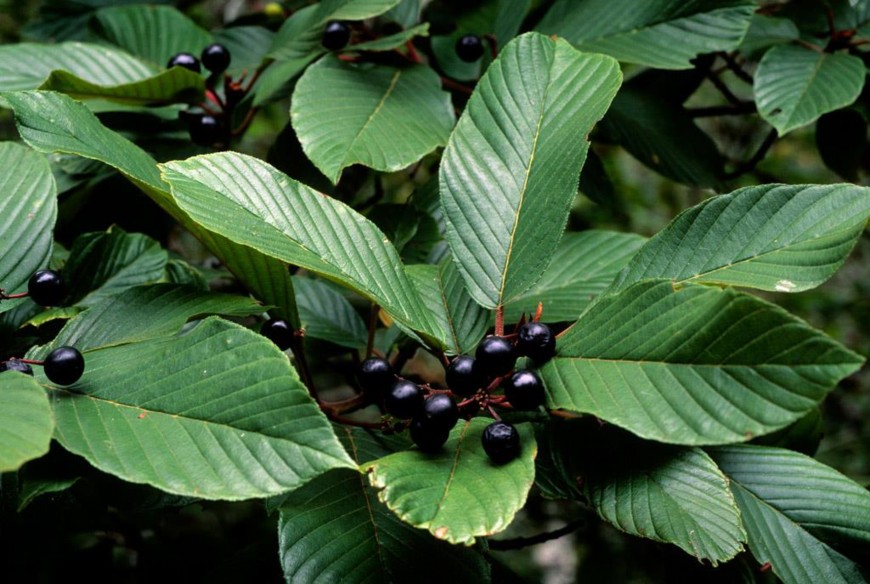
Cascara Sagrada translates from Spanish as “sacred bark” and is thought to have acquired this name from Spanish priests who noted its similarity to the wood used for the ark of the covenant.
It has a long history of traditional use in its native America, where it has been used for centuries to support digestive health and as a herbal laxative.
Knowing that the fresh bark couldn’t be used, the Native Americans stripped the bark in the Autumn and subjected it to a slow aging process lasting at least one year. We now know that fresh bark contains a substance called anthrone which causes severe vomiting. The bark must be aged for one year to allow time for the anthrone to decompose.
Typical use
Cascara Sagrada Bark Powder
A typical dosage of Cascara Sagrada Bark Powder is ½g of powdered bark one to two times per day.
Cascara Sagrada Tincture
Can be added to water or fruit juice and taken when required.
Traditionally Taken: 2-3ml taken 2-3 times per day, or as directed by a Herbal Practitioner.
Cascara Sagrada Bark Tea
Use one teaspoon of the herb, immerse in boiling water over a low heat and simmer for 10 minutes, this extracts the phyto-chemicals from the bark. Use 2 cups of boiling water per person.
Constituents
Cascara Sagrada bark contains anthranoids, mainly of the aloe-emodin type, in addition to those of the chrysophanol and physcion type.
The active constituents are hydroxyanthracene glycosides (6–9%). Of these, 70–90% are C-10 glycosides, with the 8-O-glycosides, aloins A and B, and 11-desoxyaloins A and B (chrysaloins A and B) accounting for 10–30%. The diastereoisomeric pairs, cascarosides A and B and cascarosides C and D and cascarosides E and F constitute 60–70% of the total O-glycosides. Other major hydroxyanthracene glycosides (10–20%) include the hydroxyanthraquinones, chrysophanol-8-O-glucoside and aloe-emodin-8-O-glucoside.
Precautions
Not recommended for pregnant or breastfeeding women.
Do not take for more than 7 days at a time – may cause dehydration and loss of electrolytes.
Do not use if you have ulcerative colitis, Crohns, appendicitis or other gastrointestinal disorders.
Please consult your healthcare practitioner if you are taking any prescription medications. (indigoherbs)