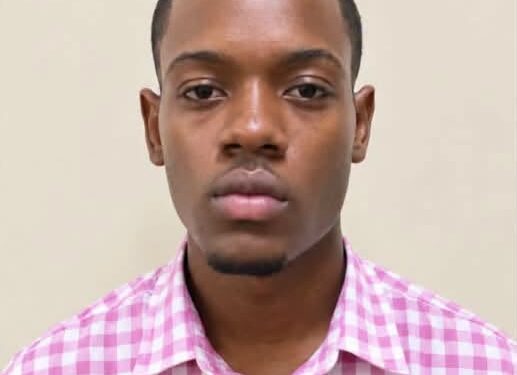
Four days after a Venezuelan diver died during the operation to salvage the sunken MV Barima, the Guyana Police Force has disclosed details of the incident, identifying the deceased as 66-year-old Luis Martinez.
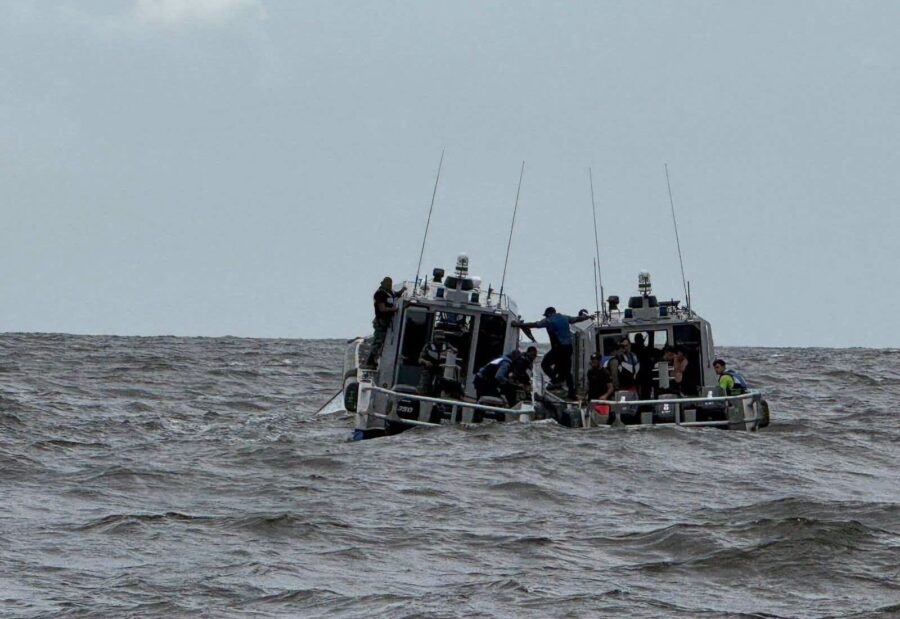
Martinez reportedly died on Wednesday evening, October 28, while conducting underwater operations approximately 10 nautical miles off the coast of Anna Regina, in the Atlantic Ocean. His death comes as the multimillion-dollar effort to recover the MV Barima continues, nearly four months after the vessel sank in one of Guyana’s deadliest maritime disasters.
According to a Police statement issued on Sunday morning, Martinez departed the Kingston Wharf in Georgetown at approximately 5:14 p.m. on Wednesday aboard a vessel with several other crew members to participate in an operation to refloat another vessel in the Essequibo River.
Although the police statement did not identify the vessel by name, the operation was connected to efforts to salvage the MV Barima, which sank off Guyana’s North-West Coast on July 18.
Police said Martinez entered the water upon arrival at the location to carry out diving operations. However, after approximately 20 minutes, he failed to resurface, prompting concern among the other crew members.
The crew subsequently retrieved him using a rope attached to his body. He was reportedly found motionless, with frothing at his mouth.
Martinez was transported to the Transport and Harbours Department Wharf at Stabroek, Georgetown, where ambulance personnel were summoned. A doctor pronounced him dead at approximately 2:30 a.m. on Thursday, October 29.
Police said the body was examined and no marks of violence were observed on the exposed parts. It was subsequently taken to Memorial Gardens Funeral Home, where it awaits a post-mortem examination. Investigations into the incident are ongoing.
A salvage operation under scrutiny
Martinez’s death adds another troubling development to the protracted recovery operation surrounding the MV Barima, which capsized and sank on July 18 while travelling from Georgetown to Port Kaituma in Region One.
The disaster claimed more than 100 lives, while more than 30 people remain unaccounted for, according to the figures provided in the current account of the tragedy. The vessel was carrying passengers and cargo when it went down, triggering an extensive search-and-rescue operation involving the Guyana Defence Force Coast Guard, police, maritime authorities, private vessel operators, Leader of the Opposition Azruddin Mohamed, local fisherfolk and international assistance.
The Government’s account to Parliament stated that 77 people were rescued, although one subsequently died. By July 24, 73 bodies had been recovered
The wreck was located on the seabed on July 20, approximately 31 nautical miles northwest of the initial distress location communicated to authorities. French divers joined local teams during the recovery effort.
The Government subsequently moved to secure a specialist contractor to raise the vessel. B.K. International was awarded the salvage contract, with its bid reported at approximately G$1.034 billion, the lowest of three submissions.
The salvage operation is particularly significant because the wreck may contain evidence relevant to the Commission of Inquiry established to examine the circumstances surrounding the disaster. The Government has stated that the contractor’s methodology must include measures for preserving evidence, alongside environmental protection, operational timelines and health and safety systems.
However, detailed public information about the day-to-day salvage activities, the personnel involved and the safety arrangements governing underwater operations remains limited.
Martinez’s death therefore raises important questions about the circumstances in which the diving operation was conducted, the safety protocols in place, the emergency response available to divers and whether the incident will be examined as part of the broader scrutiny of the salvage operation.
The recovery of the MV Barima is not simply a matter of removing a sunken vessel. It is also central to the search for answers for grieving families who continue to await the recovery of their loved ones and a full account of the disaster.
With a diver now dead during the salvage effort, the authorities face renewed questions about transparency, operational safety and accountability as the recovery work proceeds.