For 34 years, Jamaica’s hand went up. On Wednesday, in the General Assembly hall in New York, it stayed down — and the Opposition wants to know why.
By Calvin G. Brown (WiredJA)-Jamaica has abandoned one of the most consistent positions in its diplomatic history, abstaining for the first time on the United Nations resolution demanding an end to the United States embargo against Cuba, and the Opposition is accusing the Holness administration of changing the country’s foreign policy without telling the country.
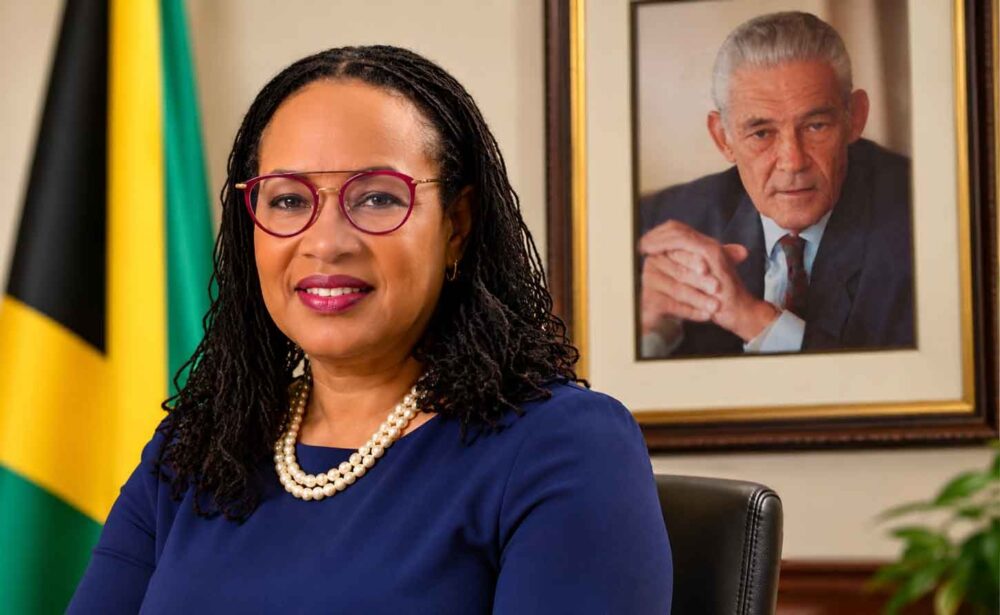
Senator Donna Scott-Mottley, Opposition Spokesperson on Foreign, Regional and Diaspora Affairs, said the decision represents a significant departure from a stance that successive governments, Jamaica Labour Party and People’s National Party alike, had treated as settled.
“For decades, Jamaica has joined the overwhelming majority of the international community in calling for an end to the embargo against Cuba. That position has transcended changes of administration and has reflected our commitment to sovereignty, self-determination and the right of nations to pursue their development free from external coercion. It is therefore deeply concerning that Jamaica should now depart from that position without any explanation to the Jamaican people,” she said.
Twenty-four hours, two positions
What has sharpened the Opposition’s anger is the timing. On Tuesday, State Minister for Foreign Affairs Alando Terrelonge piloted a Government motion through the House of Representatives on Cuba’s economic and humanitarian situation, in which he described conditions on the island as “deeply troubling” and declared that Jamaica could not support a unilaterally imposed blockade.
The motion passed without objection, with Opposition MP Dr Angela Brown-Burke branding the blockade illegal and immoral.
By Wednesday morning, Jamaica’s ambassador to the UN, Brian Wallace, was explaining to the General Assembly why his country would not vote for the resolution that says precisely that.
“Foreign policy cannot be conducted in a manner that leaves the Jamaican people uncertain about where their country stands.”
— Senator Donna Scott-Mottley
“It is difficult to reconcile the position taken in our Parliament yesterday with the decision made at the United Nations today. What has changed in the space of twenty-four hours?” Senator Scott-Mottley asked. “Foreign policy cannot be conducted in a manner that leaves the Jamaican people uncertain about where their country stands.”
The Government’s case
Foreign Affairs Minister Kamina Johnson Smith did not dispute that the ground had shifted. At Wednesday’s post-Cabinet press briefing she conceded that the abstention is “a shift in policy,” one the Government had been reflecting on for some time.
Her argument runs as follows: Jamaica did not vote against the resolution because it opposes unilateral measures under the UN Charter, but it did not vote for it either, because backing the same text year after year has coincided with a deepening, not easing, of Cuban suffering.
She pointed to Prime Minister Andrew Holness’s address to CARICOM heads in St Kitts and Nevis in July, where he affirmed solidarity with Cuba while calling for direct dialogue between Washington and Havana and for reform within Cuba itself. Tuesday’s parliamentary motion, she said, was built on that broader view, urging engagement rather than simply condemning the embargo.
The Opposition’s response is that none of this was put to the public before the vote, and that a “broader view” announced on the same morning as a historic abstention looks less like policy and more like cover.
Small state, independent voice
Senator Scott-Mottley rooted her objection in the principle that has defined Jamaica’s Cuba policy since Michael Manley joined Errol Barrow, Eric Williams and Forbes Burnham in 1972 to recognise Havana in defiance of Washington’s wishes.
“Jamaica is a small state, but we have never regarded that as a reason to surrender our independent voice in international affairs. Indeed, it is precisely because we are a small state that the principles of sovereignty, non-interference and respect for international law must remain central to our foreign policy,” she said.
She reminded the Government that the relationship with Cuba has been marked by decades of friendship and practical cooperation, most visibly in health and education, where Cuban doctors, nurses and teachers have served in Jamaican communities for generations.
A region drifting apart
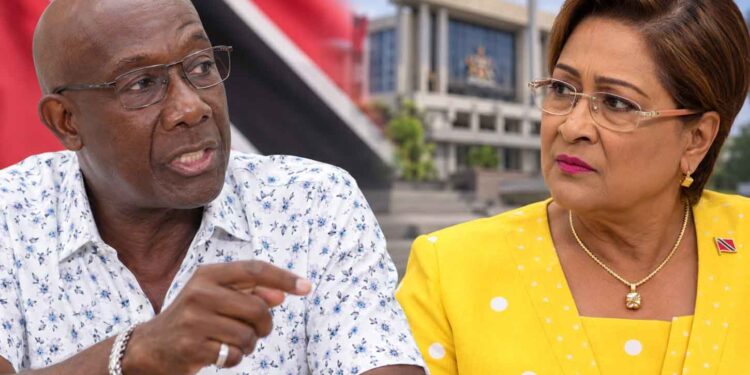
Jamaica did not drift alone. The resolution passed 130 to 17, with 25 abstentions, the weakest result in its 34-year history and a collapse from the 165 votes it drew last year. Within CARICOM, Guyana and Haiti also abstained, while Trinidad and Tobago became the first member state ever to vote against. Germany, Italy, the Netherlands and Poland broke with the resolution for the first time.
University of the West Indies political analyst Damion Gordon told the Gleaner the vote fits a pattern that began with the suspension of Jamaica’s medical cooperation arrangement with Cuba, and that the minister’s explanation does not justify so radical a change.
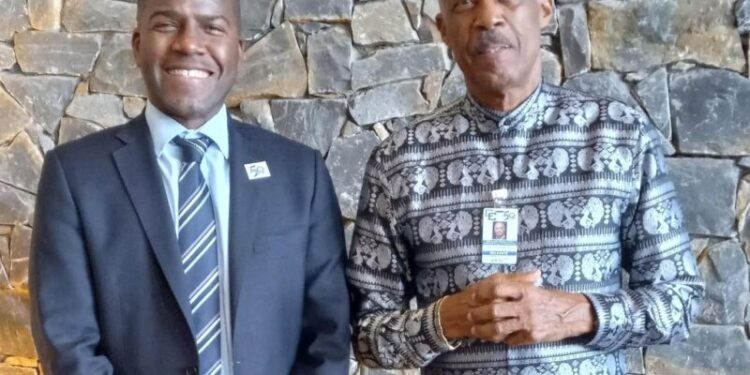
Director of Caribbean Immigrants Services in New York, Irwine G Clare, Sr, in a note to Wiredja, said he was “deeply disappointed by Jamaica’s decision to abstain on the United Nations resolution calling for an end to the US embargo against Cuba.
My connection to Cuba spans generations. My grandfather helped build its railway, an uncle was born there, and I visited in 1978 as a student representative to the 11th World Festival of Youth and Students. I also recall with pride Ben Clare’s pioneering service as Jamaica’s first Ambassador to Cuba.
The Government’s call for reform and dialogue does not prevent Jamaica from firmly opposing an embargo that deepens the hardship of ordinary Cubans. We can—and should—advocate both.
Cuba’s longstanding contributions to Jamaica, particularly in healthcare and education, deserve recognition. Our commitment to sovereignty, self-determination and opposition to economic coercion demands consistency.
I urge the Government to reconsider. Our foreign policy must reflect the independence, courage and humanity of our people” Care said.
Senator Scott-Mottley has called on Minister Johnson Smith to provide an immediate account of the abstention and to state plainly whether it signals a new policy towards Cuba.
“The Jamaican people are entitled to know whether this decision reflects a considered change in national policy and, if so, what circumstances have brought it about. Our international positions must be guided by principle, consistency and the national interest,” she said.
The embargo is 66 years old. Jamaica’s opposition to it, at least at the United Nations, now appears to be over. What the Government has not yet said is what it expects to get in return.