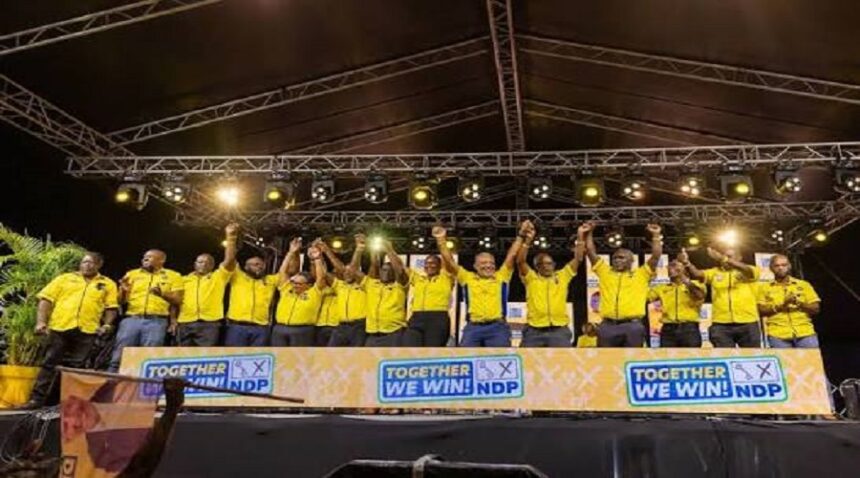
As the New Democratic Party (NDP) marks its first year in government following a decisive electoral victory that ended the Unity Labour Party’s long tenure, the administration finds itself at a critical political crossroads. While party organizers prepare a grand celebration rally to commemorate their first twelve months in office, growing public skepticism and persistent economic headwinds have sparked an intense national debate over whether political fanfare is appropriate amidst mounting everyday hardships for citizens across St. Vincent and the Grenadines.
The debate came to a head during a panel discussion on local radio station Hot 97.1 SVG, where commentators and callers examined whether the administration has delivered tangible transformation or simply fallen into the familiar habits of its predecessor. Central to the public’s frustration is the widening gap between campaign rhetoric and economic realities. During the election, the NDP campaigned heavily on easing the cost of living, promising to reduce the Value Added Tax to 13 percent within the first six to nine months in office. One year later, that reduction remains unfulfilled, replaced instead by temporary measures such as two designated VAT-free days—a gesture critics dismiss as insufficient for families facing sustained inflationary pressures.
Everyday consumers report severe price hikes at supermarkets, accompanied by noticeable supply shortages of basic staples like pasta on store shelves. While government supporters attribute these price surges to external factors such as elevated global oil prices and international conflict, analysts point out that the NDP spent its campaign holding the former administration fully accountable for identical cost-of-living challenges. Having insisted that government action could alleviate domestic pressure, the current administration now faces criticism for resorting to the same global economic explanations it previously rejected.
For public servants—a pivotal constituency in the election—the economic burden has been compounded by statutory changes. Increased National Insurance Scheme (NIS) contributions, enacted under previous legislation but continuing under the current government, have reduced net take-home pay for workers earning the same base salary. Furthermore, expected structural relief such as double salary adjustments failed to materialize as ongoing policy, yielding only a single one-off payment. For middle-income workers without dependents, social assistance measures have offered little direct relief, leaving many feeling financially squeezed despite the political transition.
Beyond economic relief, the election outcome was widely viewed as a mandate for transparency, integrity, and good governance. The electorate voted out the ULP—which suffered a decisive 14-to-1 loss—largely out of frustration with perceived patronage, corruption, and systemic inequality. However, one year into office, key legislative reforms remain conspicuously absent. Analysts on Hot 97.1 SVG highlighted that promises regarding integrity legislation, enhanced transparency controls, and structural governance reform have not been brought to the parliamentary floor. Specific concerns have also emerged over controversial public sector arrangements, including questions surrounding the Leo contract and state lottery operations, leading observers to question whether fundamental administrative practices have truly changed.
Accountability for past mismanagement has also emerged as a major point of contention. Prior to taking office, opposition figures famously gestured toward briefcases allegedly containing proof of corruption and promised that wrongdoers would face legal reckoning. Twelve months later, no formal investigations or prosecutions have been announced, leading callers to question the whereabouts of the promised evidence. Rather than demonstrating systemic institutional cleanup, the administration faces accusations that certain key figures are pursuing self-interest or maintaining political dynasties similar to the established political order.
The optics of the planned one-year celebration rally have further sharpened public criticism. Radio callers expressed dismay that the party is organizing large-scale rallies complete with free transportation while asking citizens to “tighten their belts” in the face of austerity. Commentators noted that continuous rallies and self-congratulatory events were precisely the political style of the previous ULP administration that voters ultimately grew weary of. Critics argue that holding costly celebrations while basic public issues—such as street vending regulations and supermarket food security—remain unaddressed sends a signal of misaligned priorities.
As the NDP enters its second year in office, political analysts suggest that the administration’s long-term standing will depend on shifting focus from ceremonial politics to substantive policy execution. While party loyalists maintain that one year is too brief to undo decades of structural challenges, a growing segment of the population is demanding concrete legislative action, fiscal relief, and genuine transparency over political fanfare.
St. Vincent Times