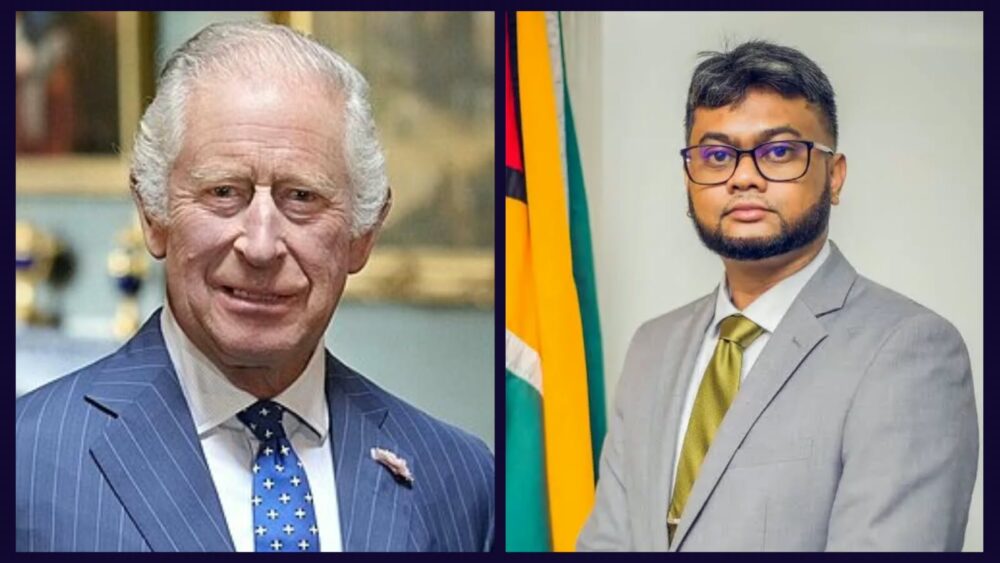
The Institute for Action Against Discrimination (IFAAD) is calling on King Charles III to use his historic visit to Guyana to confront Britain’s role in slavery and engage directly with descendants of enslaved Africans on the question of reparatory justice.
The organisation wants the British monarch to move beyond ceremonial engagements and acknowledge the enduring consequences of slavery, arguing that the royal visit presents an opportunity for meaningful dialogue on one of the most painful chapters in Guyana’s history.
In a statement issued during the King’s two-day state visit, IFAAD Vice Chairman Pt. Ubraj Narine called for formal discussions involving representatives of the African Guyanese community, civil society organisations, historians and advocates for reparatory justice.
IFAAD also called on the Government of Guyana to prioritise the issue in its engagements with the monarch, insisting that slavery and its continuing consequences should not be sidelined in diplomatic discussions.
The organisation said generations of Africans endured enslavement, exploitation and dehumanisation under a system whose social, economic and psychological consequences remain evident in contemporary debates about inequality, justice and human dignity.
“A visit by the British monarch should be more than a ceremonial occasion. It should provide an opportunity for honest dialogue, meaningful acknowledgement, and a renewed commitment to addressing the historical injustices associated with slavery and colonialism,” IFAAD stated.
The organisation stressed that acknowledging the historical wrongs would be insufficient without concrete steps to address their consequences. It called for sustained dialogue, historical truth, educational initiatives, institutional accountability and serious consideration of appropriate reparatory measures.
IFAAD further argued that confronting slavery was not about assigning personal guilt to present generations for the actions of their ancestors, but about recognising historical injustices and addressing their continuing impact.
The appeal comes amid renewed Caribbean demands for Britain to acknowledge its role in the transatlantic slave trade and support reparatory justice.
Guyana’s history is deeply connected to the plantation economy established under Dutch and later British colonial rule. Enslaved Africans were forced to work on sugar plantations under brutal conditions, while the wealth generated through their exploitation helped build colonial fortunes. Slavery was abolished in British Guiana in 1834, followed by a period of apprenticeship that ended in 1838. Its consequences continue to shape discussions about land, economic inequality, racial discrimination and access to opportunity.
King Charles arrived in Guyana on October 29 for a two-day state visit marking 60 years of diplomatic relations between Guyana and the United Kingdom. His visit has renewed attention on Britain’s historical responsibility and the Caribbean’s longstanding reparations campaign.
President Irfaan Ali has also called for Britain to formally apologise for slavery and support practical measures to address its legacy, including concessional financing, debt relief and targeted investment in critical sectors. The British Government, however, has maintained its opposition to financial reparations.
IFAAD wants the royal visit to produce more than expressions of regret, insisting that the descendants of enslaved Africans must have a meaningful voice in discussions about the historical injustices that continue to affect their communities.
“Guyana must seize this opportunity to ensure that the voices of those whose ancestors endured slavery are heard and that their concerns are treated with the seriousness they deserve,” the organisation said.
The organisation urged King Charles and the Guyanese Government to use the visit to advance a substantive conversation on acknowledgement, accountability and reparatory justice.