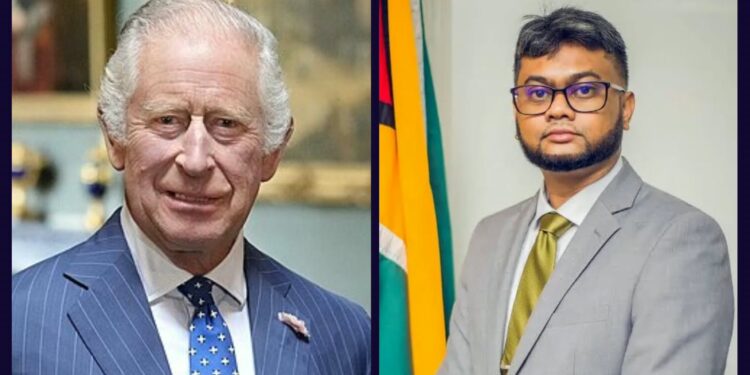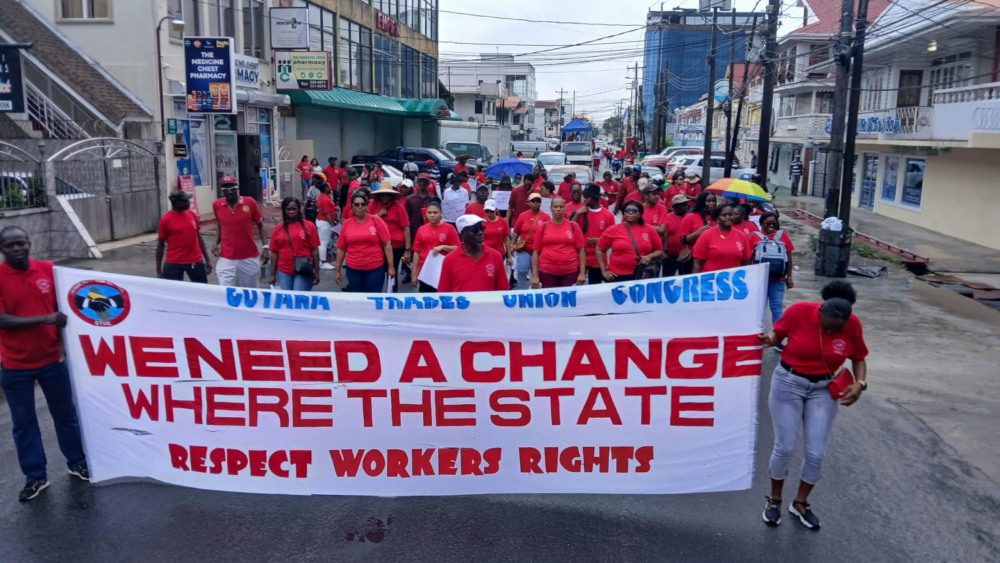
The Guyana Trades Union Congress (GTUC) welcomes His Majesty King Charles III to Guyana but urges him to look beyond ceremonial engagements and confront two unfinished struggles: reparative justice for slavery and the erosion of democratic, economic and constitutional rights in Guyana today.
The Congress calls on His Majesty to use this historic visit to press for meaningful action, not merely acknowledge past suffering while remaining silent on present-day injustices.
The wrongs of history demand redress, and the injustices of the present demand accountability.
Enslaved Africans were forcibly brought to Guyana in chains, treated as property and compelled to build the wealth of plantation owners and the British Empire through brutal, uncompensated labour. They endured violence, deprivation and inhumane working and living conditions while being denied their freedom and dignity.
The United Nations has recognised transatlantic slave trade and slavery as the gravest crimes against humanity. Yet, following emancipation, the British government compensated former slave owners while the formerly enslaved people whose labour created that wealth received no comparable compensation.
The enslavers were compensated. The enslaved received nothing.
That injustice cannot be settled through expressions of regret alone. The GTUC calls for a formal commitment to sustained reparations dialogue between the United Kingdom and representatives of affected communities, including trade unions and civil society. That process must examine practical measures to address slavery’s enduring consequences, including educational and economic inequalities, and establish a framework for meaningful redress.
The Crown must recognise that the wealth created through unpaid labour came at an immense human cost. Historical responsibility must translate into action.
But justice cannot be confined to the past. His Majesty arrives at a time when the GTUC is deeply concerned about democratic governance, political intimidation, the functioning of Parliament and the exercise of state power.
The Congress is alarmed by what it regards as an atmosphere of fear, the marginalisation of the opposition, the harassment of its constitutional leadership and the weakening of independent institutions and civil society.
The GTUC therefore calls for specific, measurable commitments to uphold democratic freedoms, beginning with respect for the independence of Parliament, constitutional institutions and regional and local democratic authorities. Allegations of political interference, intimidation and misuse of state institutions must be subject to credible, independent scrutiny.
The Congress supports the rule of law. Anyone accused of an offence must answer through lawful procedures. However, arrest and detention must never be used to intimidate political opponents or silence dissent.
An accusation is not a conviction. Arrest is not a substitute for justice.
The GTUC calls for due process to be respected in every investigation and prosecution, regardless of political affiliation. It also demands protection for freedom of expression, peaceful assembly, association and the right to organise without fear of retaliation.
The Congress urges His Majesty to raise these concerns directly with President Dr Mohamed Irfaan Ali and encourage demonstrable commitments to constitutional governance, independent institutions and the protection of citizens’ fundamental rights.
The GTUC also demands action on the disparity between Guyana’s extraordinary economic growth and the financial hardship experienced by workers and their families.
Economic growth is not shared prosperity when workers cannot afford a decent standard of living.
The Congress calls for:
- A livable wage: A structured, time-bound process involving government, employers and trade unions to establish wages that reflect the actual cost of living.
- Meaningful social dialogue: Regular, substantive engagement with recognised trade unions on wages, working conditions, labour policy and national economic priorities.
- Equitable distribution of national wealth: Greater transparency and accountability in the management of oil revenues and other natural resources, with measurable benefits for workers and vulnerable communities.
- Protection of trade union rights: An end to intimidation, discrimination and marginalisation of workers and independent organisations exercising their lawful rights.
Guyana’s oil wealth belongs to the nation. Its benefits must not be concentrated among political or private interests while ordinary citizens struggle to meet basic needs. Workers who create the nation’s wealth must receive a fair share of its rewards.
The Congress further calls for respect for the separation of powers and the independence of constitutional institutions. Parliament must be able to scrutinise the executive, civil society must be free to hold the government accountable, and regional and local democratic bodies must be permitted to exercise their lawful responsibilities.
Democracy requires more than elections. It requires accountability, independent institutions and the freedom to challenge those in power without fear.
The GTUC also urges His Majesty to seek greater attention to the rights of Indigenous peoples, particularly concerns surrounding Guyana’s Low Carbon Development Strategy (LCDS), resource management and decisions affecting Indigenous lands and livelihoods.
The Congress calls for transparent implementation of development and environmental programmes, meaningful consultation with Indigenous communities, respect for their rights and access to effective remedies where those rights are violated. Economic or environmental objectives must not override the dignity, participation and lawful interests of Indigenous peoples.
The GTUC asks His Majesty to ensure that these matters are not lost among diplomatic formalities. It calls on him to encourage the British government to support sustained engagement on reparative justice and to raise concerns about democratic governance and human rights through appropriate diplomatic channels.
The Congress recognises that the King cannot direct Guyana’s domestic policies. Responsibility for governing Guyana rests with its elected authorities. Nevertheless, a historic royal visit provides an opportunity to speak candidly about the standards of justice, accountability and human dignity to which all governments should be held.
The GTUC’s demands are clear: a credible path to reparative justice; protection of constitutional and democratic rights; fair wages and meaningful union engagement; transparent management of national wealth; and respect for Indigenous peoples.
The Congress seeks justice for the enslaved who were denied compensation and for present-day citizens whose rights and freedoms must be protected. Neither historical suffering nor present-day abuses should be dismissed for political convenience.
His Majesty should leave Guyana having heard not only official speeches, but also the concerns of workers and citizens demanding accountability.
Guyana’s wealth must serve its people. Its government must respect their rights. Its history must be confronted with honesty, and its injustices must be addressed through action.
PRESS STATEMENT
Guyana Trades Union Congress (GTUC)
October 29, 2026