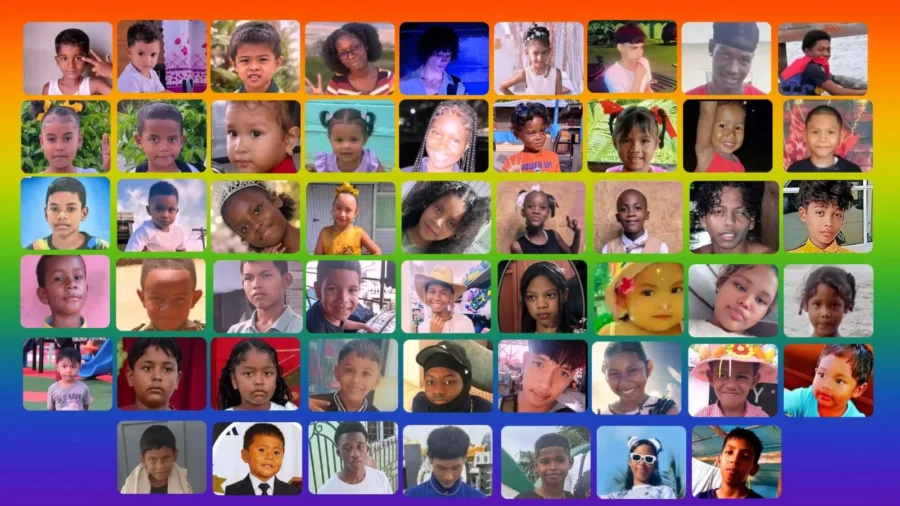
At least 64 children have died in Guyana during 2026, in circumstances ranging from murder and road accidents to house fires and drownings, raising urgent questions about child protection, public safety and the government’s responsibility to prevent avoidable deaths.
The figures, documented in an October 22 investigation by News Room Guyana, paint a troubling picture of children losing their lives across the country, including in circumstances that demand closer examination of the systems responsible for protecting them.
The tally includes at least eight children reportedly murdered, 12 killed in road crashes and other vehicle-related incidents, two who died in fires and 40 drowning victims. Two additional deaths, including that of a 14-year-old girl who died from heart failure and anaemia, and a 17-year-old student whose death remained under investigation, were also documented.
The figures are not simply a collection of unrelated tragedies. They raise fundamental questions about whether preventable risks are being adequately addressed by the authorities.
Drownings accounted for the largest category, with 40 children losing their lives. However, the sinking of the MV Barima on July 18 was responsible for at least 32 of those deaths. At least three other children reportedly remain missing following the disaster.
The tragedy, which claimed the lives of passengers travelling to the North West District, exposed the devastating consequences of a single maritime disaster for families and communities.
Outside the ferry disaster, eight children drowned in trenches, canals, rivers, pools and other bodies of water.
Among them were two siblings, Jadon and Tianna De Courte, aged 10 and eight, who drowned in a trench at Enterprise, East Coast Demerara. Another child, six-year-old Kayden Busey, drowned in a water-filled excavation at Edinburgh, East Bank Berbice.
These incidents demand scrutiny of public safety measures, including barriers around dangerous excavations, community warnings, supervision and enforcement of safety requirements.
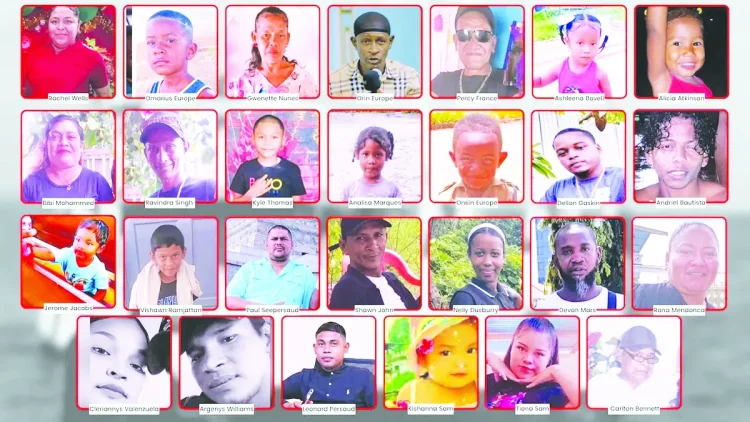
The murder of children is another deeply disturbing feature of the figures.
Seven-year-old Adriel Aftab Mohamed was killed during a home invasion at Zeelugt in June, while seven-year-old Isabella Dabadial was strangled at Fyrish, Corentyne, in April. Teenagers were also among the victims, including 16-year-old Andel Martin, who was fatally stabbed in Georgetown, and 17-year-old Toisha Andrews, who was fatally shot in Linden in October.
More recently, six-year-old Orlando Jaikarran’s body was discovered in a canal at Bath Settlement, West Coast Berbice, after he had been reported missing. His father reportedly confessed to the killing, although the criminal proceedings must determine the full circumstances and legal responsibility.
Road safety presents another serious concern. Twelve children died in vehicle-related incidents, including infants and teenagers. The circumstances varied, involving motorcycles, motor vehicles and other forms of transport.
Two young children also died in house fires, including three-year-old Keron Latchman, who died alongside his 20-year-old mother in a fire at Charity, Essequibo Coast, on October 19.
The central question is what is being done to prevent the next tragedy.
Guyana has institutions responsible for child protection, road safety, maritime regulation, fire prevention and social services. Yet the cumulative death toll raises questions about coordination, enforcement, resources and accountability.
The government must explain what interventions are being implemented to address children drowning in unprotected waterways, the safety of children travelling on public vessels, dangerous road conditions and violence within households.
President Irfaan Ali has called for a review of Guyana’s position on the death penalty following Orlando’s killing. However, discussions about punishment must not overshadow the broader responsibility to prevent violence and protect vulnerable children.
The Ministry of Human Services, Childcare and Protection Agency, Ministry of Education, Guyana Police Force and other relevant institutions should be asked to provide measurable information on interventions, investigations and prevention programmes.
A task force on children’s welfare and safety has also been announced. Its effectiveness must be judged by concrete action, public reporting and results rather than the number of consultations conducted.
There is also a need for an independently verified national database recording child deaths by age, location, cause and circumstances, allowing policymakers to identify recurring risks and direct resources accordingly.
The 64 deaths should not become another statistic that disappears from public attention. Each child represented a family, a future and a life that deserved protection. The country needs answers about what happened, where safeguards failed and what will change to prevent more children from dying.