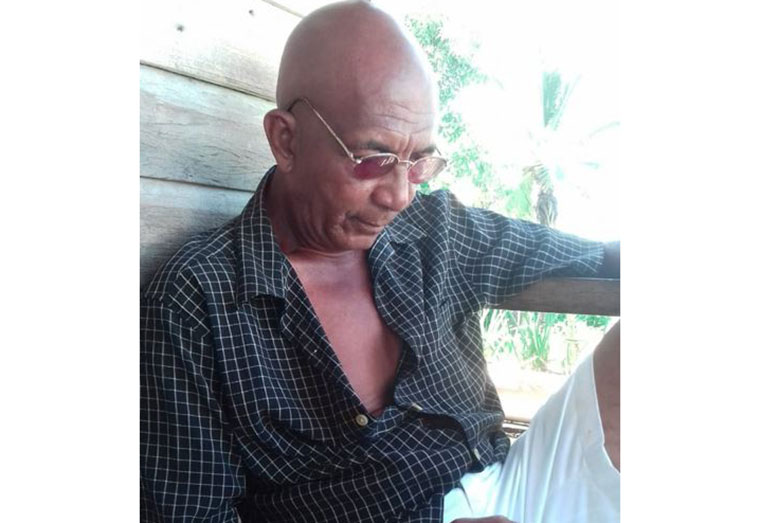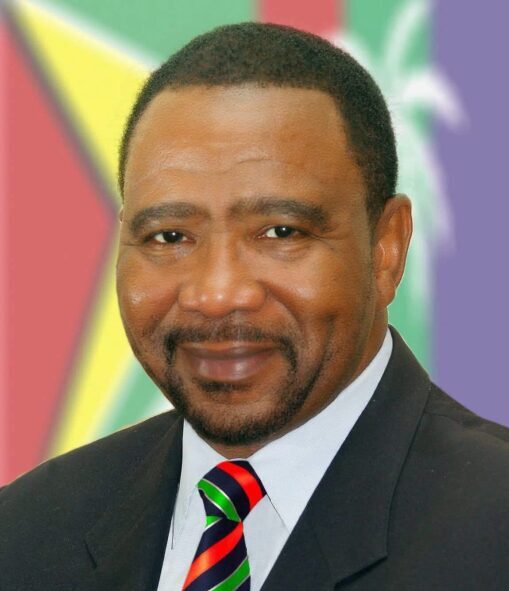
By Mark DaCosta- Former People’s National Congress Reform (PNCR) leader and longtime parliamentarian Robert Herman Orlando Corbin died on October 4, 2026, at the age of 78, bringing to an end a more than four-decade political career that saw him serve as a senior government official, Opposition Leader and one of the most prominent figures in the history of the PNC.
Corbin, who spent his final days at a hospital in Georgetown, leaves behind a political legacy spanning Guyana’s post-independence era and continuing through major shifts in the country’s political landscape.
Born on February 15, 1948, in Linden, Comrade Corbin emerged as one of the most significant political figures in our country’s post-independence history. His tenure in politics spanned over four decades, showcasing his commitment to service and leadership.
Corbin’s political journey began in earnest when he was elected to Parliament in 1973, marking the start of a distinguished career that saw him rise through the ranks of the PNCR, where he served as its leader from 2002 to 2012.
Corbin grew up in Linden, a focal point of Guyana’s bauxite mining industry, amid a vibrant working-class community. His early life was enriched by familial links to the arts, with his brother, Sol Raye, making a name for himself in performing arts.
This background instilled in Corbin a belief in the power of community and leadership, propelling him to engage in social development activities, particularly within the youth sector through the Presbyterian Church.
His academic pursuits at the University of Guyana and the Hugh Wooding Law School shaped him into a well-rounded individual ready to tackle the legal and political challenges of our time.
Corbin’s political awakening was influenced significantly by his mentorship under Linden Forbes Sampson Burnham, the founder of the People’s National Congress and our nation’s first executive president.
Swiftly ascending through various governmental roles under Burnham’s administration, he demonstrated administrative prowess, especially in crucial sectors like youth services and agriculture.
Following major political shifts in governance, he adeptly transitioned into opposition politics after the 1992 elections, where he continued to advocate for the principles of democratic governance.
As a member of the opposition, Corbin was known for his articulate debates and his ability to navigate the complex dynamics of Parliament. His leadership capabilities were recognised when he was elected Chairman of the PNCR in 2000, soon ascending to the role of party leader after the untimely passing of Desmond Hoyte in 2002.
During his leadership, he was renowned for fostering constructive dialogue with the government, allowing for cooperative discussions on pressing national issues despite fierce political rivalry.
Corbin’s era was marked by challenges within the parliamentary landscape of our nation. He focused on promoting a new ethos within the PNCR, moving away from a history of “maximum leadership” towards a more collaborative approach.
Under his guidance, the party engaged in significant reforms and coalition-building efforts that were crucial to the eventual establishment of the APNU coalition, which took power in 2015 after a long period of opposition.
Even as he prepared to step back from leadership in 2012, Corbin’s commitment to democratic processes was evident as he facilitated a smooth transition that allowed for new leadership to rise within the party.
His decision to retire after a full-term as opposition leader – without having sought the presidency – is a testament to his dedication to political integrity and his vision for a cohesive future for the PNCR and our country.
Beyond his political legacy, Corbin was an unwavering family man, admired not only for his formidable political acumen but also for his gentle spirit and dedication to his loved ones. He leaves behind his wife, Carol, and five children, along with countless friends and colleagues who will remember him fondly.
As we reflect on Corbin’s life, the PNCR has expressed profound sorrow at his passing, emphasising the irreplaceable void left behind. His contributions to our nation will be felt for generations, and as we navigate the complexities of our political landscape, his legacy of service, dedication, and integrity will continue to inspire future generations.