From Belize’s coral reefs and mangroves to Guyana’s vast rainforests and giant Amazon water lilies, an international environmental research initiative is highlighting how community knowledge, scientific discovery and storytelling can strengthen sustainable tourism across the Caribbean.
The Strong Coasts project participated in the Caribbean Tourism Organization’s State of the Tourism Industry Conference (SOTIC 2026), held in Guyana from October 5 to 9, bringing researchers and tourism practitioners together to explore connections between environmental conservation, cultural heritage and economic opportunities for local communities.
A central feature of the initiative was a presentation on October 6 by Dr. Maya Trotz, Professor of Civil and Environmental Engineering at the University of South Florida (USF), and Mariko Wallen, Secretary of the Placencia Tour Guide Association (PTGA). They presented Caye in a Day: Community-Designed Monitoring of Belize’s Cayes at the conference’s inaugural Research Forum.
Co-developed by the Strong Coasts project and PTGA, the initiative brings tour guides and researchers together to document Belize’s more than 400 cayes, or small, low-lying islands.
During one-day field visits, participants survey coral reefs, marine species, seagrass, mangroves and water depths while collecting oral histories that record local experiences and knowledge of the environment.
The programme is designed to help tour guides discover unfamiliar cayes, develop research skills and potentially engage visitors in environmental monitoring and education. It also demonstrates how tourism workers can contribute to scientific research while helping visitors better understand the ecosystems they explore.
Connecting Guyana’s natural heritage with tourism
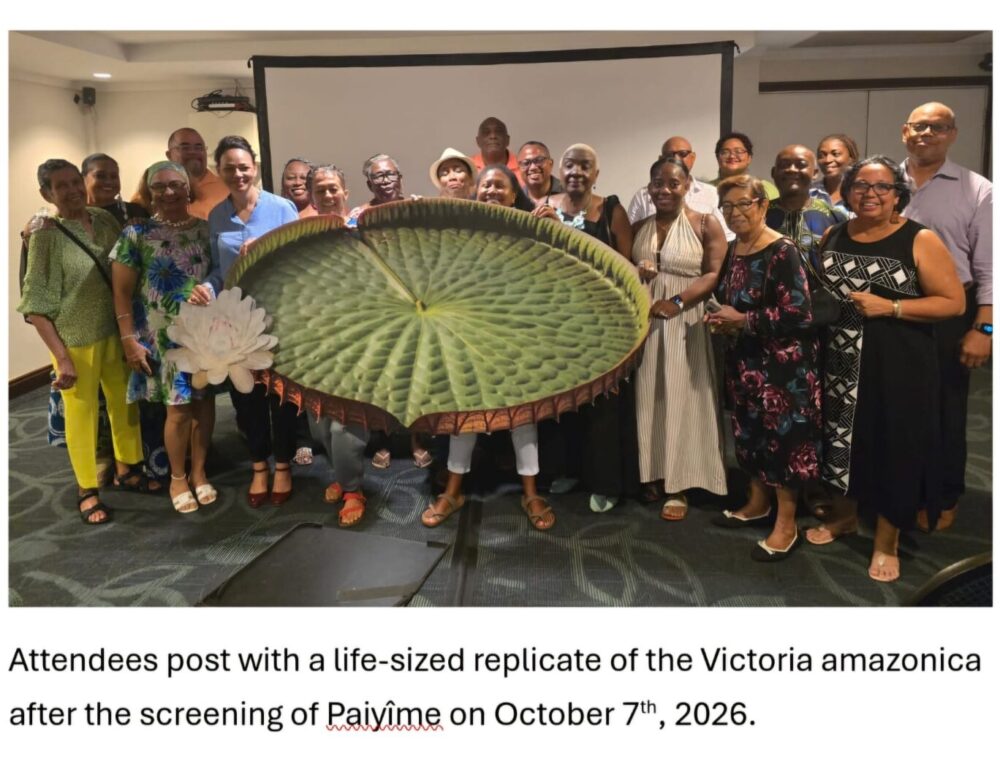
Strong Coasts also co-hosted a screening of Paimîye, a 45-minute documentary named after the Makushi word for Guyana’s national flower, the giant Amazon water lily (Victoria amazonica).
The film explores the plant’s ecological and cultural significance and demonstrates how storytelling can encourage interest in Guyana’s natural heritage and support nature-based tourism.
Melanie McTurk of Karanambu, one of the film’s storytellers, participated in a question-and-answer session following the screening, discussing subjects ranging from education and engineering to ways of connecting with Guyana’s diaspora.
Wallen, who has extensive experience as a marine tour guide and divemaster in Belize, praised the documentary’s potential to introduce Guyana’s natural attractions to wider audiences.
“The movie last night was just a beautiful story, and I think that story should be shared to the whole of Guyana and the world,” Wallen said. “I think people would come to Guyana just to see the Victoria amazonica, the Paimîye flower.”
Her visit also included a trip to Kaieteur Falls, where the sweeping rainforest landscape offered a perspective on Guyana’s natural wealth that she compared with Belize’s vast marine environment.
Flying over Guyana’s seemingly endless forests reminded her of Belize’s ocean, with both environments offering exceptional biodiversity and opportunities for discovery.
However, the visit also brought attention to environmental pressures. Wallen observed evidence of gold mining-related dredging in Guyana and drew comparisons with threats to Belize’s marine ecosystems from dredging associated with tourism development.
The comparison highlights a challenge facing destinations seeking to expand tourism while protecting the natural assets on which their appeal depends.
Tourism must benefit communities
Nigel Encalada, a graduate student in USF’s anthropology department, said examining tourism as an economic driver also provides an opportunity to consider whether cultural and tourism workers benefit in the ways governments intend.
“The Examination of tourism as a key economic driver in Caribbean countries is also an opportunity to examine how cultural and tourism workers benefit in the ways intended by their governments,” Encalada said.
His observation raises questions about how tourism revenue and opportunities are distributed, particularly among the guides, cultural workers and communities whose knowledge and environments help attract visitors.
For Dr. Trotz, the wider objective is to connect scientific research with community knowledge and environmental stewardship across the region.
“Tourism can go beyond visiting beautiful places to learning about, documenting, and helping manage them. We must create opportunities to connect the region’s blue and green economies through scientific discovery, community knowledge, and environmental stewardship. Most important is connecting the people working in these spaces,” she said.
The reference to blue and green economies reflects the opportunities associated with marine and coastal resources, forests and other natural ecosystems, while emphasising the importance of managing them responsibly.
Strong Coasts is supported by the US National Science Foundation and works with coastal communities in Belize, Florida and the US Virgin Islands to strengthen resilience through nature-based solutions developed in partnership with local people.
Its participation in SOTIC 2026 brought these ideas into a Guyanese setting, highlighting the potential for scientific collaboration, community storytelling and responsible tourism to help Caribbean destinations protect their natural heritage while creating meaningful opportunities for the people who depend on it.