Students at Corentyne Comprehensive High School in Region Six are reportedly being ordered to cut their hair and threatened with suspension, despite a Ministry of Education directive stating that students should not be denied access to education because of hairstyle breaches.
The allegations have raised questions about how the school is enforcing its appearance rules and whether disciplinary measures being threatened are consistent with national education policy.
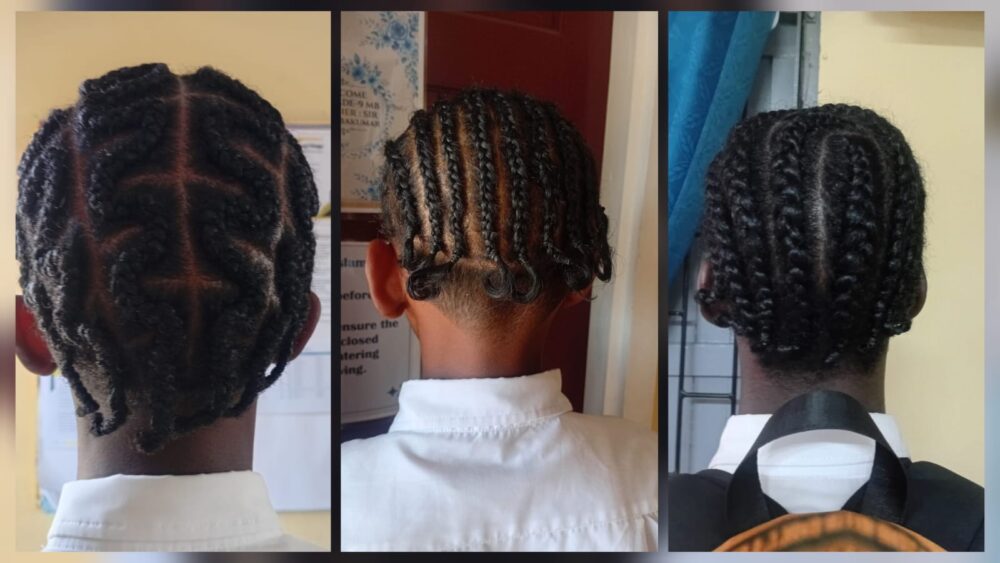
According to a complaint concerning the school, students identified as having hairstyles considered unacceptable have been instructed to cut their hair. Some students have reportedly attempted to comply by keeping their hair neat and having it braided or plaited.
In one case, a male student was reportedly told by a teacher that he had to cut his hair or have it plaited. His mother subsequently plaited the student’s hair, but he was reportedly later told that he still had to cut it.
Students are also reportedly being told that refusing to cut their hair could result in a three-day suspension. According to the complaint, they have further been warned that returning from suspension without cutting their hair could lead to another suspension and, eventually, transfer to another school.
There are also allegations that teachers who encourage students to maintain their hair are being threatened with disciplinary action.
The claims have not been independently verified, and the school has not publicly responded to the allegations.
However, the reported threats raise questions because the Ministry of Education has previously issued explicit guidance on hairstyle-related discipline.
In February 2025, then Education Minister Priya Manickchand reaffirmed the Ministry’s position, stating:
“Children should not be sent home and/or denied an education because of any perceived or actual hairstyle breach of rule.”
The Ministry said a 2023 memorandum instructed schools not to send students home over hairstyle breaches and directed that parents or guardians instead be invited to discuss the issue with the school.
The Ministry has also stated that schools may establish their own rules regarding appearance and attire. However, its guidance requires school rules and codes of conduct to be enforced consistently and impartially.
That creates a significant distinction.
A school may have a hairstyle rule, but a hairstyle dispute should not become a reason to keep a child out of the classroom.
The Ministry’s position is particularly relevant given the educational consequences of suspension. Removing students from classes means lost instructional time and can create additional academic difficulties.
The Ministry has previously said that the priority must be keeping students in school and receiving an education. Manickchand also warned in 2023 that persons who sent children home because of their hairstyles could face disciplinary action.
The complaint therefore raises several questions for the school and education authorities.
What specific hairstyle rule is being enforced? When was it established? Does it permit suspension for non-compliance? And, more importantly, are the reported disciplinary measures consistent with the Ministry’s directive that students must not be denied education because of hairstyle breaches?
The Ministry’s published disciplinary guidelines recognise the authority of schools to maintain order, but they also state that disciplinary action should consider factors including the learner’s age, the nature and frequency of the alleged offence, the learner’s attitude and the potential effect on the school environment.
The issue, therefore, is not whether schools should have rules. It is whether those rules are being enforced in a manner consistent with the Ministry’s own policy and the educational interests of the students.
The hairstyle situation warrants clarification from Corentyne Comprehensive High School and the Region Six education authorities. A hairstyle may be subject to a school rule. But under the Ministry’s stated policy, it should not become a barrier to a child’s education.