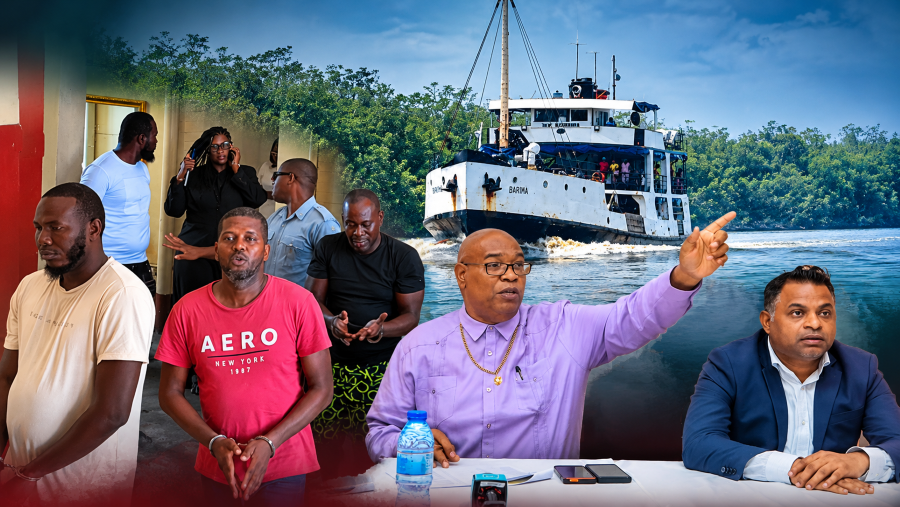
Social commentator and columnist GHK Lall is challenging the murder charges brought against three crew members of the MV Barima, arguing that the prosecution must not become a substitute for a wider examination of the government officials, agencies and decisions responsible for the vessel’s operation and oversight.
In a sharply worded column, Lall questioned why Captain Kevin Price, Chief Mate Rondell Roberts and Goods Superintendent Deleon Granderson are facing murder charges following the July 18 disaster while, in his view, those higher up the chain of responsibility remain untouched.
“Why charge these three, while the real murderers self-immunize?”
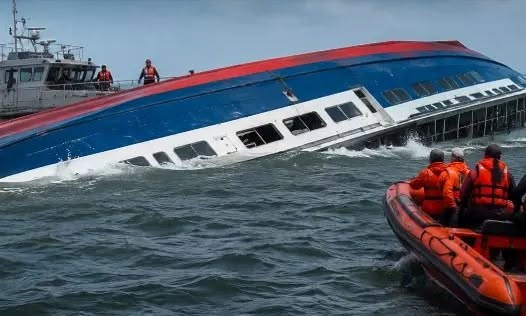
The Barima sank while travelling from Georgetown to Port Kaituma. Government figures presented to the National Assembly established that 179 passengers and crew were eventually accounted for, 76 survived, 73 bodies were recovered and 30 people remained unaccounted for.
The three accused remain before the courts and are presumed innocent unless proven guilty.
Lall argues that the circumstances surrounding the vessel should be examined before responsibility is placed exclusively on the crew.
“Give three men a boat without a bottom, then charge them. Give them only a paddle, then hold them responsible.”
His argument goes directly to questions now before the Commission of Inquiry, which has been mandated to determine the immediate, contributing and systemic causes of the disaster, assess compliance with maritime and safety requirements, identify shortcomings or failures and recommend accountability where warranted.
The Commission has already begun examining documentation concerning the Barima’s seaworthiness and the conditions under which it sailed, while obtaining records from agencies including the Maritime Administration Department, the Transport and Harbours Division and the Guyana Coast Guard.
Lall contends that those questions cannot be separated from political and institutional responsibility.
“When men are charged for murder due to their being on duty on a boat with anemic engines, porous floors, paper walls, and probably heavy overload, those charges conceal the real murderers in government offices.”
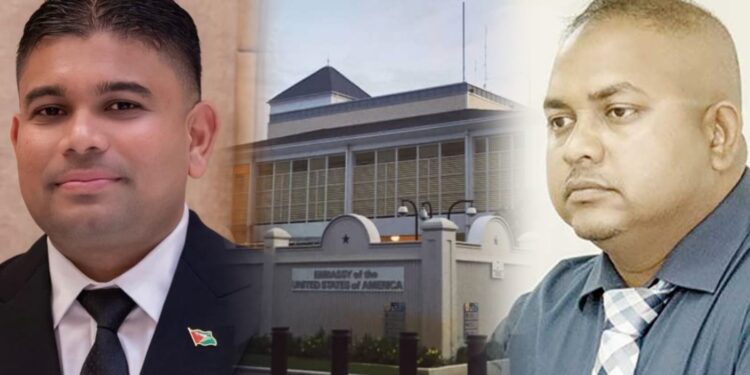
Protests Target Edghill and Indar
Lall’s criticism comes as families of victims, civil society activists and opposition politicians have staged several protests demanding accountability and calling for Public Works Minister Juan Edghill and Minister of Public Utilities and Aviation Deodat Indar to leave office.
Those demands first became prominent during protests surrounding the July 27 sitting of the National Assembly, when opposition parliamentarians repeatedly called for the resignations of the two ministers over the sinking.
The demonstrations have continued in the months since the tragedy.
On September 22, grieving relatives, civil society members and opposition politicians protested outside the Public Works Ministry, demanding the resignations of Edghill and Indar, the recovery of the sunken vessel and greater transparency surrounding the disaster.
The reasons cited by protesters centre on ministerial responsibility, the condition and maintenance of the state-owned vessel, maritime oversight and the government’s handling of the recovery operation.
Edghill has rejected claims that the Barima was known to be unseaworthy, saying after the disaster that there had been no report declaring the vessel unseaworthy and that it had been scheduled for dry docking in 2026.
The Commission is now tasked with determining whether there were failures in maintenance, seaworthiness, regulatory compliance, loading, passenger management, crew operations or institutional oversight. Its terms of reference specifically allow it to examine whether negligence, misconduct, dereliction of duty or institutional failures contributed to the disaster.
“Charge the Right Ones”
Lall argues that the criminal case against the three crew members must not obscure those wider questions.
“There’s a law for the poor, unconnected and uncoddled. There’s another law for those who are a law onto themselves.”
He accuses the government of using the crew as scapegoats and argues that accountability must reach beyond the people who were physically aboard the vessel when it went down.
Those are Lall’s allegations and political characterisations, not findings established by a court or the Commission of Inquiry.
The Commission has invited victims’ families, survivors and other persons with relevant information to seek standing in the proceedings, potentially giving those directly affected an opportunity to participate in the examination of what happened.
For families still waiting for answers and the recovery of loved ones, the question remains whether the eventual reckoning will stop with the three men facing criminal charges or extend throughout the chain of responsibility.
Lall’s challenge is blunt:
“The right ones rise high. Charge them, damnit!”