When Bharrat Jagdeo became President of Guyana in August 1999, the State controlled a substantial portfolio of companies, land, factories, shares and other commercial assets accumulated over decades.
By the end of his presidency in December 2011, many of those assets had been sold, leased, restructured or otherwise transferred to private interests.
The transactions formed part of Guyana’s broader privatisation programme, which began before Jagdeo took office. The Privatisation Policy Framework was established in the 1990s, and the Privatisation Unit was tasked with implementing the programme, negotiating sales and making recommendations to Cabinet.
But the scale and beneficiaries of the transactions during the Jagdeo years raise a question that remains relevant today:
Did privatisation modernise Guyana’s economy—or did it facilitate a major transfer of publicly accumulated wealth into the hands of a relatively small number of private interests?
The question becomes sharper when individual transactions are examined.
NICIL: The Gateway to State Assets
The National Industrial and Commercial Investments Limited (NICIL) became the principal vehicle through which numerous State assets were managed and disposed of.
NICIL’s own Privatisation in Tables: Phase II (1993–2011) records 159 transactions handled by the Privatisation Unit, comprising share and trade sales, real-estate sales, leases and restructuring transactions. The document records 67 real-estate sales and 34 real-estate leases among the transactions.
Separately, a forensic audit found that NICIL disposed of 65 State assets and properties between 1995 and 2011.
NICIL’s records show gross proceeds from privatisation-related transactions between 1994 and 2011 exceeding G$25.5 billion.
The issue, therefore, is not simply whether the State had authority to privatise.
It is who acquired the assets, what they paid, how the prices were established, whether competitive bidding occurred and whether the terms approved by government were followed.
The Sanata Textiles Deal
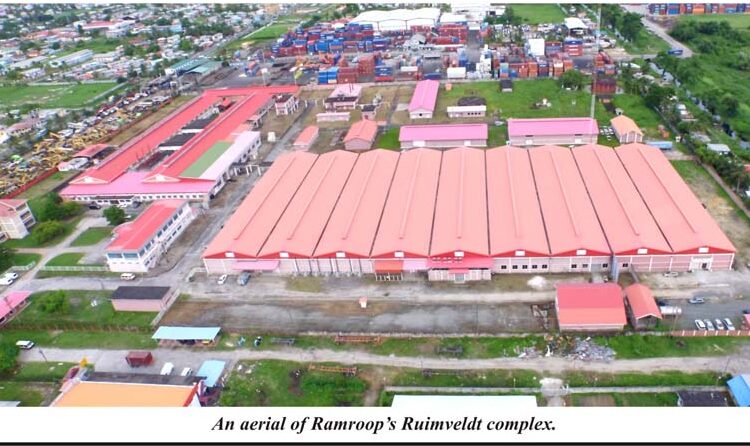
Few transactions have generated as much controversy as the sale of the former Sanata Textiles complex at Ruimveldt.
In November 2010, NICIL sold approximately 18.9 acres of land, buildings and other structures at the former Sanata complex to Queens Atlantic Investments Inc. (QAII), associated with businessman Ranjisinghi “Bobby” Ramroop, for approximately G$689 million.
NICIL’s records said the property had previously been advertised without receiving proposals and that QAII subsequently presented an investment proposal involving development of the compound.
The transaction later came under scrutiny.
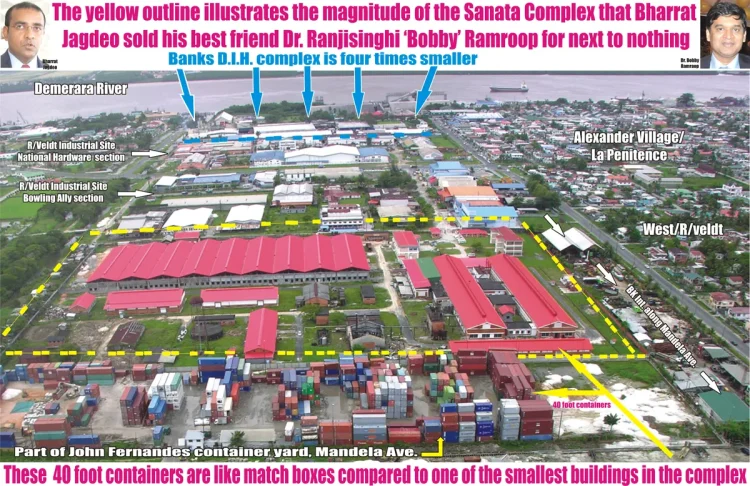
SARA filed civil recovery proceedings seeking approximately G$2.7 billion from QAII, alleging that the State had suffered a loss in connection with the acquisition of the property.
Those were allegations in civil proceedings, not a judicial finding that Ramroop corruptly acquired the property. That distinction is important.
Nevertheless, the Sanata transaction became one of the clearest examples of the controversy surrounding the disposition of State assets.
Guyana Pharmaceutical Corporation
Another major transaction involved the Guyana Pharmaceutical Corporation.
The State’s interest in GPC was progressively transferred to Queens Atlantic Investments, leaving the government with a minority holding. NICIL’s privatisation records document the transaction as part of the broader restructuring and sale of State interests in the company.
Again, the broader question is not whether private ownership of a pharmaceutical company was inherently improper.
It is whether the State received fair value and whether the process was sufficiently transparent and competitive.
The Liliendaal Land Deals
The disposal of State land provides another window into the privatisation process.
In March 2010, 103.88 acres of GuySuCo land at Liliendaal were transferred to NICIL. The property was subsequently sold to National Hardware Guyana Ltd. for approximately G$510 million, according to NICIL’s privatisation records.
Another 4.7-acre parcel at Plantation RU, Liliendaal, was sold to Scady Business Corporation for approximately G$115 million.
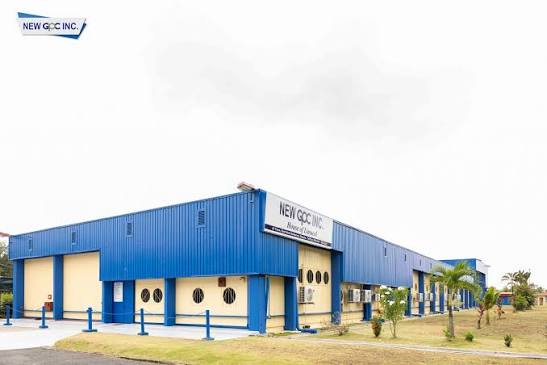
The timing became a major issue in the forensic audit. The property was sold only two days after being transferred from the Government to NICIL, prompting questions about the process and whether the purchaser had effectively been identified before the property entered NICIL’s ownership.
NICIL defended aspects of the transactions, arguing in some cases that properties could be sold without public tender where, among other considerations, market value was obtained or substantial investment was anticipated.
Turkeyen, Duke Street and Beyond
Other State properties went to established private businesses.
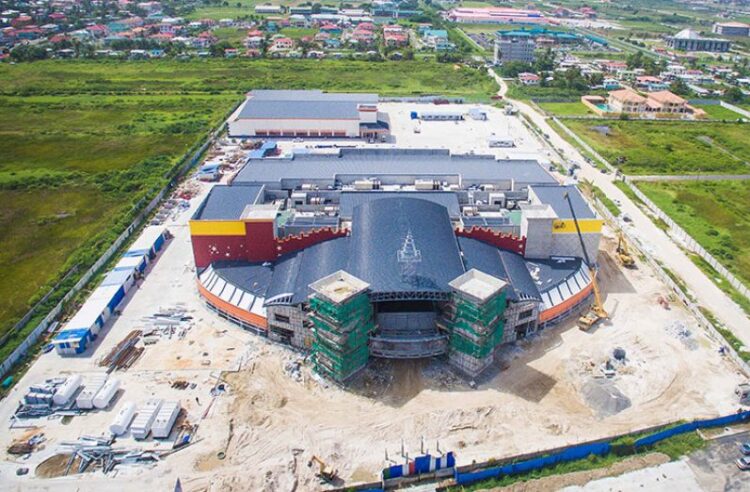
NICIL records show, for example, the sale of approximately 10 acres at Turkeyen to Multicinemas Guyana Inc. for about G$159 million, while properties on Duke Street, Kingston, were sold to Roraima Airways Inc. for tens of millions of dollars.
The transactions cannot automatically be characterised as improper merely because private companies acquired State assets.
But taken collectively, they demonstrate the enormous scale of the transfer of publicly controlled property into private ownership.
The Forensic Audit Questions
The subsequent forensic examination raised serious questions about NICIL’s processes.
The audit noted that, among 65 properties disposed of between 1995 and 2011, the sale proceeds and recorded valuations were remarkably similar in numerous cases. In 30 transactions, the valuation and sale price were identical, while in another 22 the difference was only about G$2 million. The auditor said this raised doubts about whether genuine independent valuations had been conducted.
The audit also questioned NICIL’s legal basis for transferring some assets to third parties and highlighted cases where properties were disposed of on the same day or within days of being vested in NICIL.
These findings do not establish that every transaction was corrupt. They do, however, demonstrate why the privatisation programme warrants scrutiny beyond the simple question of whether assets were legally sold.
Jagdeo’s Political Responsibility
The transactions happened under the leadership of President Bharrat Jagdeo, whose administration oversaw the continuation and implementation of the State’s privatisation programme.
NICIL and the Privatisation Unit administered the sales and other disposals, with officials such as Winston Brassington playing central roles in carrying out the transactions. However, the programme operated under the policy and political authority of the Jagdeo administration, making the role of his government and Cabinet central to any examination of how State assets were disposed of.
The key questions are therefore who approved the transactions, how the prices were determined, whether competitive processes were followed, and whether the public received fair value for the assets transferred into private hands.
- Who approved the sales?
- How were prices established?
- Were independent valuations obtained?
- Why were some properties sold without competitive bidding?
- Were investment commitments enforced?
- And did politically connected purchasers receive any advantage in the process?
Those questions become particularly important where large public assets were transferred to companies or individuals with established relationships within the political and business establishment.
Who Won the Privatisation Era?
Privatisation itself was not necessarily misguided. Guyana had already begun moving away from a predominantly State-controlled economy toward a mixed economy under the structural adjustment programme initiated by President Desmond Hoyte, which the People’s Progressive Party/Civic (PPP/C) government inherited when it took office in October 1992. That programme included economic liberalisation, restructuring and privatisation of State-owned enterprises, and a greater role for private capital and market forces.
By the time Bharrat Jagdeo became President in 1999, Guyana was already firmly on that economic path. Many State-owned enterprises were also facing serious challenges, including global economic pressures, declining performance and the loss of skilled personnel. There was therefore an economic rationale for restructuring some enterprises and bringing in private capital and management.
But under Jagdeo’s leadership, the disposal of State assets raises a far more troubling question than whether privatisation was, in principle, a legitimate economic policy. The issue is whether the process by which valuable public assets were transferred into private hands protected the national interest, secured fair value for the State and provided sufficient transparency and accountability.
Guyana did not merely dispose of struggling factories. It transferred land, buildings, companies, shares and valuable commercial properties accumulated through decades of public investment into private ownership. Once transferred, those assets ceased to be publicly controlled wealth and became private assets capable of generating wealth for their new owners.
Even where a transaction may have complied with the law, that does not automatically make it fair, transparent, properly valued or free from political influence. A sale can be legally structured and still raise serious questions about the price paid, the process used, the beneficiaries, the availability of competing bids and whether the public received a fair return.
That is the harder question surrounding the Jagdeo-era privatisation programme: who benefited from the transfer of Guyana’s public wealth, how were those beneficiaries selected, what did they pay, and did the State receive the value it should have received?