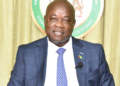
Educator, Founder and Executive Director of STEMGuyana and Partway Online Academy, Dr. Karen Abrams, is urging government, schools, businesses and communities to share responsibility for helping struggling students, warning that financial hardship and demanding work schedules are leaving some children without the academic supervision they need after school.
Her appeal echoes the African proverb, “It takes a village to raise a child,” emphasising that children’s educational success requires collective action, particularly when families struggle to provide consistent support at home.
In an opinion article published on October 11, 2026, titled “When parents cannot provide the academic supervision for a child, who becomes the surrogate parent?”, Abrams said an attendance problem at one of the educational programmes prompted her to investigate why children who needed academic assistance were failing to attend regularly.
Conversations with teachers, parents and students revealed that many families were struggling to meet basic needs, leaving parents with little time or energy to supervise homework, monitor online lessons or ensure their children attended after-school programmes.
“Many of these parents were struggling simply to put food on the table,” Abrams wrote.
She explained that some parents work long hours or overnight shifts, while others juggle bills, meals and other household responsibilities.
“When a parent is worrying about tomorrow’s breakfast, whether the electricity will be disconnected, or how to find transportation money for work, academic supervision can become another responsibility for which there is simply no time or energy,” she wrote.
A village of support
Abrams’ proposal draws on the principle that children’s development should not depend solely on their parents’ availability, particularly when economic circumstances make consistent supervision difficult.
She suggested that retired teachers supervise small groups after school, churches and community centres provide safe spaces for homework, and older students mentor younger pupils. Businesses and corporate sponsors could contribute funding, equipment, internet access and academic support.
Such initiatives would supplement parental care rather than replace it, ensuring that children have access to responsible adults who can encourage learning, reinforce classroom instruction and help them develop good study habits.
The approach is particularly important for students who fall behind in foundational subjects but whose families cannot afford private tutoring.
Learning gaps threaten future opportunities
Abrams warned that children who fail to master basic skills may struggle as lessons become more advanced. Teachers, working within limited classroom time, must accommodate pupils with different levels of understanding, and some children move forward without fully grasping earlier concepts.
These learning gaps can become apparent in Grade Two, Four and Six assessments, Caribbean Secondary Education Certificate (CSEC) examinations and, eventually, the qualifications young people need to pursue further education or secure better employment.
“Some children are building on solid foundations. Others are building on sinking sand,” she wrote.
Citing research from the Education Endowment Foundation, Abrams noted that one-to-one tuition produces an average of five additional months of academic progress, while small-group instruction produces approximately four months.
However, children who could benefit most from additional lessons are often those whose families can least afford them.
While technology can provide personalised instruction and help identify learning weaknesses, Abrams cautioned that access to computers and online platforms is insufficient when children are hungry, emotionally distressed or left unsupervised.
We can provide computers, internet access, lessons, and learning platforms. We can train teachers, recruit coaches, and develop excellent curricula. But if a child is hungry, exhausted, emotionally distressed, or left unsupervised for much of the afternoon, access to technology alone may accomplish very little.
She stressed that community programmes must be supported by broader efforts to address poverty, food insecurity and the pressures facing working families. After-school initiatives cannot fully compensate for households struggling to meet basic needs.
Connecting economic growth to educational opportunity
Abrams also linked the issue to Guyana’s expanding oil economy, warning that the opportunities created by economic growth, technology and foreign investment could remain beyond the reach of children who leave school without essential skills.
She called for coordinated action involving government, schools, families, businesses and civil society to strengthen the support system surrounding vulnerable learners.
“Government, schools, businesses, community organisations, parents, and volunteers all have roles to play,” she wrote.
Reflecting on her investigation, Abrams said poor attendance could conceal the difficult circumstances families face.
I came away reminded that behind an absent child may be an exhausted mother, a father working through the night, or a household struggling to survive.
She cautioned against placing the entire burden on parents, some of whom are already doing everything possible under difficult circumstances.
“We cannot solve every educational problem by demanding that parents do more. Some are already doing everything they can,” she wrote.
Her appeal reinforces the principle that a child’s education is a shared responsibility. By providing safe study spaces, mentoring and additional academic instruction, communities can help ensure that children are not deprived of opportunities simply because their parents are working to keep their households afloat.
As Guyana’s economy expands, Abrams’ message is that investment in the nation’s future must also include the children who need additional support to benefit from that growth.
She concluded:
“A child’s future may be decided after school, but that child should not have to face those hours alone.”