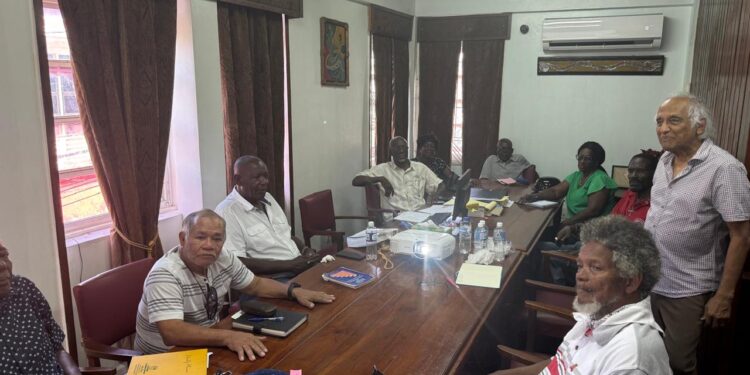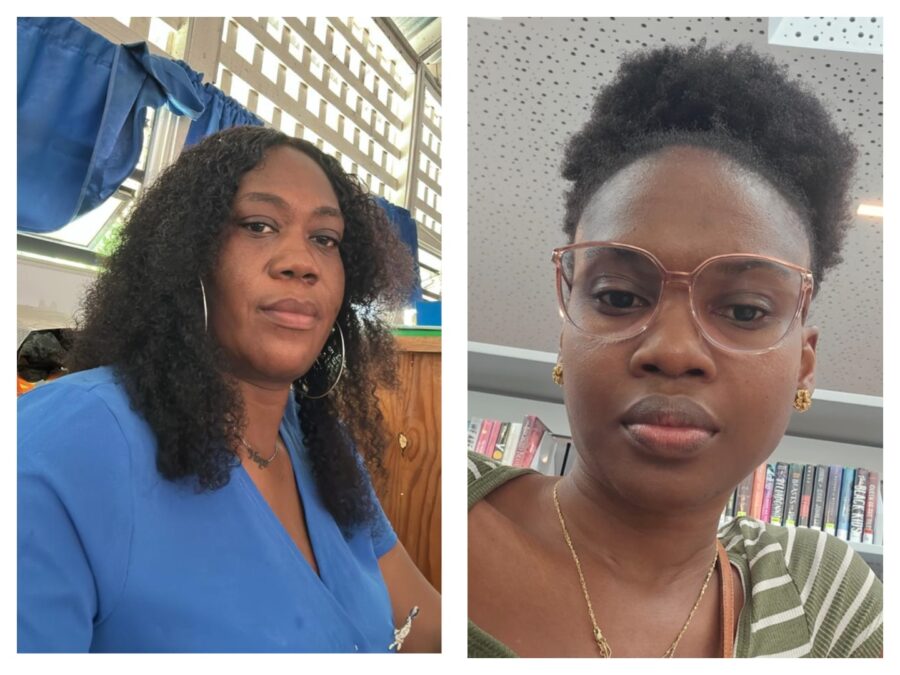
A call for Buxtonians to revive the spirit of unity, collective responsibility and community pride that transformed the village after Emancipation dominated last weekend’s Black Is Beautiful Pre-Emancipation Cultural Evening, according to a statement issued on August 3.
The annual event celebrated Buxton’s rich heritage while challenging residents to work together to restore the historic community to its former prominence.
Among the evening’s featured speakers was young entrepreneur Saudia Edgehill, who urged residents to shift from individual interests to a shared vision for the community.
“We’ve got to stop thinking about me, me, me and start thinking about we, we, we,” Edgehill told the audience. “Our ancestors struggled so much and achieved so much with so little. Today we have far more available to us, yet we are not doing what we are capable of doing.”
Her remarks drew sustained applause as she reflected on Buxton’s proud history and contrasted it with the village’s current condition.
“Buxton is depressing right now,” she said, recalling that after walking throughout the village for several years she found herself asking, “Where is the difference? Why does the Buxton I remember growing up seem better than what I see today?”
Despite those concerns, Edgehill expressed confidence that Buxton could once again become a model village if residents embraced the same spirit of cooperation demonstrated by the formerly enslaved Africans who purchased and developed the community after Emancipation.
“They were able to build hundreds of houses and establish a thriving community with far fewer resources than we have today,” she said. “If they could achieve so much together, imagine what we can accomplish if we unite with a common purpose.”
Founded in 1840 by formerly enslaved Africans who pooled their resources to purchase the former plantations Buxton and Friendship, Buxton became one of Guyana’s earliest village communities established through collective ownership and remains an enduring symbol of African-Guyanese self-determination, enterprise and community organisation.
Edgehill also encouraged older residents to revive the tradition of passing the village’s history to younger generations through storytelling and community engagement.
“We have to get back to the storytelling,” she said. “Our children need to know where they came from because that history gives them a sense of responsibility for where they are going.”
The message of shared responsibility was echoed throughout the evening.
Community activist Kidackie Amsterdam encouraged residents to strengthen Buxton’s economy by supporting locally owned businesses rather than spending outside the community.
“When you spend your money outside Buxton, you’re helping to build another community,” the audience was told. “When you support your own businesses, you help keep their doors open, create opportunities for others and strengthen Buxton itself.”
Educator Bonita Hope paid tribute to teachers, cultural workers, community activists and other residents who have devoted decades of service to the village, stressing the importance of recognising their contributions while they are still alive.
Organised by the First of August Movement, the annual Black Is Beautiful celebration featured music, steel pan performances, poetry, spoken word presentations, youth recognition and reflections on Buxton’s history as one of the villages purchased by formerly enslaved Africans following Emancipation.
While celebrating Buxton’s cultural legacy, speakers repeatedly stressed that preserving that heritage will require renewed commitment from today’s generation.
As the programme concluded, Edgehill left residents with a simple challenge.
“If you claim to love Buxton, then make Buxton beautiful.”
The cultural evening was hosted by Buxton Secondary School teacher Bonita Hope and Kidackie Amsterdam of KAMS TV on YouTube and Facebook.
Edgehill is a member of Buxton’s Toucan II Multi-purpose Club and founder of BUX’N SWAPS, a social enterprise dedicated to strengthening Guyanese pride by offering Guyana-inspired souvenirs and encouraging conversations about the country’s history and culture through TikTok, Instagram and Facebook.