The Government is facing mounting criticism over its handling of the MV Barima disaster after Prime Minister Brigadier (Ret’d) Mark Phillips disclosed that there are no plans to raise the state-owned ferry from the seabed, a position that has deepened the anguish of grieving families and reignited questions about whether authorities have exhausted every possible option to recover those still missing.
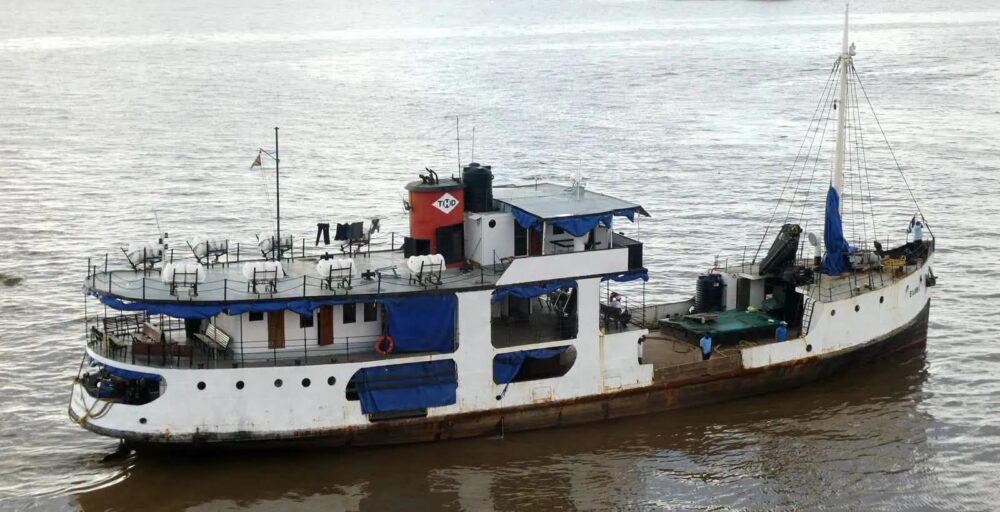
The announcement comes less than two weeks after one of Guyana’s deadliest maritime disasters, in which the Transport and Harbours Department vessel capsized on the night of July 18 while sailing from Georgetown to Port Kaituma with reportedly 116 passengers and 17 crew members on board. The number has since climbed to 180 persons on the vessel.
Government verification exercises have confirmed that 76 people survived the tragedy. Fifty-three bodies have since been recovered, while several passengers remain unaccounted for, leaving relatives clinging to hope that the wreck itself may still hold the answers—and perhaps the remains—of their loved ones.
Instead, the Government now appears prepared to leave the vessel where it lies off Iron Punt on the Essequibo coast.
Speaking with reporters following Monday’s sitting of the National Assembly, Prime Minister Phillips said the Government has not contacted anyone to undertake a salvage operation and suggested that the wreck would likely remain on the seabed indefinitely.
“In terms of the actual raising of the vessel, I don’t think we’ve contacted anybody to raise the vessel. If you listen to the interview with the French, the whole issue of raising the vessel is not being forwarded at this stage because it’s difficult to do that exercise now. The vessel is likely to remain there as is.”
His comments have outraged relatives who continue to plead for every reasonable effort to be made to recover the vessel and any victims who may still be trapped inside.
The Prime Minister’s statement also comes amid intense public scrutiny of the Government’s overall handling of the disaster. Today, three employees of the Transport and Harbours Department—the captain, an engineer and the vessel’s bosun—were charged with murder following legal advice from the Director of Public Prosecutions. They were not required to plead and were remanded to prison. The unprecedented charges have drawn widespread criticism from legal experts, trade unions and sections of civil society, who argue that the criminal prosecution of crew members risks diverting attention from broader questions about systemic failures, vessel maintenance, seaworthiness, regulatory oversight and occupational safety.
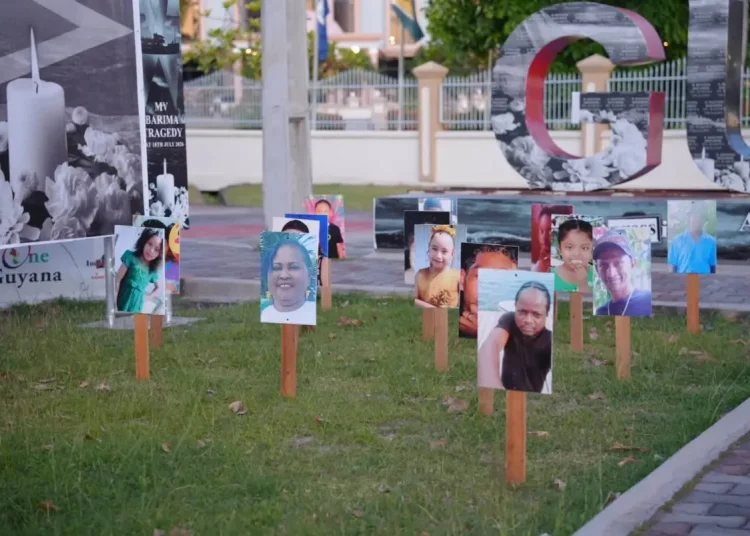
Compounding those concerns, Phillips’ declaration that the wreck will likely remain on the ocean floor has only intensified calls for an independent and comprehensive investigation into every aspect of the tragedy.
French military divers assisting the recovery effort previously explained to anxious relatives gathered at the Charity Operations Centre that entering the overturned vessel had become extraordinarily dangerous because of zero underwater visibility, strong currents and numerous entanglement hazards inside the wreck.
“It is too dangerous for us to enter into the wreck, and because of the many ropes and the hammocks, it’s very difficult to see where we are going,” one of the divers said.
While the French team’s assessment explains the dangers confronting divers, it has not settled the question of whether the vessel itself can be raised.
In a letter to the editor, forestry expert and environmental scientist Dr. Janet Bulkan argued that recovering the remaining victims requires moving—and preferably lifting—the vessel.
“To retrieve the drowned passengers the wreck has to be moved, and preferably raised,” she wrote.
Bulkan pointed to what she described as an immediate opportunity available to the Government.
She noted that the Normand Installer, a specialised offshore subsea construction and recovery vessel, is in Trinidad, heading to Guyanese waters under contract to assist with mooring anchor installation for SBM Offshore’s One Guyana Floating Production Storage and Offloading (FPSO) vessel.
Quoting Trinidad and Tobago’s Maritime Administration Notice to Mariners No. 123 dated July 17, Bulkan said the vessel would be operating only 101 nautical miles offshore Guyana and urged the Government to “immediately requisition this vessel.”
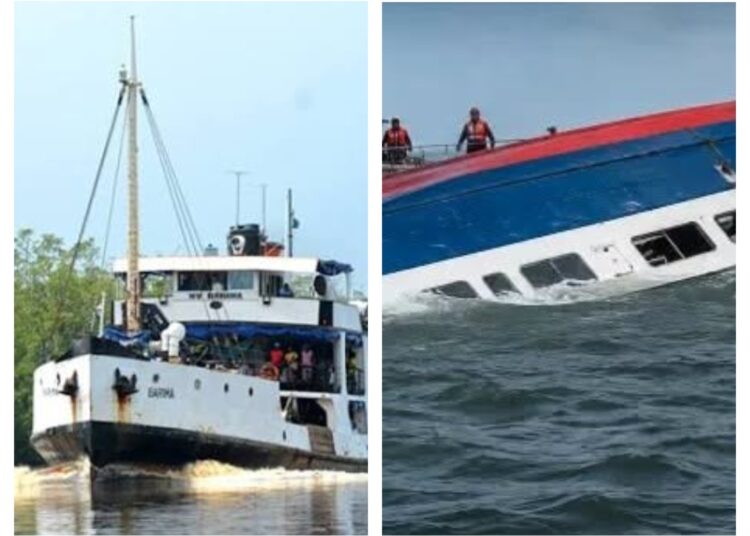
The Normand Installer is specifically designed for deepwater subsea construction and recovery operations. The 124-metre vessel is equipped with a 250-tonne active heave-compensated offshore crane, a 250-tonne stern A-frame, a 500-tonne winch, dynamic positioning technology that allows it to maintain an exact position over underwater structures, a moonpool for deploying subsea equipment and work-class remotely operated vehicles capable of inspecting and rigging underwater wrecks.
According to published marine capability assessments, the vessel routinely installs and retrieves offshore infrastructure substantially larger and heavier than the MV Barima. Maritime specialists have noted that although the ferry was carrying cargo when it sank, it remains significantly smaller than the offshore structures the Normand Installer was built to handle, making its use as a salvage platform technically feasible, subject to engineering assessments of the wreck’s structural condition and lifting requirements.
Bulkan’s position has since been echoed by others who argue that the Government has prematurely abandoned the possibility of recovering the vessel without publicly demonstrating that every available salvage option was explored.
To date, the Government has not disclosed whether it sought independent salvage assessments or formally approached companies operating specialized heavy-lift vessels in or near Guyanese waters before concluding that raising the MV Barima was not being pursued.
For many people, particularly the victims’ relatives, the issue extends beyond recovering a vessel. It is about recovering loved ones, establishing the full truth about what happened on the night of July 18, and ensuring accountability reaches every level where failures may have occurred.
With the Government now signalling that the MV Barima is “likely to remain there as is,” families fear the wreck could become not only the final resting place of those still missing, but also a permanent symbol of unanswered questions, unfinished recovery efforts and a national tragedy many believe deserved a far more determined response.