As pressure mounts on the Government over its handling of the MV Barima disaster, calls are growing for President Irfaan Ali’s administration to immediately secure the services of a specialised offshore construction vessel capable of raising the sunken ferry from the seabed and recovering the bodies of passengers still believed to be trapped inside.
The appeal comes amid concerns that the Government is preparing to abandon any effort to salvage the wreck, despite repeated pleas from grieving families who say raising the vessel is the only realistic way to recover their loved ones and uncover what caused one of Guyana’s deadliest maritime disasters.
The capsizing of the 87-year-old passenger and cargo ferry MV Barima off Guyana’s northwest coast on July 18, 2026, resulted in at least 73 recovered bodies and 76 verified survivors. Official estimates indicate that approximately 179 people were on board when the vessel went down while sailing from Georgetown to Port Kaituma, leaving a number of passengers still unaccounted for.
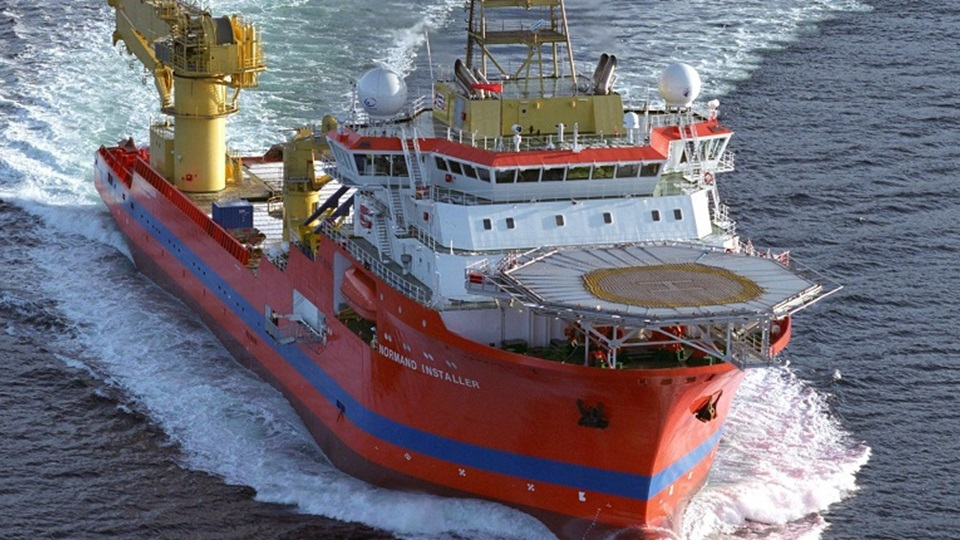
Among those leading the call for the vessel to be raised is forestry expert Dr. Janet Bulkan, who has urged President Ali, Prime Minister Brigadier (Ret’d) Mark Phillips and Minister of Public Works Juan Edghill to requisition the Normand Installer, a heavy-lift offshore subsea construction vessel currently operating in the Trinidad and Tobago Exclusive Economic Zone.
In a public letter, Dr. Bulkan argued that moving—and preferably lifting—the vessel is essential if the remaining victims are to be recovered.
“To retrieve the drowned passengers the wreck has to be moved, and preferably raised,” she wrote.
She noted that the Normand Installer was, as of July 25, in Chaguaramas, Trinidad, en route to Guyanese waters to assist in installing mooring anchors for the One Guyana Floating Production Storage and Offloading (FPSO) vessel under contract to SBM Offshore.
Quoting Trinidad and Tobago’s Maritime Administration (MARAD) Notice to Mariners No. 123 of July 17, Dr. Bulkan pointed out that the vessel would be operating just 101 nautical miles offshore Guyana.
She appealed to the country’s leaders “to immediately requisition this vessel.”
The Normand Installer is not an ordinary offshore support ship. Built in 2006 specifically for deepwater subsea construction and recovery operations, the 124-metre vessel is equipped with a 250-tonne active heave-compensated offshore crane, a 250-tonne stern A-frame, a 500-tonne winch, dynamic positioning technology that allows it to maintain its exact position above underwater structures, a moonpool for deploying subsea equipment and work-class remotely operated vehicles (ROVs) capable of inspecting and rigging wrecks on the seabed.
Marine capability assessments indicate that the vessel routinely installs and recovers offshore infrastructure substantially larger and heavier than the MV Barima, a coastal passenger and cargo ferry.
Although the Barima was reportedly carrying cargo when it sank, maritime specialists note that it remains considerably smaller than the offshore structures the Normand Installer was designed to handle, making it technically feasible for the vessel to serve as the primary salvage platform, subject to engineering assessments of the wreck’s condition, structural integrity and lifting requirements.
The renewed calls come as French military divers have described the underwater conditions at the wreck site as so hazardous that entering the vessel has become almost impossible.
Speaking to anxious relatives during a briefing at the Charity Operations Centre on Sunday, a French military officer said his team has conducted approximately 15 dives since arriving in Guyana, but the operation has been hampered by complete darkness, powerful currents and dangerous entanglement hazards.
“It is totally dark there. There are very, very hard environmental conditions, especially because of the tide and the current on the wreck,” the officer explained.
“So, it is very difficult for us to navigate through the wreck. We have to feel the wreck, and it’s like we are blind.”
The officer said divers are forced to navigate entirely by touch while following guide ropes along the vessel’s structure.
“We follow the rope, arrive on the wreck and try to navigate by searching the characteristics of the wreck,” he said.
He added that ropes, hammocks and other debris inside the capsized vessel have made penetrating the wreck too dangerous.
“It is too dangerous for us to enter into the wreck, and because of the many ropes and the hammocks, it’s very difficult to see where we are going.”
The comments have strengthened arguments that a controlled salvage operation may now represent the safest and most effective means of recovering the victims still trapped inside the wreck, while significantly reducing the risks faced by divers.
Beyond recovering the missing, supporters say raising the MV Barima would also preserve critical physical evidence that could prove indispensable to determining why the vessel capsized and whether failures in maintenance, inspection, seaworthiness certification or regulatory oversight contributed to the tragedy.
With a specialised heavy-lift vessel expected to be operating within close proximity to Guyana’s waters, advocates argue that the Government has a rare opportunity to mount a full-scale recovery operation that could bring closure to grieving families while ensuring investigators have access to the wreck itself rather than relying solely on diver observations.