This third installment tells the story not only of Wednesday 18th of July 2012 but of the 35 Days of the People’s Struggle that followed. While the Commission of Inquiry thoroughly examined the shootings themselves, this account focuses on the people, their courage, discipline, sacrifice and determination as a single day of protest evolved into thirty five days of resistance, negotiation and community action before an agreement was signed between the people of Linden and the Government.
For me, Wednesday 18th of July remains deeply personal. I still remember hearing the sound of bullets striking the steel of the Wismar-Mackenzie Bridge, the warnings of “Mr. Solomon turn back, they are using live rounds,” the frantic journey to the hospital where families gathered around the dead and wounded and travelling to Georgetown the following morning to tell the nation what had happened. Those memories remind us that behind every historical record are human lives forever changed.
However, this installment is not about me. It is about a community that refused to surrender. A community that buried its dead, cared for its wounded, organised itself, rebuilt what had been destroyed and demonstrated to Guyana that courage is not measured by the absence of fear, but by the determination to stand together in the face of injustice.
History ultimately asks one question: How does a government respond when its own people cry out to be heard?
The events of 18th of July 2012 answered that question in a way that continues to shape Linden’s history.
As outlined in the second installment, the people of Linden had spent months exhausting every democratic avenue after the government announced what residents regarded as an over 1,000% increase in electricity tariffs. Letters were written. Technical proposals were submitted. Meetings were held. Delegations travelled to Georgetown. Peaceful demonstrations were organised. Every reasonable opportunity for dialogue was pursued.
The community sought engagement. The Government chose indifference.
The Protest – Wednesday, 18th of July 2012
The protest of 18th July 2012 was a lawful exercise of the constitutional right to peaceful assembly. Permission was granted.
Thousands of workers, pensioners, teachers, students, vendors and families gathered peacefully to oppose a decision that threatened the economic survival of an entire town.
Our protest was about far more than electricity. It was about dignity. It was about fairness. It was about economic justice. Above all, it was about the right of citizens, guaranteed under Article 13 of the Constitution, to participate in the decisions that affect their lives.
The Killings
What followed remains one of the darkest moments in Guyana’s democratic history.
Members of the Guyana Police Force opened fire on unarmed civilians at the Wismar–Mackenzie Bridge.
Ron Somerset, Alan Lewis and Shemroy Bouyea were killed. Dozens more were wounded, many carrying physical and emotional scars to this day.
The Commission of Inquiry concluded that the use of lethal force was unjustified and that innocent citizens had been unlawfully killed. It recommended compensation for the victims and recognised serious failures in the actions of the Guyana Police Force.
Every democracy has moments that define its conscience.
Britain remembers Peterloo. South Africa remembers Sharpeville. Northern Ireland remembers Bloody Sunday. Linden remembers its 18th of July Martyrs.
The true measure of democracy is not how a government treats those who support it but how it protects those who peacefully disagree. The contrast was evident when compared with the PPP Government’s handling of other protests, including those in Berbice. On November 25th, 2005, when residents of Tain and surrounding communities, including Whim, burned tires, buildings and vehicles in protest against alleged corrupt practices by members of the Tactical Services Unit stationed in the region. On that occasion, the then Minister of Home Affairs, Gail Teixeira, travelled to the area to meet with the protesters and assure them that the allegations would be investigated.
She stated then:
“We will set up an investigating committee to take evidence from people who have been victims of police corruption, or victims of suspect police involvement in any criminal activities.”
The Days That Followed
On 19 July 2012, community meetings continued throughout Linden as residents resolved that the deaths of their fellow citizens would not be in vain. Parliamentary discussions involving the Government, APNU, and the AFC also commenced, although the Government still refused to reverse the electricity tariff increase that had triggered the crisis.
On 25th of July 2012, while Parliament debated the Linden shootings, tragedy struck again. Randy Telford and Ray Wills were shot during what was described as a “reckless police operation.” Mr. Telford sustained devastating injuries to his jaw, while Mr. Wills narrowly escaped losing his leg.
Neither shooting formed part of the Commission of Inquiry. Neither man has received the justice or recognition their suffering deserves.
On 27th of July, negotiations intensified while preparations continued for the funeral of the three young men whose lives had been taken.
On 1 August, citizens gathered at the Square of the Revolution before accompanying Ron Somerset, Alan Lewis and Shemroy Bouyea, where thousands of Lindeners paid their last respect at the Wismar-Mackenzie Bridge, before taking them, to their final resting place at Bamia Cemetery.
Linden buried its sons together but also buried any notion that intimidation would break the spirit of its people.
Then came another blow.
On 12 August, the historic One Mile Primary School, the first school built through self-help by the people of Linden, was destroyed by fire. Other public and private buildings were also burned. Despite repeated concerns about outside agitation and attempts to return the community to the divisions of 1964, no one has ever been held accountable for the destruction. Yet Linden refused to retreat.
Under the leadership of the “Rebuilding Our Future Project,” chaired by the late Councillor Maurice Butters, residents raised resources, cleared debris, restored damaged areas and began rebuilding almost immediately.
The slogan was simple: No Retreat. No Surrender.
Negotiation Over Confrontation
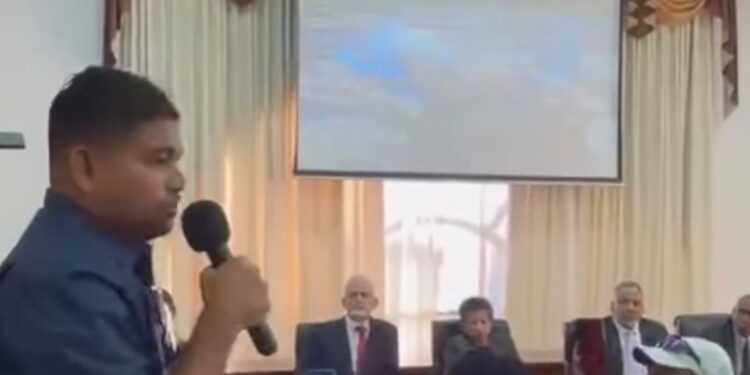
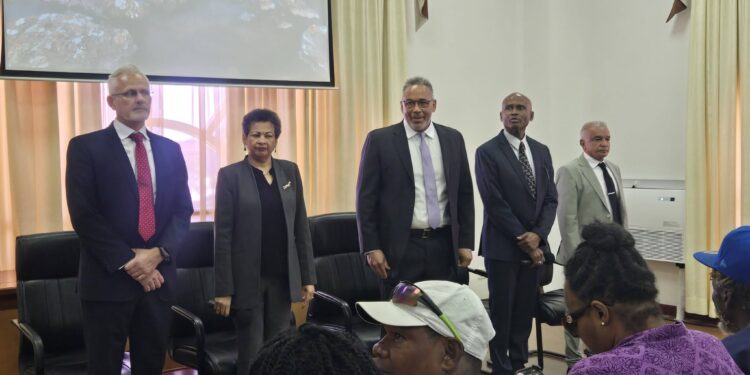
Even in grief, Linden chose dialogue. The negotiating team, comprising Aubrey Norton, Dr. Rupert Roopnaraine, Vanessa Kissoon, Councillor Leslie Gonsalves, Nigel Hughes, and myself, engaged the Government over several weeks in search of peace with justice.
The community demanded an independent Commission of Inquiry; changes to the police leadership responsible for operations in Linden; an Economic Committee to address Linden’s depressed economic condition; a Technical Committee to review the generation and distribution of electricity; the return of the television infrastructure which was gifted to the community, but was hijacked by the state and the re-establishment of the Land Selection Committee under the Regional Democratic Council to ensure greater community participation in land allocation and development.
Those negotiations culminated in the signing of an agreement on 21st of August 2012.
The lesson was unmistakable. The dialogue the community had requested before 18th of July was ultimately the same dialogue that resolved the crisis. Most importantly, the government reversed its imposition.
Justice Remains Unfinished
As one of the demands, on September 5th, 2012, President Donald Ramotar established the Linden Commission of Inquiry. His government chose to unilaterally select the Commissioners and its own terms of reference for the Inquiry.
Its findings confirmed serious failures in the policing of the protest and recognised the unlawful loss of innocent lives.
Yet justice remains incomplete.
The families of Ron Somerset, Alan Lewis and Shemroy Bouyea still deserve full accountability. The dozens injured demand far more than what was assigned by the Commission.
Randy Telford and Ray Wills remain outside the Commission’s consideration despite suffering life altering injuries.
The destruction of the One Mile Primary School and other public buildings has never been fully explained, nor have those responsible been brought before the law.
History is not simply about remembering the past. It is about learning from it. We remember these events not to reopen old wounds but to ensure they are never repeated because democracy demands accountability.
Justice demands truth, and no government should ever answer peaceful protests with bullets, and the killing of unarmed citizens.
Hon. K. Sharma Solomon
Member of Parliament
NOTE
This is the third installment in a four-part series on the 35 Days of the People’s Struggle.
The first examined Linden’s historic relationship with electricity. The second documented the months of dialogue and peaceful engagement that preceded 18 July 2012. This third installment recounts the protest, the killings, the negotiations, and the community’s remarkable resilience during those thirty-five days.
The final installment will examine the agreement itself, what was implemented, what was abandoned and what the events of 2012 continue to teach us about democracy, justice and the future of Linden and Guyana.