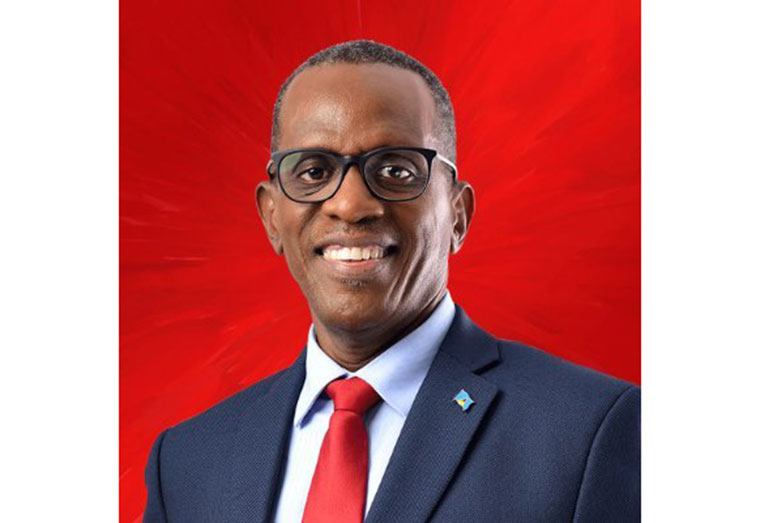
Prime Minister of Saint Lucia, Hon. Philip J. Pierre, has pledged to make the Caribbean Community (CARICOM) more people-centred, promising that regional integration must deliver tangible benefits to citizens across the Caribbean.
Pierre assumes the rotating chairmanship of CARICOM on July 1, 2026, and will serve until December 31, succeeding the outgoing chairman.
In a statement marking the start of his tenure, the incoming chairman said he accepted the responsibility “with humility, determination, and a deep sense of service to the people of our region.”
He reaffirmed the founding principle of the regional integration movement, stressing that CARICOM’s greatest strength lies in the collective action of its Member States.
“Today, I speak to you as Prime Minister of Saint Lucia and as the incoming Chairman of CARICOM. I accept this responsibility with humility, determination, and a deep sense of service to the people of our region,” Pierre said.
He added, “CARICOM has always been built on a simple but powerful belief: that our countries can achieve more together than we ever could alone. That belief remains as important today as it was at the founding of our Community.“
Acknowledging the rapidly changing global environment, Pierre said Caribbean nations are adapting to new economic realities while confronting challenges that demand greater cooperation, innovation and unity.
He noted that many citizens are asking how CARICOM can make a greater difference in their daily lives, saying that question must guide the work of the Community over the coming months.
“During my tenure as Chairman, my commitment is clear: CARICOM must continue to move closer to the people. It must be seen and felt not only in meetings and declarations but also in communities, schools, businesses, homes, and in the opportunities available to every Caribbean citizen,” he stated.
The Saint Lucian leader said regional unity would remain central to CARICOM’s success, describing the Caribbean’s diversity of cultures, languages, traditions and experiences as one of its greatest assets.
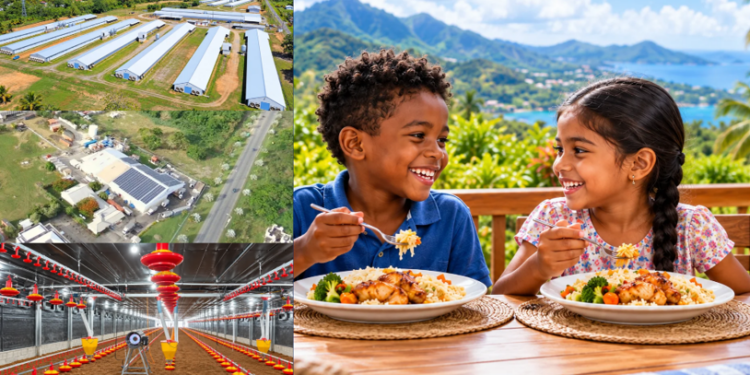
He also outlined several priorities for the Community, including advancing climate action, strengthening food and nutrition security, promoting sustainable economic growth, embracing digital transformation, expanding trade and investment, and improving the movement of people, skills, services and ideas throughout the region.
Pierre emphasised that these efforts must remain firmly focused on improving the lives of Caribbean people.
“At the heart of this work must be our people. Every Caribbean citizen, regardless of age, gender, ability, background, occupation, or circumstance, must be able to see themselves reflected in the regional agenda and feel that CARICOM is working to improve their lives, expand their opportunities, and strengthen their future,” he said.
He also underscored the importance of building safer and more secure communities, noting that development and security are inseparable and that every Caribbean citizen deserves the opportunity to live, work, learn and thrive in peace and dignity.
According to Pierre, the effectiveness of CARICOM should not be measured solely by policy decisions or summit declarations, but by the extent to which citizens experience the benefits of regional integration.
“The success of CARICOM must ultimately be measured by whether our people feel the benefits of integration in their daily lives. Because integration that our people cannot feel will not last,” he declared.
Calling for renewed regional solidarity, Pierre said CARICOM must continue building “a Caribbean Community that is more united, more inclusive, more resilient, and more prepared for the future.”
He ended his address with a call for collective action: “Let us move forward together, from resilience to renewal and revival.“
Pierre assumes the chairmanship at a pivotal time for the 15-member regional bloc, as CARICOM continues to deepen economic integration while advancing initiatives in climate resilience, food and nutrition security, regional security, digital transformation, and the free movement of Caribbean nationals.