Absent from Fidel Castro’s centenary colloquium, Jamaica’s longest-serving prime minister — the last survivor of the 1972 decision that broke Cuba’s hemispheric isolation — sends a tribute that doubles as a warning to the Caribbean of 2026.
MONTEGO BAY, Jamaica (WiredJA) – Havana’s Palace of Conventions filled on Monday with more than 1,500 delegates drawn from some 63 countries, convened for the First International Colloquium “Fidel: Legacy and Future” — four days of argument and commemoration timed to close on Thursday, 13 August, the hundredth anniversary of the birth of Fidel Castro Ruz.
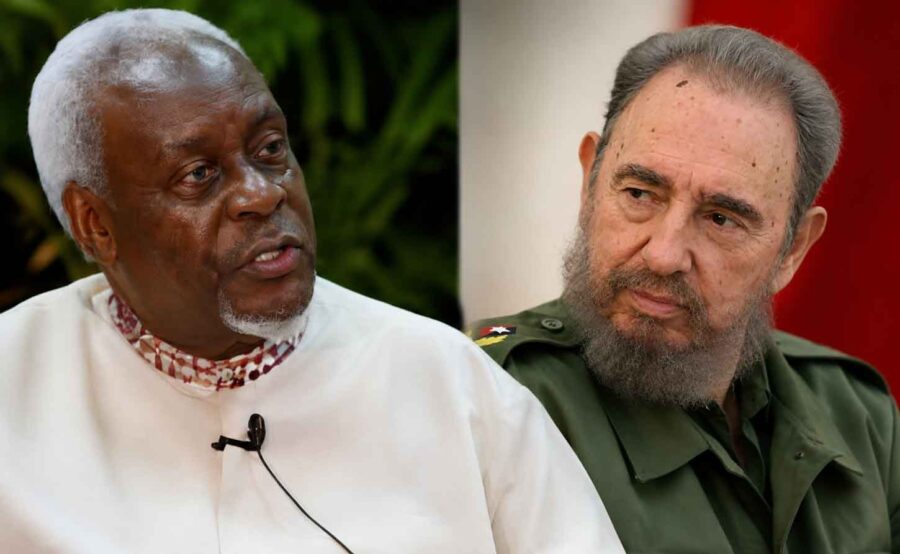
One of the voices carrying the heaviest historical weight in that room was not in it. P.J. Patterson, Jamaica’s longest-serving prime minister, sent his contribution from home, and it arrived with the authority of a man who was present at the beginning.
The last man standing from 1972
Patterson accepts his absence with what he calls considerable regret, citing a convergence of circumstances that made attendance impossible. His disappointment, he writes, is sharpened by his standing as the sole surviving participant in the Port of Spain summit at which four newly independent Caribbean states resolved to open relations with Havana.
On 8 December 1972, Barbados, Guyana, Jamaica and Trinidad and Tobago acted simultaneously and ended Cuba’s diplomatic quarantine in this hemisphere. Errol Barrow, Forbes Burnham, Michael Manley and Eric Williams are all gone. Patterson, then a young minister in Manley’s cabinet, remains.
That vantage point gives the message its force. The decision, he insists, was not ideological alignment but the exercise of a sovereign right — an attempt to create a zone of peace in what he calls our single space. Nobody, he notes drily, sat down in 1972 to calculate the benefits that would follow.
The man, not the monument
Rather than deliver a paper to a hall of political scientists and professors, Patterson asks leave to speak simply of the man he was privileged to know. What follows is unabashedly admiring.
He describes Castro as a warrior for human dignity and an invincible foe of injustice, a believer in the sovereign equality of nations regardless of size, military might or economic power — and traces that conviction to Angola, where Cuban troops fought Jonas Savimbi’s forces and the South African army.
That victory, in Patterson’s reading, hastened the end of apartheid and the political liberation of the wider African continent.
His sharpest characterisation is strategic rather than sentimental: Castro as quintessential strategist and supreme tactician at once, unswerving in principle but realistic about timing.
Hence, Patterson argues, Cuba’s decision to invest what it lacked in natural resources into people instead — the medical brigades, the scholarships, the disaster relief and technical expertise, offered across five decades, he stresses, without a single conditionality or any request for reciprocity.
“South—South solidarity is pivotal to our survival and future well-being… forge instead a single phalanx.”
The warning inside the wreath
Then the tribute turns, and Patterson’s real subject reveals itself as 2026 rather than 1926. He points the colloquium towards what he describes as the reincarnation of the Monroe Doctrine in an even more repulsive edict, the dismantling of an admittedly inequitable multilateral system, and the emergence of a new imperium with flagrant disregard for international law.
His prescription is old-fashioned and, for a region currently tempted by bilateral accommodation with Washington, distinctly pointed. South—South solidarity, he argues, is pivotal to survival.
States of the Global South should not pursue a path of national separatism and division but in the words of Fidel, forge a single phalanx capable of fashioning a global architecture that is inclusive, fair and sustainable.
He closes with a demand rather than a benediction: that every participant, and every nation that holds the human condition sacred, condemn, deplore and resist what he calls a cruel, repugnant and unlawful fuel tourniquet and the punitive embargo behind it.
A legacy still contested
That framing will not go unchallenged, and it should not. The colloquium convened amid what President Miguel Díaz-Canel himself conceded is one of the most difficult moments the revolution has faced, and critics abroad and on the island read a gathering of 1,500 delegates as state theatre staged against blackouts, scarcity and steady emigration.
Castro’s record on political pluralism, press freedom and the treatment of dissent remains, for many Cubans and for much of the diaspora, the unfinished argument that no centenary can settle. Patterson does not engage it.
His is a statesman’s account of what Cuba did for the Caribbean, not an audit of what the revolution did to Cubans.
But the Caribbean case he makes stands on its own ground. Whatever one concludes about Havana’s domestic record, the region’s four founding independent states did in 1972 what larger and richer countries would not: they treated sovereignty as something to be used rather than merely possessed.
He ends by appropriating Castro’s own most famous line — the young lawyer’s 1953 declaration from the dock that history would absolve him — and settling the verdict himself. History, Patterson proclaims, has already absolved Fidel in full.
Whether the Caribbean can still summon the nerve it found in Port of Spain half a century ago is the question his absence leaves hanging over the hall.