Regional health officials are stepping up efforts to eliminate the transmission of HIV, syphilis and hepatitis B from mothers to their children, a move that comes as the Caribbean continues to confront one of the highest HIV prevalence rates outside of Sub-Saharan Africa.
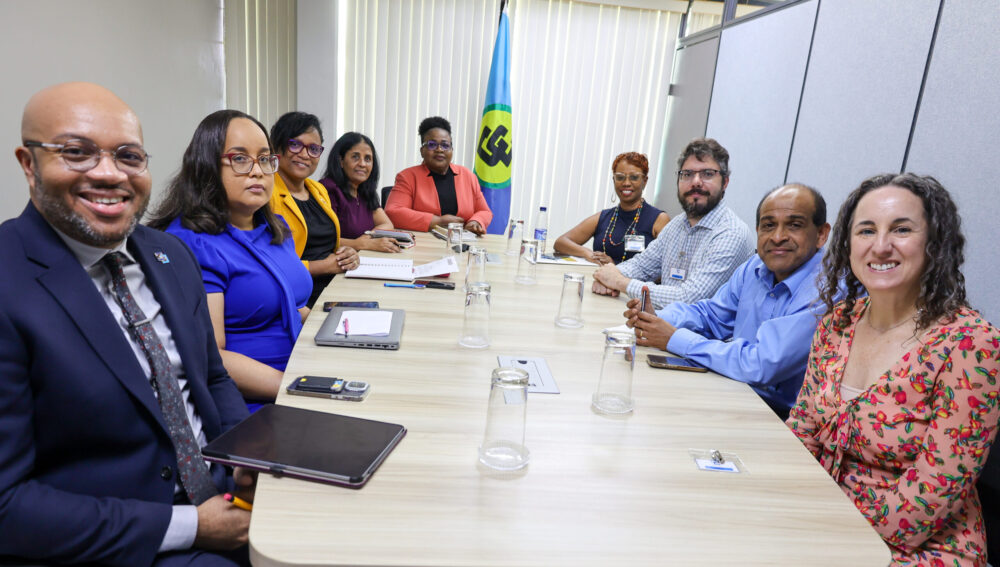
The initiative was the focus of a June 11 meeting between the CARICOM Secretariat and the Pan American Health Organization (PAHO)/World Health Organisation (WHO) Regional Validation Committee at the CARICOM Secretariat’s headquarters in Georgetown.
The discussions centered on accelerating the Elimination of Mother-to-Child Transmission (EMTCT) of HIV and hepatitis B through stronger prevention programmes, improved treatment services, enhanced monitoring of HIV-positive pregnant women and exposed infants, and more robust laboratory and disease surveillance systems.
The CARICOM delegation was led by Beverly Harry-Emmanuel, Advisor for Social Development and Officer-in-Charge of the Human and Social Development Directorate. Other participants included Dr. Wendy Telgt Emanuelson, Director of the Pan Caribbean Partnership Against HIV and AIDS (PANCAP) Coordinating Unit; Tamara Bobb, Programme Manager for Health Sector Development; and Dr. Shanti Singh-Anthony, Knowledge Coordinator at PANCAP.
Representing PAHO/WHO were Sandra Jones, Advisor on HIV, Sexually Transmitted Infections, Tuberculosis and Viral Hepatitis; Dr. Leandro Sereno Soares, Advisor on Viral Hepatitis Prevention and Control; Jodie Dionne, Chair of the Regional Validation Committee; and Dr. Shabbir Argaw, a member of the committee.
The meeting underscored the importance of helping CARICOM member states attain and maintain WHO validation status for eliminating mother-to-child transmission of HIV, syphilis and hepatitis B.
“There was consensus that the validation process not only advances EMTCT goals but also improves the overall efficiency and quality of health service delivery across national systems,” CARICOM said in a statement.
The push comes against the backdrop of significant regional progress in combating HIV. According to UNAIDS, the Caribbean has reduced new HIV infections by more than 20 percent since 2010 and AIDS-related deaths have fallen substantially. However, the region continues to face a generalized HIV epidemic, with an adult HIV prevalence rate estimated at between 1.2 percent and 3.1 percent, among the highest outside Africa. Hundreds of thousands of people across the Caribbean are living with HIV.
In Guyana, approximately 1.6 percent of adults are estimated to be living with HIV, with roughly 11,000 adults and children affected by the disease.
Health officials emphasized that preventing transmission from mother to child remains one of the most effective ways to reduce new HIV infections. Advances in testing, treatment and prenatal care have dramatically reduced transmission rates in countries that have achieved elimination targets.
Several Caribbean countries and territories have already achieved validation for the elimination of mother-to-child transmission of HIV and syphilis, including Anguilla, Antigua and Barbuda, The Bahamas, Belize, Bermuda, the Cayman Islands, Cuba, Dominica, Jamaica, Montserrat, St. Kitts and Nevis, and St. Vincent and the Grenadines.
The Bahamas has been validated for the elimination of mother-to-child transmission of HIV, while the Turks and Caicos Islands became the first territory in the Americas to achieve dual validation for both HIV and hepatitis B.
CARICOM and PAHO officials said those achievements demonstrate the region’s capacity to lead in public health and provide a model for other countries seeking to eliminate the transmission of preventable diseases from one generation to the next.
The latest engagement signals a continued regional commitment to ensuring that every child in the Caribbean has the opportunity to be born free of HIV, hepatitis B and congenital syphilis, while strengthening health systems capable of sustaining those gains over the long term.