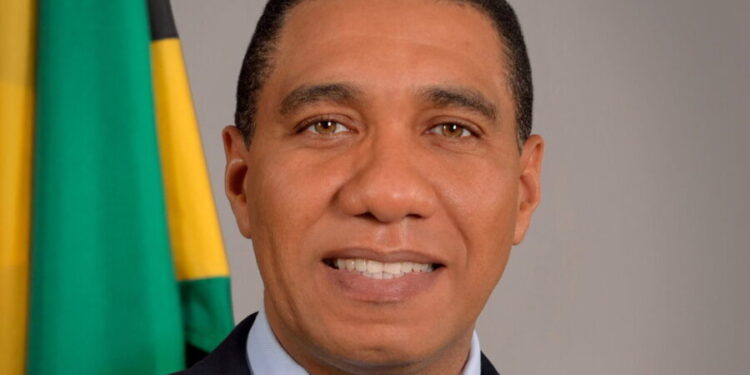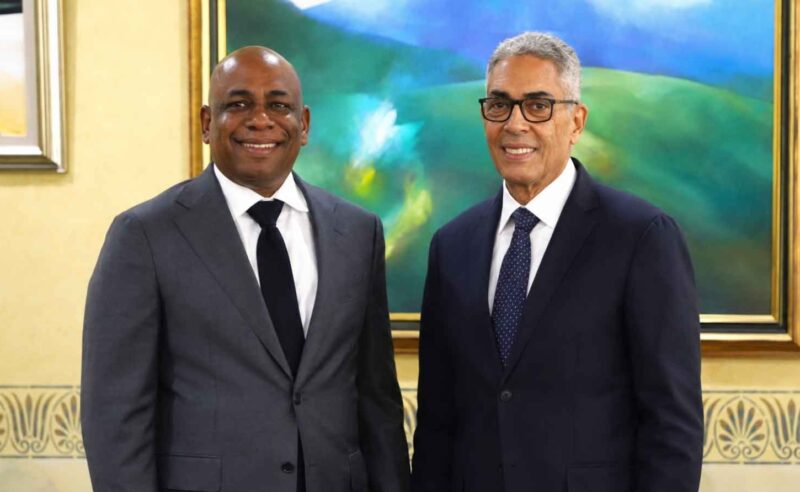
After seven years that carried Jamaica from a pandemic to an 11.8 per cent price spike and back inside the band, Richard Byles hands Bank of Jamaica to Dr. R. Brian Langrin — on rate-decision day.
KINGSTON, Jamaica, August 18, 2026 | One of Jamaica’s most successful and impactful BOJ Governor, Richard Byles, closes his ledger today. Tomorrow, Dr. R. Brian Langrin opens his — and by the end of that first working day, the institution he now leads must tell Jamaicans what it intends to do about a cost of living that has broken through the Bank’s own ceiling.
The choreography is unusually tight. Langrin’s appointment by the Governor-General, on Cabinet’s recommendation under the Bank of Jamaica Act, takes effect on 19 August — the very date the Monetary Policy Committee announces its next policy decision. Few central bankers anywhere begin a term with the market already watching the clock.
But before the successor, the record — because Byles’s deserves stating plainly. He arrived in August 2019 to a policy rate of 0.5 per cent and a quiet price level. Then came the pandemic, the shipping crisis, the war on Ukraine, and a shock that drove annual inflation from 3.8 per cent in April 2021 to 11.8 per cent by April 2022 — the sharpest sustained squeeze on Jamaican households in more than a decade.
The Bank’s answer was 650 basis points of tightening to a policy rate of 7.0 per cent, held there from November 2022, paired with hard liquidity management and deliberate deployment of the reserves to steady the exchange rate.
It worked. Inflation was walked back inside the 4.0 to 6.0 per cent band and held there, easing beginning only in June 2024, once the data had earned it. Byles resisted every invitation to cut early — from borrowers, from the commentariat, from the political calendar — and Jamaicans are measurably better off for that discipline.
He did it, moreover, as the first Governor to run the institution under full operational independence, a change that took effect in 2022 and which he calls the defining experience of his tenure. When Hurricane Melissa struck, the Bank did not flinch: between 1 November 2025 and 31 January 2026 it sold roughly US$365 million into the market and a further US$87 million to Petrojam, and the dollar appreciated rather than buckled.
One pandemic, one global inflation shock, one catastrophic hurricane — and a currency that held. That is a consequential governorship by any measure the region applies.
Which is precisely what makes the June number sting. Headline inflation reached 6.7 per cent, the highest reading since January 2024 and the first breach of the target range since February 2024.
Food and non-alcoholic beverages ran at 9.8 per cent over the twelve months, with fruits and nuts up 34.2 per cent. An 8.0 per cent rise in route taxi fares on 2 June did the rest. These are not abstractions on a chart. They are the arithmetic of a Friday market run.
The policy rate sits at 5.50 per cent, trimmed by 25 basis points in February when Melissa’s price impact proved milder than feared, and held through May and June on the view that the stance was already tight enough to contain second-round effects from the Middle East commodity shock.
Core inflation — stripping out farm produce and fuel — tells a less comfortable story, rising to 4.7 per cent in May from 3.9 per cent in January. Growth for FY2026/27 is projected between 1.0 and 3.0 per cent, with fiscal rules suspended to fund recovery.
Into that sits a man the Bank already knows. Langrin served as Chief Economist in BOJ’s Research and Economic Programming Division and later headed its Financial Stability Department, where he was technical lead for the Government on two sovereign debt restructurings — which is to say he was in the room when Jamaica’s debt arithmetic was being rewritten, not reading about it afterwards.
He then went where Caribbean technocrats of his calibre tend to go: Regional Financial Stability Advisor at the IMF; Executive Director at the Inter-American Development Bank Group, chairing its Audit and Assurance Oversight Committee; Board Advisor to the World Bank Group Executive Director for Canada, Ireland and the Caribbean. His doctorate is from Pennsylvania State University; his first two degrees from the UWI.
The succession marks a shift in kind, not a repudiation. Byles came from four decades in the private sector and proved a corporate leader could run an inflation-targeting central bank with rigour. Langrin returns the chair to the research floor.
The most interesting line in his file, though, may be the most recent. Before his appointment, Langrin advised CARICOM on modernising the region’s digital financial market infrastructure. Byles, on his way out, named JAM-DEX adoption as his unfinished business — the central bank digital currency Jamaica launched ahead of the region and has since struggled to push into everyday retail.
The incoming Governor arrives holding precisely the brief his predecessor could not close.
Two tests will define the early months. The first is whether the MPC under new leadership reads the June breach as the temporary commodity pass-through it has been calling it, or as evidence that expectations are drifting loose.
The second is quieter: whether a central bank staffed by economists can persuade a public squeezed by yam prices that 5.50 per cent is working for them. Independence won in 2022 is not self-sustaining. It is renewed, or forfeited, in the court of household experience.
Bank of Jamaica has thanked its outgoing Governor for his service and promised a seamless transition. The thanks are earned. Seamless is the easy part. The harder part starts Wednesday afternoon.