Vice President Bharrat Jagdeo’s latest call for Commonwealth countries to seize climate finance opportunities and pursue sustainable urbanisation has drawn sharp criticism from a local environmental advocate, who accused the government of preaching environmental responsibility abroad while failing to confront serious ecological problems at home.
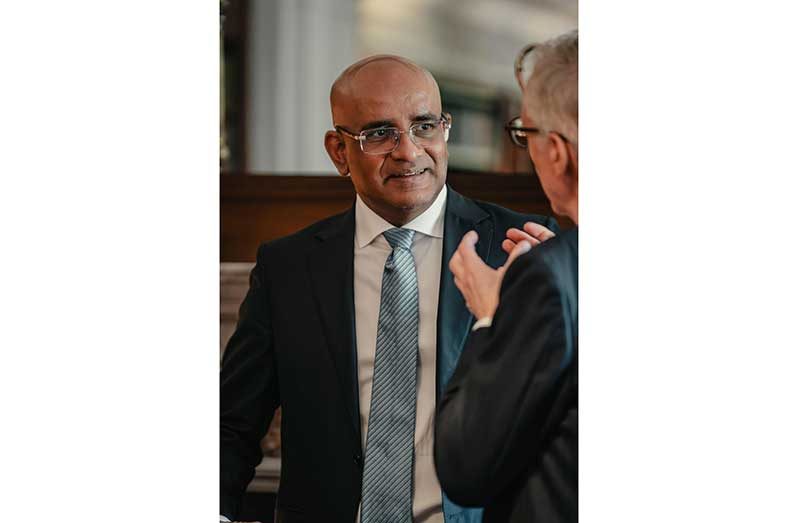
Jagdeo spoke Saturday at a Commonwealth roundtable on the Declaration on Sustainable Urbanisation, adopted in Kigali in 2022. The event, supported by The King’s Foundation, brought together member states, experts and civil society organisations to discuss how countries can manage rapid urbanisation while improving quality of life, economic opportunity and climate resilience.
But an environmentalist who requested anonymity, citing fear of political and professional backlash, said the Vice President’s remarks reveal a “stunning hypocrisy.”
“Guyana is rife with environmental problems that the government prefers to package, polish and export as climate leadership,” the environmentalist said. “But the daily reality for ordinary citizens tells a very different story.”
The source pointed to mining pollution, blocked drainage, poor waste management, climate vulnerability and what they described as a national culture of reckless concrete development.
“Gold mining continues to threaten rivers and creeks that Indigenous citizens depend on for drinking, bathing, fishing and daily life,” the environmentalist said. “Whether the pollution comes from mercury, cyanide, sedimentation or reckless mining practices, the result is the same: communities far from Georgetown are left to live with risks that politically connected people rarely face.”
Guyana’s own mining code acknowledges the risks associated with cyanide use in gold mining, stating that cyanide management rules are intended to protect workers, Indigenous and non-Indigenous communities, and the environment from misuse and mismanagement. Separate research on gold mining in the Guiana Shield has found that mining has significant impacts on forests, freshwater systems, biodiversity and human health, including mercury pollution in rivers and streams.
The environmentalist also criticized urban development practices, saying that in many communities, waterways and drainage systems have been treated as obstacles to private profit rather than essential public infrastructure.
“Our waterways are not properly maintained, and in some areas, connected business people have blocked critical outflow channels in the name of development,” the source said. “Then when flooding comes, ordinary people are blamed for garbage, while the powerful people who reshaped the land and blocked the water disappear from the conversation.”
The criticism comes as Guyana remains highly exposed to coastal flooding. ThinkHazard, a World Bank-associated risk screening platform, classifies Guyana’s coastal flood hazard as high, warning that potentially damaging waves are expected to flood coastal areas at least once in the next 10 years and that project planning, design and construction must take coastal flood risk into account.
Yet, according to the environmentalist, Guyana’s national response remains dangerously inadequate.
“We do not have a serious, visible, national plan for rising seas and worsening flood risks that ordinary people can understand, track and trust,” the source said. “We have speeches, roundtables and glossy international language. But where is the practical plan for the family living on the coast, the farmer watching saltwater creep closer, or the village that floods after every heavy rain?”
The source also took aim at the country’s construction culture, arguing that Guyana is copying the worst habits of wealth without building the systems needed to manage them.
“We build with concrete everywhere,” the environmentalist said. “People concrete their yards because they see wealthy politicians and big developers doing it. But every yard that is sealed off from the earth becomes another surface that sends water rushing into the streets, drains and canals. We are building heat, flooding and ugliness into our communities.”
The environmentalist said Guyana’s waste problem further exposes the gap between climate rhetoric and domestic environmental management.
“We do not have a proper national trash management system,” the source said. “Garbage piles up, drains clog, illegal dumping continues, and communities are left to improvise. A country that cannot manage its garbage should be careful about lecturing the world on sustainable urbanisation.”
Jagdeo, in his remarks, praised the Commonwealth Climate Finance Access Hub and called for new thinking, better data and artificial intelligence tools to help small and developing states plan more effectively. He argued that AI models must be trained on data from small and developing countries if they are to serve those countries fairly.
But critics say data and artificial intelligence cannot substitute for political will.
“The Vice President is right that data matters,” the environmentalist said. “But data without accountability is decoration. AI will not clear blocked canals. AI will not stop reckless mining. AI will not build a national recycling system. AI will not protect Indigenous water sources if the political class refuses to confront the people profiting from environmental destruction.”
The environmentalist said Guyana should not reject climate finance or international cooperation, but must stop using global climate platforms to create the appearance of leadership while leaving local environmental crises unresolved.
“Climate finance is important,” the source said. “But before Guyana sells itself as a model of sustainable development, it must look honestly at what is happening in its own rivers, drains, coastlands, villages and urban communities. The hypocrisy is not that Guyana is asking for climate support. The hypocrisy is asking the world to admire our climate vision while citizens at home are living with the consequences of environmental neglect.”
Jagdeo’s remarks may have been aimed at the Commonwealth, but for many Guyanese, the test of environmental leadership is not delivered in international conference rooms. It is measured in clean drinking water, unblocked drains, protected coastlines, responsible mining, functional waste systems and communities designed for people rather than political image-making.