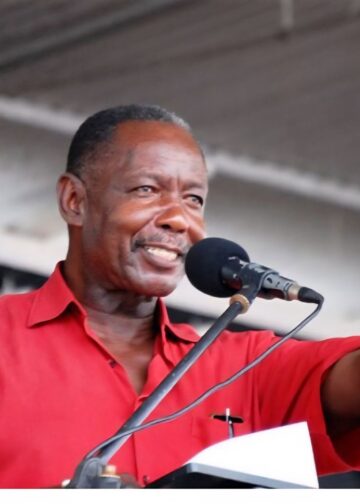
By Mark DaCosta- In a poignant call to recognise the contributions of early labour leaders, veteran trade unionist Lincoln Lewis, General Secretary of the Guyana Trades Union Congress (GTUC), has challenged what he describes as a pervasive rewriting of the nation’s history. He is urging citizens to honour those who laid the groundwork for trade unionism and workers’ rights, while highlighting concerns about the marginalisation of a key figure, Hubert Nathaniel Critchlow.
Lewis’s commentary illuminates the importance of acknowledging diverse contributions to history, cautioning against the oversimplification of our narrative to one that begins and ends with only a few names. He has summoned the citizens of our nation, regardless of their background, to defend the integrity of our shared history. His assertive clain invites reflection on why it is crucial to memorialise and respect the contributions of all who have fought for our rights, particularly during tumultuous times.
At the heart of Lewis’ message is the assertion that “a nation built on distortion cannot stand in dignity.” He explicitly denounces the People’s Progressive Party (PPP) government’s inclination to diminish the role of Black leaders in our struggle for rights and recognition.
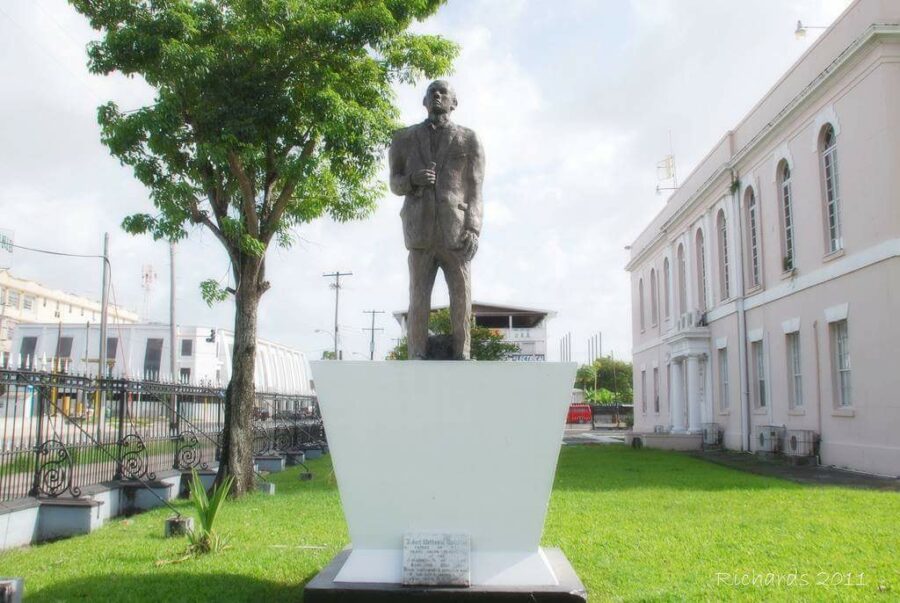
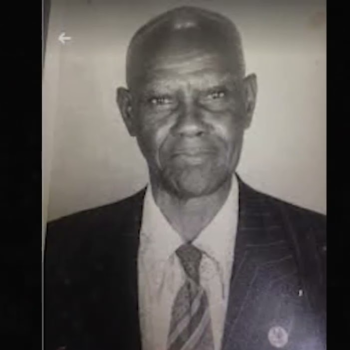
This brings to light the long-standing contributions of Critchlow, well known as the Father of Trade Unionism in Guyana and the British Commonwealth, and an irrefutable figure in our labour history. His diligent efforts and sacrifices laid a robust foundation that the trade union movement continues to build upon today.
Historically, Critchlow’s activism predated prominent figures like Cheddi Jagan, underscoring the necessity to acknowledge his pioneering role in the labour movement.
Lewis stresses that “when Critchlow… was organising workers and igniting a movement across British Guiana and the wider Commonwealth, Cheddi Jagan was not born.” This assertion seeks to reclaim Critchlow’s legacy, aptly depicting the key role he played in advocating for workers’ rights decades before Jagan’s emergence in the political realm.
Lewis reminds us that the fight for universal adult suffrage — and the principle of “one man, one vote” — was initiated under Critchlow’s leadership as early as 1926. Such clarifications are crucial, as they illustrate how today’s political figures stand on the shoulders of those who came before them, often without acknowledging the debt owed to these foundational leaders. He candidly remarks, “you sit where you sit today because of the groundwork laid by a Black man,” asserting that this undeniable truth must permeate public discourse.
In addressing the Labour Minister, Keoma Griffith, Lewis implores him to confront his heritage and remember the sacrifices made by his ancestors: “If you are not proud of the struggles and sacrifices of your ancestors… that is your burden to carry.” The workers’ advocate emphasises that one’s discomfort cannot be a justification for rewriting the contributions of others who shaped our nation’s identity.
He adamantly maintains that “we will not allow Hubert Nathaniel Critchlow to be erased,” signalling a commitment to preserving the narrative of Black contributions to our society.
This insistence on historical accuracy extends beyond just Critchlow; it also encompasses the complex interplay of forces that shaped the labour movement, including the political rivalry between the PPP and the People’s National Congress (PNC).
Lewis calls attention to the fact that the existence and growth of independent trade unions, such as the Guyana Bauxite and General Workers Union (GB&GWU), have been under threat, particularly from the current ruling party. Drawing a parallel,
Lewis notes that “independent trade unions that refuse to bow to the PPP are denied that same space,” spotlighting the ongoing challenges faced by those advocating for workers’ rights within a fiercely partisan landscape.
Moreover, Lewis expresses discontent regarding the recent celebration of GAWU’s achievements, arguing that such commemorations should not come at the expense of honouring Critchlow’s legacy: “Your rise was not without the interplay of forces….” This criticism is reflective of a broader sentiment among disillusioned citizens who feel that political dominance often leads to the erasure of specific contributions and historical truths, in other words, a rewriting of history.
The challenge of recognising and commemorating contributions from diverse segments of our society is fraught with complexity. Lewis’ reflections conjure up a shared responsibility to maintain the integrity of our past whilst fostering unity in a multicultural society. Historical truths, he cautions, must not be manipulated for political gain, as “those who sit idly by” become complicit in perpetuating a narrative of exclusion.
Ultimately, Lincoln Lewis’s loud and undeniable call to honour Hubert Nathaniel Critchlow is an urgent plea for historical accountability. By acknowledging the contributions of past leaders and refraining from selective memory, our nation can begin to forge a path that celebrates the intricate tapestry of our history. As Lewis eloquently puts it, “we must be vigilant. We must be honest.” The erasure of history is a disservice to all, and only through recognition and respect for every contributor can we truly honour the struggles that have shaped Guyana.