Saturday, August 22, 2026
Village Voice News
ADVERTISEMENT
  • Home
  • News
  • Sports
  • Editorial
  • Letters
  • Global
  • Columns
    • Eye On Guyana
    • Hindsight
    • Lincoln Lewis Speaks
    • Future Notes
    • Blackout
    • From The Desk of Roysdale Forde SC
    • Diplomatic Speak
    • Mark’s Take
    • In the village
    • Mind Your Business
    • Bad & Bold
    • The Voice of Labour
    • The Herbal Section
    • Politics 101 with Dr. David Hinds
    • Talking Dollars & Making Sense
    • Book Review 
  • Education & Technology
  • E-Paper
  • Contact Us
No Result
View All Result
  • Home
  • News
  • Sports
  • Editorial
  • Letters
  • Global
  • Columns
    • Eye On Guyana
    • Hindsight
    • Lincoln Lewis Speaks
    • Future Notes
    • Blackout
    • From The Desk of Roysdale Forde SC
    • Diplomatic Speak
    • Mark’s Take
    • In the village
    • Mind Your Business
    • Bad & Bold
    • The Voice of Labour
    • The Herbal Section
    • Politics 101 with Dr. David Hinds
    • Talking Dollars & Making Sense
    • Book Review 
  • Education & Technology
  • E-Paper
  • Contact Us
No Result
View All Result
Village Voice News
No Result
View All Result
Home Global

Cups, straws, spoons: India starts on single-use plastic ban

Staff Writer by Staff Writer
July 2, 2022
in Global
AP Photo

AP Photo

0
SHARES
0
VIEWS
Share on FacebookShare on Twitter

By ANIRUDDHA GHOSAL

NEW DELHI (AP) — India banned some single-use or disposable plastic products Friday as part of a federal plan to phase out the ubiquitous material in the nation of nearly 1.4 billion people.

READ ALSO

AI needs a symbiotic reset with humanity

China makes a $2 billion push into Africa’s third-most industrialized nation as Beijing moves ahead of the US

For the first stage, it has identified 19 plastic items that aren’t very useful but have a high potential to become litter and makes it illegal to produce, import, stock, distribute or sell them. These items range from plastic cups and straws to ice cream sticks. Some disposable plastic bags will also be phased out and replaced with thicker ones.

Thousands of other plastic products — like bottles for water or soda or bags of chips — aren’t covered by the ban. But the federal government has set targets for manufacturers to be responsible for recycling or disposing of them after their use.

Plastic manufacturers had appealed to the government to delay the ban, citing inflation and potential job losses. But India’s federal environment minister Bhupender Yadav said at a press briefing in New Delhi that the ban had been in the pipeline for a year.

“Now that time is up,” he said.

This isn’t the first time that India has considered a plastic ban. But previous iterations have focused on specific regions, resulting in varying degrees of success. A nationwide ban that includes not just the use of plastic, but also its production or importation was a “definite boost,” said Satyarupa Shekhar, the Asia-Pacific coordinator of the advocacy group Break Free from Plastic.

Most plastic isn’t recycled globally and millions of tons pollute the world’s oceans, impact wildlife and turn up in drinking water. Scientists are still trying to assess the risks posed by the tiny bits of broken-down plastic, known as microplastics. In 2020, over 4.1 million metric tons (4.5 million U.S. tons) of plastic waste was generated in India, according to its federal pollution watchdog.

The creaky waste management system in the country’s burgeoning cities and villages means that much of this waste isn’t recycled and ends up polluting the environment. Nearly 13 million metric tons (14 million U.S. tons) of plastic waste was either littered or not recycled by the South Asian nation in 2019 — the highest in the world, according to Our World in Data.

“Given the magnitude of the plastic crisis, this is too little. And it’s too little both in its scope as well as the coverage,” said Shekhar.

Ravi Agarwal, the director of Toxics Link, a New Delhi-based advocacy group that focuses on waste management, added that the ban was “a good beginning,” but its success will depend on how well it is implemented. The actual enforcement of the law will be in the hands of individual states and city municipal bodies.

India said that the banned items were identified while keeping in mind the availability of alternatives: bamboo spoons, plantain trays, wooden ice-cream sticks. But in the days leading up to the ban, many vendors said that they were confused.

Moti Rahman, 40, is a vegetable vendor in New Delhi. Customers at his cart carefully picked out fresh summer produce Tuesday before he tipped them into a plastic bag. Rahman said that he agrees with the ban, but added that if plastic bags are stopped without a readily available and equally cost-effective replacement, his business will be impacted.

“After all, plastic is used in everything,” he said.
 
ShareTweetSendShareSend

Related Posts

Visitors interact with a robot from Unitree Robotics during the sixth China International Consumer Products Expo (CICPE) in Haikou, South China's Hainan province, April 14, 2026. [Photo/Xinhua]
Global

AI needs a symbiotic reset with humanity

by Admin
August 21, 2026

China Daily As companies pour billions of dollars into artificial intelligence while cutting jobs, fears of human replacement are mounting....

Read moreDetails
Chinese leader Xi Jinping and Egyptian President Abdel Fattah el-Sisi (Photo: Reuters)
Global

China makes a $2 billion push into Africa’s third-most industrialized nation as Beijing moves ahead of the US

by Admin
August 20, 2026

This proposed initiative would establish a massive, integrated industrial complex in the Egypt's Suez Canal Economic Zone (SCZONE), marking a...

Read moreDetails
Ebola Treatment Centre at the Centre Médical Évangélique in Bunia, the first Ebola treatment centre to be built in Bunia. Constructed by WHO and run by ALIMA.
Global

WHO and Africa CDC Welcome Allocation of Ebola vaccines to Democratic Republic of the Congo

by Admin
August 20, 2026

Last week, the government of the Democratic Republic of the Congo (DRC) requested a release of Ervebo vaccines from the...

Read moreDetails
Next Post
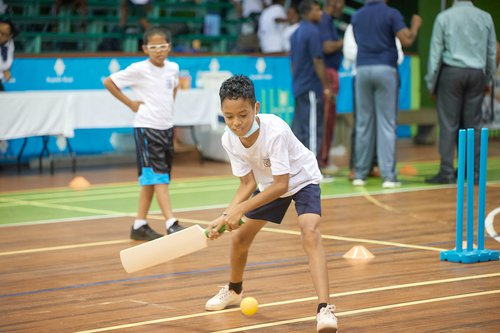
Cricket West Indies (CWI) and Republic Bank Financial Holdings Guyana launched ‘Five for Fun’ - a new format of cricket designed to appeal to children from 8 to 11 years old.

CWI & Republic Bank Financial Holdings ‘Five For Fun’ Bowls Off in Guyana


EDITOR'S PICK

Enjoy the Christmas but be watchful to avoid that unguarded moment

December 24, 2023
China Flag

From waste mountains to power plants: How China transforms waste treatment in a decade

June 4, 2026

Guyana’s Historic Commonwealth Games 3×3 Basketball Campaign Ends in Heartbreaking Fashion

July 27, 2026
China-assisted Sir Vivian Richards Cricket Stadium in St. John's, capital of Antigua and Barbuda, on February 2 (XINHUA)

China and LAC: a transformative partnership

November 4, 2024

© 2024 Village Voice

No Result
View All Result
  • Home
  • News
  • Sports
  • Editorial
  • Letters
  • Global
  • Columns
    • Eye On Guyana
    • Hindsight
    • Lincoln Lewis Speaks
    • Future Notes
    • Blackout
    • From The Desk of Roysdale Forde SC
    • Diplomatic Speak
    • Mark’s Take
    • In the village
    • Mind Your Business
    • Bad & Bold
    • The Voice of Labour
    • The Herbal Section
    • Politics 101 with Dr. David Hinds
    • Talking Dollars & Making Sense
    • Book Review 
  • Education & Technology
  • E-Paper
  • Contact Us

© 2024 Village Voice