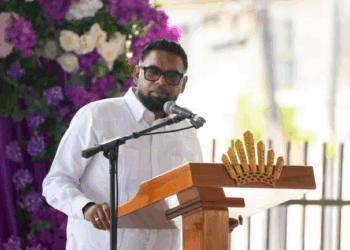
Social commentator GHK Lall has raised pointed questions about President Irfaan Ali’s leadership and public representation, arguing that the office demands a deeper alignment with national identity and expectations.
In an op-ed published in the Village Voice News, Lall contends that while “it is said to each his own,” the presidency “permits no such luxury,” asserting that the role carries responsibilities that go beyond personal expression.
Lall frames his critique through a series of questions directed at the Head of State, the public, and wider audiences. He challenges the President’s connection to the broader Guyanese population, asking, “Mr. President: who are you the leader for, which country and its rainbow of peoples? Who in Guyana looks up to you, Mr. President, as the nation’s leader?”
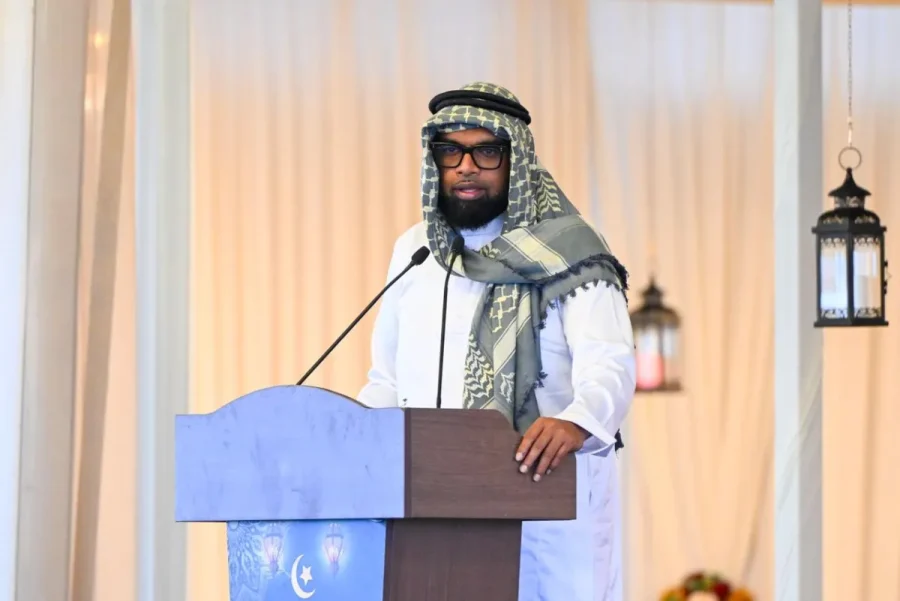
A central focus of the commentary is the President’s attire at recent religious observances marking Eid al-Fitr, which signals the end of the holy month of Ramadan.
Lall argues that the clothing worn by the President did not reflect local cultural norms, stating that “nothing in the attire of President Ali indicated even a smidgen of a relationship, or resemblance, to the way Guyanese Muslim men dress.”
He further noted that a review of the gathering showed that “not a single Muslim brother, not one believer and follower of the faith made the same choice of dress for the occasion, as did the president.”
This observation led Lall to pose a series of questions about appropriateness and symbolism, including whether those in attendance were “inappropriately dressed for the occasion,” or whether “Pres Ali was the one who was inappropriately dressed, given the time and place.”
Beyond Lall’s critique, similar concerns have been raised by observers who have questioned the President’s choice of attire at public events. Observations have described the President’s appearances as, at times, confused, ill-fitting, or inappropriate, with some suggesting they appear overly attention-seeking. One commentator went as far as likening the presentation to that of a “confused man-child, badly craving the limelight.”
The President wore a keffiyeh during the Eid observance. Traditionally an Arab headdress, the keffiyeh has evolved beyond its origins as practical attire for Bedouin men to become a widely recognised symbol of Palestinian nationalism, resistance and solidarity. Its association with political identity dates back to the 1930s Arab Revolt and has since taken on significant global meaning.
Observers say this raises questions about the message being conveyed by the Head of State and Government. Given the symbolism attached to such attire, some argue that choices at this level are rarely neutral and often communicate broader meanings, whether intended or not.
Lall argued that a national leader should consistently reflect local customs and expectations, writing that “a national leader…should always be attired in the most fitting national dress. What is traditional here. What is the norm here? What is appropriate…in Guyana?”
He cautioned that such perceptions—whether fair or not—can create unease among citizens and raise broader questions about authenticity and leadership, including how the President is viewed both locally and internationally.
While maintaining that his intention was not to target the President personally, Lall said he was raising “tough questions in difficult circumstances to unravel hard truths,” and called for a direct response from the Head of State.
“It would inspire if Pres. Ali himself responds. No spokespeople, but the president himself, his heart,” he wrote, adding that Guyanese across different backgrounds are awaiting answers.
The commentary adds to ongoing public discourse surrounding leadership, representation and national identity, particularly as Guyana navigates a period of rapid social and economic change.