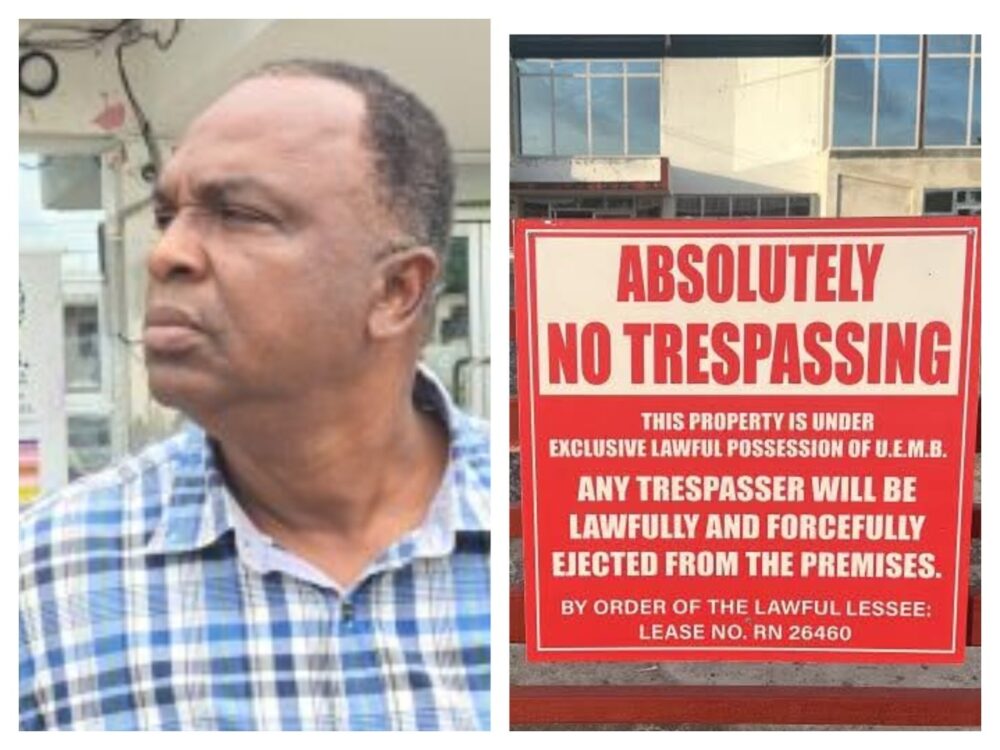
By Mark DaCosta- Recent events surrounding the Critchlow Labour College (CLC) have ignited a volatile dispute, raising serious concerns about the legitimacy of property rights and the influence wielded by certain individuals purportedly aligned with the ruling party. At the centre of this unfolding drama is Stanley Paul, just a tenant in the compound, with a little office space, who has positioned himself as a tenant yet alleges control over the property — prompting questions about the very fabric of governance and oversight in our nation.
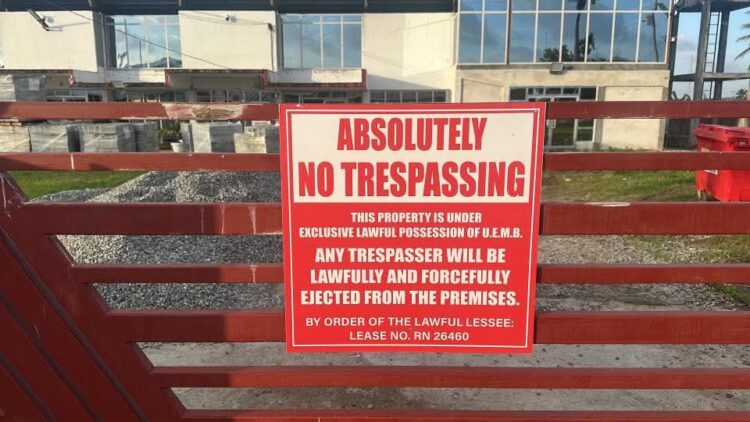
The situation has since escalated dramatically Thursday, along with subsequent erection of ‘No Trespassing’ sign by Paul or agent(s) acting his behalf at the CLC premises, signalling a blatant affront to the ongoing tensions between him and the institution’s Board Secretary, Lincoln Lewis. Reports suggest that Lewis, along with his colleagues, has been systematically locked out of the property, barred from exercising their rights over what they assert is their rightful domain. This intimidation was further exacerbated by previous complaints lodged with the police regarding Paul’s threatening behaviour, which have reportedly gone unacknowledged by local law enforcement.

Questions emerge regarding Paul’s assertions of authority. He claims to be in possession of a commercial lease signed with CLC Principal Dr. Ivor English, granting him exclusive access to portions of the college premises. Lewis contests the legality of this agreement, stating emphatically, “Nobody can sign any lease for Critchlow Labour College unless the Board has permitted me.” The lack of consent from the Board of the college puts Paul’s claims in a precarious position.
Paul, however, appears undeterred. He has been vocal about his connections within the higher echelons of power in our country, claiming to communicate directly with Vice President Bharrat Jagdeo , the Commissioner of Police and other influential figures, thereby insinuating a degree of immunity against legal scrutiny.
The validity of his lease agreement, supposedly registered with the Deeds Commercial Registry, is now being scrutinised, especially in light of claims that it was processed without rigorous oversight. Analysts have identified a troubling pattern, questioning why the registry would accept a document of such magnitude without substantating its particulars with relevant authorities.
Lewis’ attempts to alert law enforcement to the ongoing harassment seem to have been met with deaf ears. According to reports, he previously reached out to the Commissioner of Police, Clifton Hicken, about Paul’s behaviour — yet found himself without acknowledgment or support. This powerlessness in the face of intimidation raises alarms about the efficacy and integrity of our police force, especially when the situation indicates a clear misuse of authority and misrepresentation of rights.
Paul’s actions have incited public ire, with many perceiving this as nothing short of a land grab. His attempts to assert dominance over the campus evoke frustrations, especially since his actions followed incidents of destruction, with portions of the property previously ravaged by fire, determined to be arson. Amidst escalating tensions, the involvement of heavy machinery for demolition further escalated anxieties among college staff and board members, who questioned the legitimacy of the entire situation.
The local community and trade union leaders are left to ponder the implications of such events for educational institutions and community property rights. The legal framework surrounding property ownership and leasing appears compromised, with Paul’s association with the ruling Progressive People’s Party (PPP) giving rise to speculation that his boldness stems from perceived political backing rather than legitimate ownership.
The scenario illustrates a deeper concern — whether individuals with political connections can manipulate property rights to their advantage at the expense of the community and established institutions. It has left many questioning the ethical considerations, or lack thereof, that allow such transgressions to occur without accountability. The CLC, an institution founded on the principles of education and empowerment, now stands at a crossroads when faced with blatant disregard for its rights.
As the public scrutinises the unfolding saga, it is essential to recognise the need for vigilance and accountability in governance, particularly when the rule of law appears threatened. Lincoln Lewis and the CLC Board may be fighting for more than just a property; they may be battling for the fundamental principles that underpin our society — fairness, transparency, and the rightful authority of community leaders.
In this case, the governance structure intended to protect our communities seems to be failing. The situation serves as a potent reminder that every citizen must remain vigilant against the misuse of authority, especially when prominent political figures lend their influence to those seeking to undermine the rights of organisations like the Critchlow Labour College. To many observers, it seems that the CLC’s struggles represent not just a localised crisis but a broader commentary on the challenging dynamics of power in our nation.