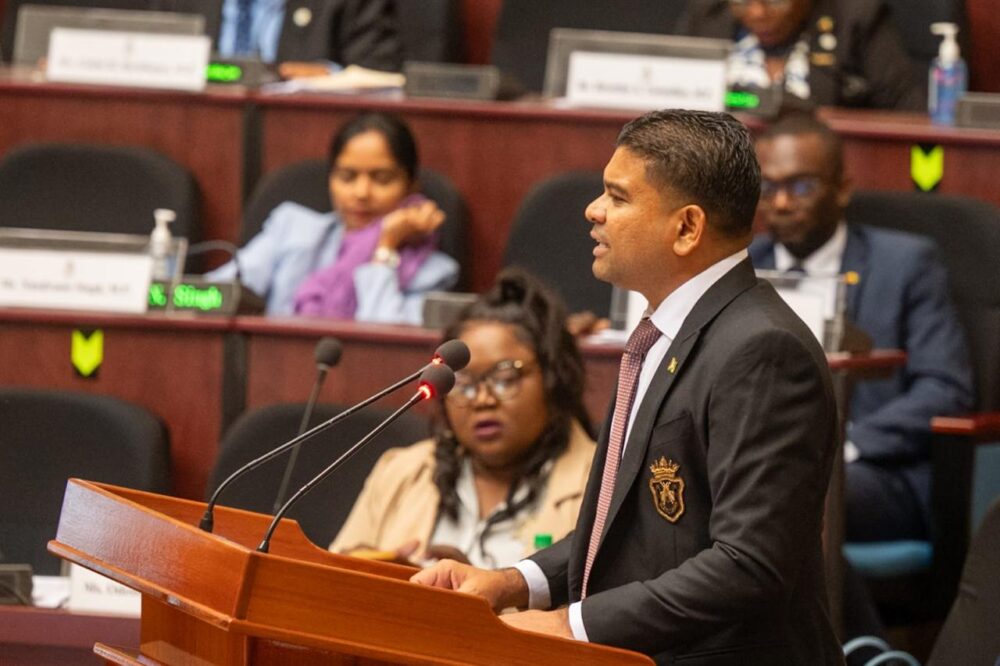
By Mark DaCosta- In a fervent display of political opposition, Azruddin Mohamed, the newly appointed Leader of the Opposition, has laid bare the shortcomings of the 2026 National Budget, declaring it incapable of alleviating the pervasive poverty affecting countless families across our nation. His remarks highlight a deepening disillusionment with the ruling party’s ability to translate impressive budget figures into tangible benefits for ordinary citizens.
Last Friday, in his maiden budget debate speech, Mohamed, who leads the We Invest in Nationhood (WIN) party, expressed that the budget’s record size of $1.558 trillion concealed a lack of effective management over vital oil revenues, ongoing issues such as power outages, and a stark decline in crucial industries like fishing. He sharply criticised the government’s focus on grand numbers and pointedly questioned, “Where is this money going, and who really benefits?” His statements resonate with citizens struggling to make ends meet as the cost of living continues to rise unchecked.
Throughout his address, Mohamed recounted the remarkable ascent of his party within the political landscape, securing over 109,000 votes. Despite being subjected to derogatory labels by government members, he stood firm, proclaiming, “I rise as the Leader of the Opposition … because over 109,000 voters believed in me… it shows hope over fear and gave WIN a chance.” His words reflect a broader frustration with the ruling party’s governance, as he called for public leaders to look beyond impressive figures and focus on substantive changes that genuinely uplift the populace.
Highlighting the disconnect between reported economic growth and the realities faced by households,Mohamed asserted that “a bigger budget does not automatically translate into better lives.” He emphasised that despite the projected economic growth, citizens feel the sting of rising prices, explaining, “These are impressive numbers; they look good on paper, but they do not help a mother who stands in the market and finds that the salary she earned this month buys less than it did last month.” This sentiment strikes a chord, particularly among those who see little improvement in their daily struggles.
Turning specifically to the oil and gas industry, Mohamed argued that while Guyana’s production has soared, with daily rates surpassing 900,000 barrels, large portions of society remain impoverished. He vehemently disputed claims of effective oversight of the Natural Resources Fund, stating, “Real oversight requires transparent audits done by internationally recognised firms, not reports filtered through the same government.” This call for transparency underscores a growing demand from citizens for accountability regarding the nation’s burgeoning oil wealth.
The opposition leader also called attention to the plight of small-scale miners, characterising them as the backbone of the industry whose rights have been overlooked by the government. He urged the Natural Resources Minister to facilitate land allocations for these crucial operators, stating, “Ensure you focus on the small miners.” His plea reflects a wider concern about the security threats faced by these workers, revealing an unsettling picture of vulnerability and neglect in the mining regions.
Mohamed did not shy away from tackling the broader agricultural sector, particularly the strife faced by fishermen. He noted a staggering decline in shrimp catches — reporting a fall from 45 million pounds to just three million — calling into question the government’s narrative of success. As the fishing industry falters, he called for urgent action, declaring that while the Minister of Agriculture wants us to believe all is well, “our sugar workers, our farmers and our fisherfolk are crying out.”
The Leader of the Opposition’s criticism extended to the public service workforce, which he asserted had been abandoned in this budget. “Our nearly 70,000 hardworking public servants got nothing in this budget. Not even a small salary increase, not a bonus, nothing planned for them in the year’s biggest budget,” he said, embodying the frustrations of many who feel overlooked amidst reported economic prosperity.
Moreover, Mohamed drew attention to the impact of economic pressures on families’ decisions regarding childbirth, highlighting a concerning trend of declining birth rates as women grapple with financial instability. He stressed that understanding the everyday struggles of citizens is essential to truly fulfilling their needs, declaring, “We need to invest directly in people, not just projects.”
In a rousing conclusion to his address, Mohamed warned that the government’s approach could lead to what is oftentermed the “resource curse,” where nations rich in resources fall prey to mismanagement and corruption. He said, “History will record what we did with this opportunity. Let it never be said that at the hour of abundance we did not do our best to ensure all 800,000 plus Guyanese benefited from our wealth.”
Ultimately, the Leader of the Opposition’s scathing critique of the 2026 Budget reveals a palpable frustration with the government’s priorities, which seem to favour headline figures over meaningful investment in citizens’ welfare. His address has ignited a conversation about accountability, transparency, and governance, calling on all parties to refocus their efforts to ensure that the benefits of our country’s resources are felt by every citizen. In doing so, he has reaffirmed his commitment to representing the voices of those often overlooked in the corridors of power, as he firmly declared, “I cannot support the 2026 budget for passage of this assembly.”