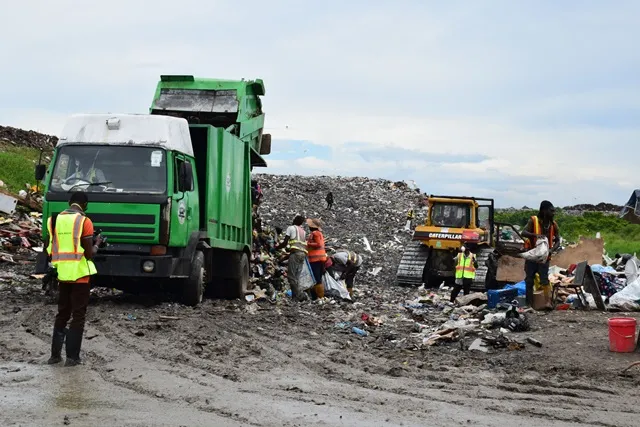
Minister of Public Works Bishop Juan Edghill has reiterated that individuals caught dumping waste along road shoulders will face stern penalties, emphasising the threat such practices pose to both public safety and the environment.
Speaking during a site inspection along the Ogle Highway last Friday, Minister Edghill warned that “Anybody who is caught dumping there will face serious consequences. Dumping of dirt, builders’ waste or garbage is not allowed on the road shoulders, [especially on] any main access road or highway,” underscoring the government’s commitment to enforcing anti‑dumping laws.
Edghill reminded that waste should instead be transported to designated landfill sites or approved locations such as schools and community grounds where fill material is needed. He also stated that authorities will clear currently dumped waste along the Ogle Highway and that enforcement will be strengthened going forward.
As part of broader waste‑management reforms, the government is exploring additional sites across Guyana to develop sanitary landfills—a move officials say is necessary to address chronic disposal challenges and promote a cleaner, more sustainable environment. Edghill said that new infrastructure, including improved road access and facilities for heavy‑duty garbage trucks, will be required nationwide to support these efforts.
Environmental experts note that illegal dumping can lead to soil and water contamination and severely harm ecosystems when waste materials leach hazardous substances into groundwater and waterways, threatening plant and animal life and potentially affecting community health. Pollutants and debris may also attract pests and contribute to air and water pollution.
Guyana, which ratified the Paris Agreement under the United Nations Framework Convention on Climate Change in 2016, has committed to protecting the environment and mitigating pollution in line with its climate responsibilities. Under international climate agreements, states are obliged to take measures that prevent significant harm to the environment and reduce greenhouse gas emissions, goals that align with national efforts to improve waste management and reduce environmental degradation.
The government also has a responsibility to ensure solid waste is properly managed by allocating financial resources to provide public waste receptacles, organise regular collection and disposal, run educational campaigns, and implement other necessary measures to maintain effective waste management across the country.