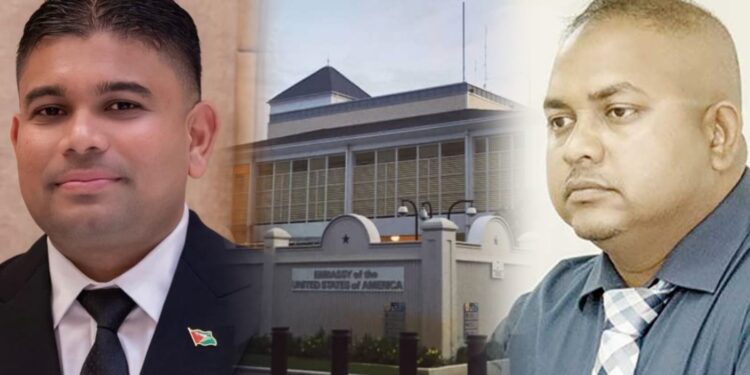
By Mark DaCosta- Recent discussions among international and local diplomatic representatives have highlighted a critical issue facing our nation — the urgent need for the election of a Leader of the Opposition. The growing impasse, which has persisted since Parliament last convened over two months ago, raises significant concerns about the functioning of our democracy. Key figures, including US Ambassador Nicole Theriot and Canada’s High Commissioner Sébastien Sigouin, have expressed their strong support for a fully operational Parliament and the swift appointment of an Opposition Leader to ensure that all representatives can fulfil their constitutional roles.
The essence of the matter lies in the vital role of the Opposition Leader within our parliamentary democracy. Theriot remarked on the importance of a functioning opposition, underscoring a point echoed by her European Union (EU )and British counterparts. She noted, “An active Parliament is important for Guyana’s continued growth and development,” thereby reinforcing the principle that a vibrant and engaged legislative body is essential for the progress of our country. Meanwhile, High Commissioner Sigouin stated that the issues related to scheduling Parliament and appointing an Opposition Leader should be resolved in accordance with our democratic laws, reflecting our nation’s commitment to upholding its constitutional responsibilities.
The absence of an Opposition Leader poses a serious threat to the principles of accountability and representation necessary for a healthy democracy. In our country’s unique political landscape, the Opposition Leader not only challenges the ruling party but also serves as a check against potential abuses of power. Without a robust opposition, the governing body could operate unchecked, risking both transparency and inclusivity in governance. This is echoed in the concerns raised by British High Commissioner Jane Miller, who articulated that the election of the Leader of the Opposition should occur “without delay,” as it is integral for parliamentarians to execute their duties fully.
The Guyanese Constitution outlines the indispensable role of the Opposition Leader in several critical appointments, ensuring that key positions within our judiciary and law enforcement are filled through a process that reflects national consensus. This mechanism acts as a safeguard against the “tyranny of the majority,” ensuring that our governance remains accountable to all citizens, not just those who supported the ruling party. The disregard for this constitutional requirement is particularly alarming, especially when one considers the historical context of our nation’s politics.
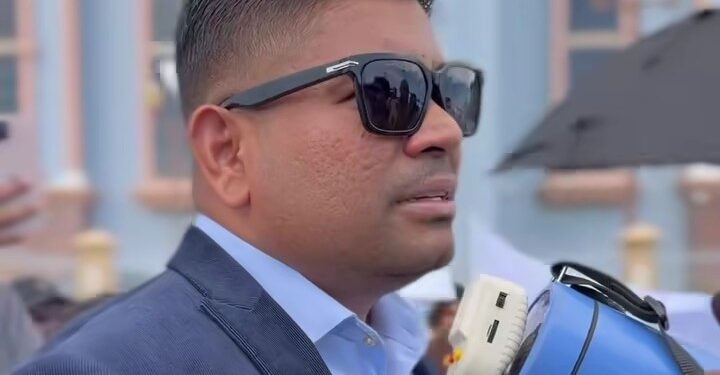
The recent failure to convene Parliament and elect an Opposition Leader is especially troubling considering the 2025 General and Regional Elections, which resulted in a significant shift in the political landscape. The WIN Leader, Azruddin Mohamed, representing a new political force, emerged with 16 seats amid a decreased representation for A Partnership for National Unity (APNU). He is widely believed to be the presumptive Leader of the Opposition. The delay in facilitating the process to allow for the election raises suspicions that the ruling People’s Progressive Party (PPP) is acting in collusion with Parliament’s Speaker, Manzoor Nadir, to suppress opposition and circumvent the democratic process.
Furthermore, without an Opposition Leader, the vital voices of citizens who supported the opposition are effectively silenced. In a nation historically divided along ethnic and political lines, the role of the Opposition Leader becomes even more crucial. As outlined in the recent remarks of EU Ambassador Luca Pierantoni, a functional democracy must ensure that diverse perspectives are heard and considered. He suggested that the resolution of parliamentary issues, including the election of the Opposition Leader, is essential for restoring governance that truly reflects the will of the people.
Amid the ongoing political tensions, Mohamed’s perceived threats to the PPP’s dominion over power, especially due to his vocal criticism surrounding allegations of corruption and mismanagement, only intensify the need for a clear and visible opposition presence. The idea that the Speaker has not convened Parliament for over two months raises eyebrows about the functioning of our democracy and the motivations behind such inaction. The reluctance to confront constitutional duties only serves to perpetuate a governance style that detaches itself from the electorate’s needs, thus posing a significant threat to our nation’s democratic integrity.
The international community’s calls for accountability resonate in light of these developments. Both the US and Canadian representatives have signalled their expectation for Guyanese political actors to demonstrate their commitment to democracy by allowing parliamentary discourse and the election of an Opposition Leader to progress without undue delay. The ongoing refusal by the ruling party to take responsibility for maintaining parliamentary schedules and electing an Opposition Leader amplifies calls for change and reform.
Our country stands at a crossroads where the importance of a functional governance structure cannot be overstated. In the absence of an Opposition Leader, we risk losing the essential checks and balances required for a government that serves all citizens. The implications for accountability, justice, and representation extend far beyond the realm of party politics; they strike at the very heart of what it means to be a democratic nation. With the next parliamentary session yet to be called and crucial issues unresolved, the people of our nation deserve to see their right to representation restored promptly and decisively. The time has come for decisive actions that reaffirm our commitment to a thriving democracy and a clear vision for our future.