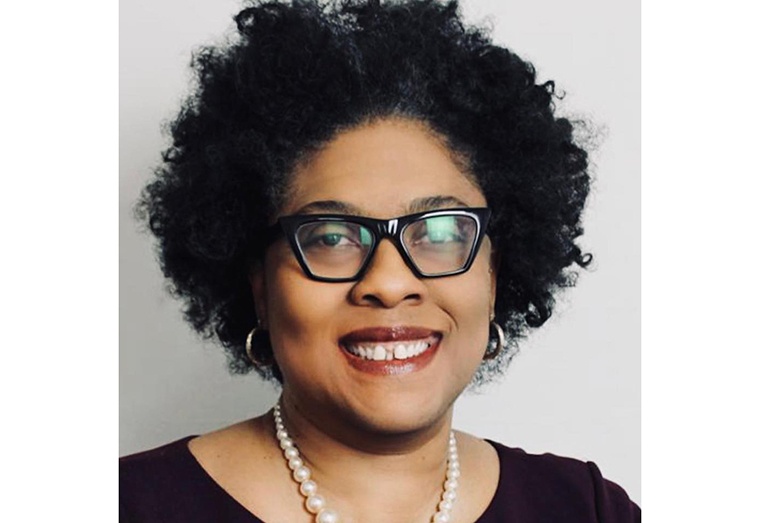
Learning gaps that cause children to fall behind academically often begin long before Grade 6 and, in many cases, before formal schooling starts, according to education researcher Karen Abrams, who is calling for earlier and more targeted interventions to reverse the trend.
Writing in Kaieteur News, Abrams, an education technology doctoral candidate, said children who are described as “behind” are not lacking intelligence but foundational skills such as letter recognition, sound blending, basic vocabulary, and number sense. “These gaps appear quietly in nursery and early primary, then grow louder with each grade,” she noted, adding that early struggles often evolve into frustration, low confidence, and reduced opportunities later in life.
Abrams cited international research showing that learning disparities emerge as early as toddlerhood, particularly among children who hear fewer words or have limited interactive conversation at home. Once school begins, the gap widens as stronger readers improve while struggling readers fall further behind. By around Grade 4, when students are expected to “read to learn,” children who are still decoding words begin to falter — a problem compounded by long school holidays without access to books or enrichment activities.
Guyana’s own data reflect similar trends, Abrams wrote, pointing to early childhood and primary assessments that show persistent weaknesses in phonological awareness, vocabulary, decoding, and numeracy. These gaps are evident from Pre-K screenings through Grades 2, 4, and 6, with long-term consequences for secondary school completion. She highlighted clear regional and socioeconomic disparities, noting that children in hinterland and riverain communities face additional barriers such as distance, language differences, limited electricity, and poor connectivity. “This is not about ability,” she wrote. “It is about exposure, time, and whether teaching meets children where they are.”
Evidence-Based Solutions Exist
Abrams said evidence-based solutions are well established. She emphasised that early, consistent, and interactive experiences — including daily reading aloud, conversation, songs, sound games, and hands-on counting — can significantly improve outcomes. For children already behind, quick assessments are critical to identify specific gaps, followed by explicit daily instruction and small-group or high-dosage tutoring. “Attendance matters. Lost days add up quickly,” she added, stressing that motivation and encouragement from adults can also change learning trajectories.
Drawing on personal experience, Abrams recalled a moment from her own schooling when a teacher’s encouragement helped her succeed, writing that “inspirational teachers change trajectories.” She argued that Guyana already has a clear policy path, including strengthening early childhood education, aligning curricula with frequent assessments, expanding early-grade tutoring, and ensuring remediation before students enter secondary school.
While calling for systemic reform, Abrams also urged parents to take immediate action at home. “Ten minutes of reading aloud each day. Five minutes of sound games. Counting while you cook. Naming what you see on the minibus,” she wrote, describing these simple activities as a form of curriculum that can help children catch up.
She concluded that, despite challenges such as limited internet access and shortages of books, progress does not have to wait. Early identification of learning gaps, timely intervention, and consistent support at home and in schools are key to ensuring more children complete secondary school ready to choose their futures rather than have those choices made for them.
A National Development Imperative
Meanwhile, others warn that Guyana’s failure to address early learning deficits threatens the country’s ability to build the skilled workforce needed to manage and benefit from its oil wealth and to diversify into non-oil sectors such as agriculture, manufacturing, technology, and services. Without strong foundations in literacy and numeracy, too many children will be locked out of technical training, higher education, and skilled employment, increasing reliance on foreign labour and expertise.
This risks deepening inequality, as the benefits of oil development accrue to a narrow segment of society rather than the wider population. Sustained underinvestment in early education could undermine long-term economic resilience and productivity beyond oil. Addressing these gaps systematically is not only a social imperative but a strategic economic necessity for Guyana’s development trajectory.
Analysts note that, despite Guyana earning more than US$8 billion since first oil in 2019, the country has failed to convert its resources into meaningful improvements in child welfare, education, and health. Pockets of extreme poverty remain widespread. A 2025 Inter-American Development Bank (IDB) report found that 58 percent of the population live in poverty, with 26 percent in moderate poverty and 32 percent in abject poverty.
Research shows a strong link between poverty, motivation, and educational outcomes. Children growing up in impoverished households often face limited resources, reduced support, and fewer opportunities for enrichment, which can diminish motivation and hinder learning. Without intervention, these challenges reinforce a cycle where low engagement and inadequate foundational skills lead to poorer academic achievement and reduced future prospects.
Hinterland regions such as Barima-Waini (Region 1), Cuyuni-Mazaruni (Region 7), Potaro-Siparuni (Region 8), and Upper Takutu-Upper Essequibo (Region 9) report poverty rates exceeding 70 percent, particularly among indigenous communities with limited access to services and infrastructure. Urban centres are not exempt: neighborhoods like Tiger Bay, Charlestown, Albouystown, Linden, and Lethem continue to grapple with overcrowding, poor sanitation, and underemployment.
Education and health outcomes compound the crisis. The World Bank notes that while enrollment at nursery and primary levels is high, a child born in Guyana today will be only 50 percent as productive as they could be with complete education and full health. Learning-Adjusted Years of Schooling (LAYS) are just 6.8 years, far below regional norms for Latin America and the Caribbean.
It Takes a Village
Addressing Guyana’s early learning gaps is not just an educational issue — it is a national imperative that will determine whether the country can fully harness its oil wealth, build a skilled workforce, and create a more equitable society. Policymakers must prioritise early childhood education through sustained investment, curriculum alignment, frequent assessments, and targeted remediation programs. Families, too, have a vital role, providing daily support through reading, conversation, and simple interactive learning at home. Communities and stakeholders must come together, recognising that no single institution can shoulder this responsibility alone.
As the African proverb reminds us, “It takes a village to raise a child.” Only through coordinated action — from government ministries to parents, educators, and civil society — can Guyana ensure that every child acquires the foundational skills needed to succeed, unlocking their potential and securing the country’s long-term social and economic future. The time to act is now; waiting risks leaving a generation behind while the nation’s wealth grows.