Guyana has been elected for the first time in decades to the Executive Board of the United Nations Educational, Scientific and Cultural Organisation (UNESCO), marking a significant milestone in the country’s international engagement.
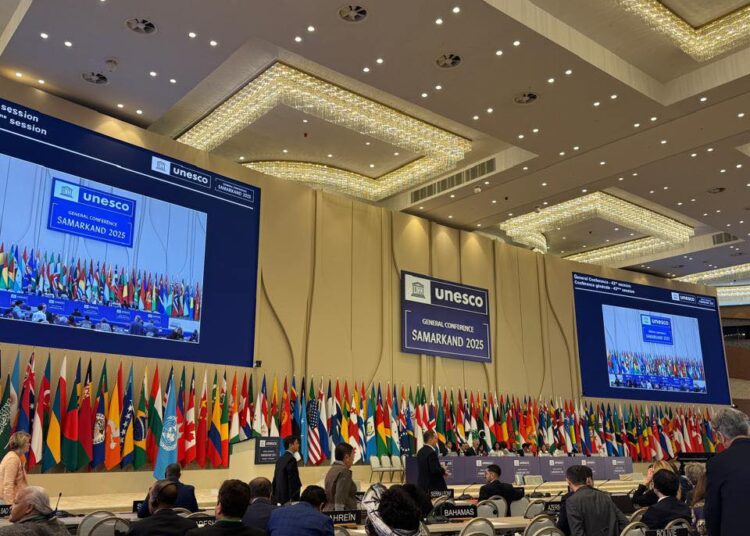
The election took place on Friday during UNESCO’s 43rd General Conference, currently underway in Samarkand, Uzbekistan. As a member of the Executive Board, Guyana will play a pivotal role in shaping policies and developing solutions for UNESCO’s 194 member states, focusing on education, science, culture, and communication.
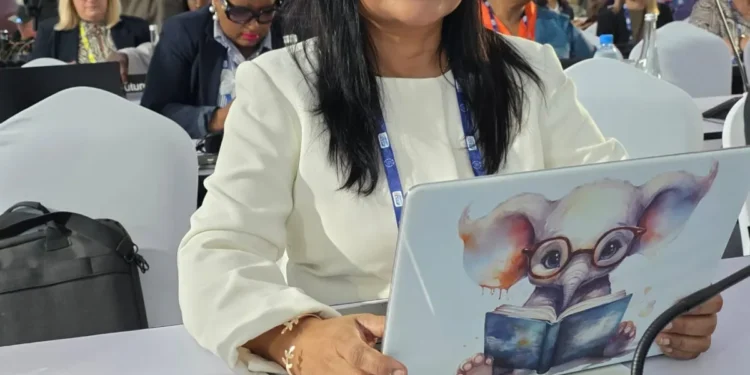
At the conference, Guyana’s Minister of Education, Sonia Parag, underscored the government’s commitment to academic equality and inclusion. She outlined ongoing and future efforts to ensure access to quality education for all, while also emphasizing initiatives to preserve Guyana’s rich cultural heritage and to nurture cultural industries as vital drivers of economic growth and social cohesion.
UNESCO’s constitution highlights the importance of intellectual and moral solidarity in achieving lasting peace, underscoring the significance of Guyana’s new role in advancing these ideals on the global stage.
According to the UNESCO Institute for Statistics, Guyana’s primary education completion rate has risen to approximately 99%, with the lower-secondary modeled completion rate reaching about 90%, both surpassing regional averages.
Despite these educational advances, challenges persist in child nutrition. A 2023 joint report by UNICEF, WHO, and the World Bank reveals that Guyana’s prevalence of wasting—low weight for height—among children under five stands at around 6.5%, exceeding the global target of 5%. A 2024 UNICEF report on “child food poverty” further shows that about 20% of Guyanese children consume only 0–2 food groups per day, indicating severe food poverty, while roughly 40% receive 3–4 food groups, indicating moderate food poverty.
Meanwhile, the Food and Agriculture Organization (FAO) notes that Guyana ranks among Latin America and Caribbean countries with the lowest prevalence of undernourishment—below 2.5%—although the country still faces relatively high rates of child wasting and anaemia among women of reproductive age, measured at 31.7%.