One week after losing last Thursday’s General Election by a landslide, former St. Vincent and the Grenadines Prime Minister Dr. Ralph Gonsalves remains—on paper—one of the principal overseers of relations between Guyana and Venezuela. His continued authority rests not on political mandate, but on the Joint Declaration of Argyle for Dialogue and Peace Between Guyana and Venezuela, an agreement signed on December 14, 2023, that entrenched his role as a permanent interlocutor in the border controversy.
From the moment of its signing, analysts argued that the Argyle Agreement weakened Guyana’s sovereign footing by shifting the territorial controversy away from United Nations mechanisms—including the International Court of Justice—and into the hands of political personalities without enduring legitimacy. The agreement, they warned, effectively allowed Guyana to be dictated to while outsourcing aspects of its sovereignty to external actors whose political power and global standing were never guaranteed to remain stable.
Gonsalves’ sudden removal from office now brings those early warnings into sharp focus.
A Discredited Former PM Still in Charge of a Sovereignty Crisis
The Argyle Agreement’s Clause #8 institutionalised Gonsalves’ involvement permanently, stating:
“Both States [Guyana and Venezuela] agreed that Prime Minister Ralph E. Gonsalves, the Pro-Tempore President of CELAC, Prime Minister Roosevelt Skerrit, the incumbent CARICOM Chairman, and President Luiz Inacio Lula da Silva of Brazil will remain seized of the matter as Interlocutors… [and] For the avoidance of doubt, Prime Minister Gonsalves’ role will continue even after Saint Vincent and the Grenadines ceases to be the Pro-Tempore President of CELAC, within the framework of the CELAC Troika plus one; and Prime Minister Skerrit’s role will continue as a member of the CARICOM Bureau.”
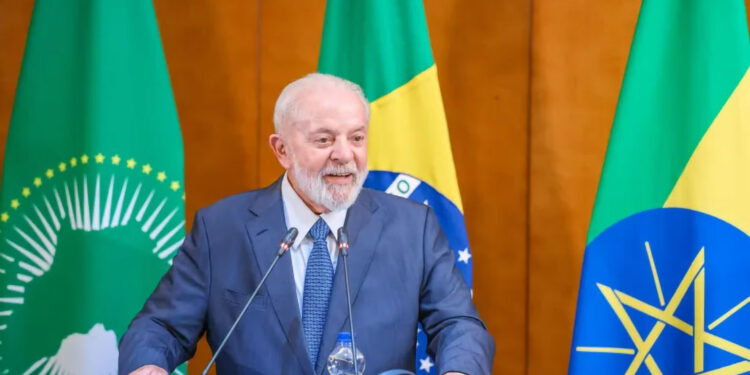
Clause #8 of the Argyle Declaration is the heart of the problem. It states that Gonsalves, along with Roosevelt Skerrit and Brazil’s President Luiz Inacio Lula da Silva, would remain permanently “seized of the matter,” and that Gonsalves’ role as interlocutor would continue even after he ceased to be the Pro-Tempore President of CELAC. In effect, the agreement personalized a key component of Guyana’s sovereignty—granting long-term authority to leaders whose domestic political fortunes could shift at any time.
Those fortunes have indeed shifted. Gonsalves’ defeat was not a narrow loss but a resounding rejection of his leadership. The scale of the electoral backlash, combined with the open contempt displayed by segments of his own population during and after the campaign, raises serious questions about the legitimacy he now brings to any regional or international mediation. If he could not command respect at home, analysts argue, it is difficult to see how he could effectively command it from a foreign nation—especially while presiding over a critical aspect of Guyana’s sovereignty and given his own history of hostility toward sections of the Guyanese electorate during the 2020 General and Regional Elections.
CELAC Has Moved On — But Guyana Has Not
Regionally, the political landscape has also shifted. The Pro-Tempore President of CELAC is now Gustavo Petro, who assumed the position on April 9, 2025, succeeding Xiomara Castro of Honduras. Gonsalves’ tenure as CELAC chair ended in January 2024, meaning that his institutional basis for involvement has long expired.
Yet despite these changes, the Government of Guyana has made no public statement clarifying whether the Argyle framework—and Gonsalves’ central role within it—remains in force. This silence has only deepened concerns that Guyana may have tied its territorial defence to external figures without ensuring institutional continuity or accountability.
A Self-Inflicted Vulnerability Exposed
Gonsalves’ electoral defeat highlights what critics now view as a fundamental design flaw in the Argyle Agreement. By tying the border process to political individuals rather than international institutions, Guyana exposed itself to the unpredictable realities of regional elections. The agreement’s architects assumed stability where none existed, and Gonsalves’ removal from office now exposes just how fragile that design always was.
As of December 2025, Guyana has not addressed the most pressing questions:
-
Does Ralph Gonsalves still serve as an interlocutor in the Guyana–Venezuela process?
-
If so, under what authority?
-
Does the Argyle Agreement still have legal or diplomatic standing?
-
Will Guyana restore full reliance on the ICJ-led UN process?
-
Who now speaks for CELAC and CARICOM within the Argyle mechanism?
Until these issues are confronted publicly, Guyana remains in a precarious position: a former foreign leader—stripped of office, stripped of regional authority, and repudiated by his own electorate—continues to hold formal influence over one of Guyana’s most sensitive territorial matters.
What was introduced in 2023 as a framework for de-escalation now risks becoming a sovereignty trap of Guyana’s own making.