Friday, April 17, 2026
Village Voice News
ADVERTISEMENT
  • Home
  • News
  • Sports
  • Editorial
  • Letters
  • Global
  • Columns
    • Eye On Guyana
    • Hindsight
    • Lincoln Lewis Speaks
    • Future Notes
    • Blackout
    • From The Desk of Roysdale Forde SC
    • Diplomatic Speak
    • Mark’s Take
    • In the village
    • Mind Your Business
    • Bad & Bold
    • The Voice of Labour
    • The Herbal Section
    • Politics 101 with Dr. David Hinds
    • Talking Dollars & Making Sense
    • Book Review 
  • Education & Technology
  • E-Paper
  • Contact Us
No Result
View All Result
  • Home
  • News
  • Sports
  • Editorial
  • Letters
  • Global
  • Columns
    • Eye On Guyana
    • Hindsight
    • Lincoln Lewis Speaks
    • Future Notes
    • Blackout
    • From The Desk of Roysdale Forde SC
    • Diplomatic Speak
    • Mark’s Take
    • In the village
    • Mind Your Business
    • Bad & Bold
    • The Voice of Labour
    • The Herbal Section
    • Politics 101 with Dr. David Hinds
    • Talking Dollars & Making Sense
    • Book Review 
  • Education & Technology
  • E-Paper
  • Contact Us
No Result
View All Result
Village Voice News
No Result
View All Result
Home Op-ed

Can Technology Really Help The Caribbean Recover Faster After Disasters?

By: Chalsey Gill Anthony, Environmental Communicator, on behalf of Caribbean Policy Development Centre (CPDC)

Admin by Admin
November 27, 2025
in Op-ed
Damaged vessels from Hurricane Beryl, Barbados. Photo Credit - Ricardo Mazalan

Damaged vessels from Hurricane Beryl, Barbados. Photo Credit - Ricardo Mazalan

0
SHARES
0
VIEWS
Share on FacebookShare on Twitter

In the face of a disaster, the difference between quick recovery and prolonged hardship often comes down to one thing: information. Who is affected? How severe are the damages? Who needs help first? In the Caribbean, where disasters are growing stronger and more frequent, technology can turn chaos into action.

The reality on the ground is that, too often, communities wait weeks for assessments before help arrives. A farmer loses not only her crops, but also stored seeds and irrigation equipment. A fisher is left without nets, fuel or safe harbour access. A market vendor loses stock during a power outage but still owes rent and supplier fees. These delays aren’t because governments don’t care, but because the systems we rely on are slow and need improvement.

READ ALSO

Southport Inquiry: a real one, real results

Gas lines -a study in leadership failure, mixed priorities

As we’ve seen with recent storms like Hurricane Melissa, delays in assessment mean missed planting seasons, extended income loss, and avoidable setbacks across multiple sectors.
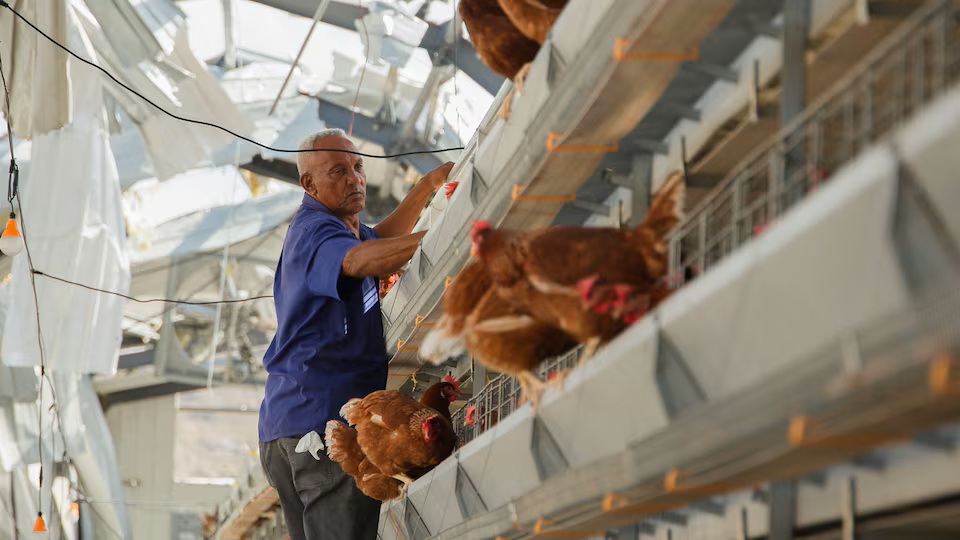
Osbourne Brumley at his “hurricane-proof” egg facility, destroyed by Hurricane Melissa in St. Elizabeth, Jamaica. Photo Credit – Maria Alejandra Cardona

Can technology help? Only when it fits our realities.

CPDC’s research across five Caribbean countries shows that only 21% of community organizations currently keep vulnerability data on their members. That means most cooperatives, credit unions, and civil society groups simply don’t have records ready and on hand about who is most at risk. Whether it’s the elderly farmer without irrigation equipment, the young fisher still repaying a motor loan, or the market vendor dependent on refrigeration with no backup power, help is harder to target, and delays are sure to happen.

Digital tools like shared databases, mobile apps and surveys, and even SMS-based tools can help local organizations identify risks and track their members’ needs in real time. Imagine a cooperative with an app showing which members are most exposed to flooding, or a credit union instantly verifying who qualifies for an emergency payout after a storm. CPDC’s research recommends testing digital tools across the region through cooperatives and CSOs to help track member risk and deliver disaster support faster, starting with small-scale action rather than large technological overhauls.

But While Digital Tools Show Promise, Not Everyone Has Equal Access

Across the region, access to smart devices and stable internet is not the same for everyone. Many women, rural families, and the elderly are not using apps. Power outages after storms make digital tools temporarily inaccessible. If technology is built without considering gender, age, connectivity, or socio-economic gaps, the people most at risk remain excluded and unprotected.

That is why any move toward a “Smart Caribbean” must consider who has digital access, who requires in-person support, and how to use technology to complement—not replace—human networks. It must help organise data and blend digital tools with long-standing traditional methods of support to determine what systems will truly work on the ground.
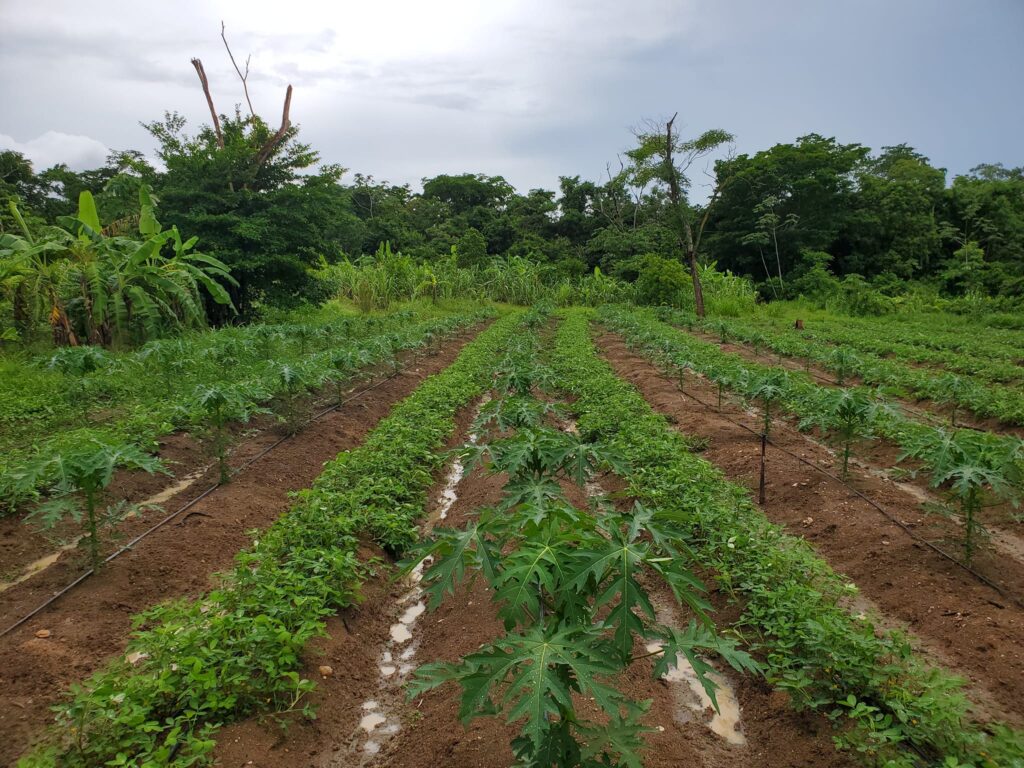
rop field in Cayo District, Belize. (Photo Credit – contributed)

Technology and Community-led Finance

Technology also strengthens meso-level Climate and Disaster Risk Finance and Insurance (CDRFI). Parametric insurance, for example, relies on weather data triggers, like rainfall or wind speed, so payouts can happen automatically without lengthy inspections. Satellite imagery, weather stations, and mobile money transfers combine to ensure that affected families receive funds within days, not months.

For informal workers, technology can be the key to inclusion. Mobile payments mean fishers without bank accounts can still receive insurance payouts. Digital surveys allow market vendors to register with their associations quickly, building the databases needed to prove their vulnerability. Even WhatsApp groups can serve as rapid communication channels during emergencies, linking communities to trusted organizations.

Recovery Must Start Before Impact

Tools alone won’t make us ready—but tools combined with trusted institutions can. With meso-level CDRFI and the right technology, we can shorten recovery times, target assistance more fairly, and ensure that no one is left behind. A Caribbean powered by smarter data, trusted institutions and people-centred tools is one where recovery happens faster and where fewer families are forced to start over.

CPDC’s research provides a roadmap for how technology and meso-level CDRFI can work hand-in-hand to make this possible. The next step is putting those tools in the hands of the people who know their communities best.

Learn more about how technology and meso-level disaster finance can protect livelihoods. Explore CPDC’s CDRFI research and join the conversation through the Risk Resilience Hub.

Climate change isn’t waiting, and neither should we.
ShareTweetSendShareSend

Related Posts

GHK Lall
Op-ed

Southport Inquiry: a real one, real results

by Admin
April 16, 2026

The Commission of Inquiry chaired by Sir Adrian Fulford and probing for answers into the Southport, England tragedy went live...

Read moreDetails
GHK Lall
Op-ed

Gas lines -a study in leadership failure, mixed priorities

by Admin
April 15, 2026

Like a wildfire, a flicker became a flame almost instantly.  Thankfully, it was not a real fire, but the fearful...

Read moreDetails
Op-ed

Hungary and Guyana -Many Striking Parallels

by Admin
April 14, 2026

By GHK Lall- A handful of people owns/controls half the country. Rings loudly; with a bigger fraction involved. The “machinery...

Read moreDetails
Next Post

Victims of Silence: The Stolen Dreams and Worthless Deeds Behind Project MYRA


EDITOR'S PICK

Aubrey Norton and Nigel Hughes have Gotta to be Hungry to Win the Upcoming Elections

April 1, 2025

Court of Appeal Upholds GECOM’s Right for Election Recount

December 19, 2023

NAACIE general secretary cannot properly represent workers while sitting as a director of GPL

January 4, 2021
Chinese Foreign Ministry spokesperson Lin Jian at a regular press conference in Beijing, capital of China, April 29, 2024. /China's Ministry of Foreign Affairs

China to apply visa-free policy to nine more countries: spokesperson

November 22, 2024

© 2024 Village Voice

No Result
View All Result
  • Home
  • News
  • Sports
  • Editorial
  • Letters
  • Global
  • Columns
    • Eye On Guyana
    • Hindsight
    • Lincoln Lewis Speaks
    • Future Notes
    • Blackout
    • From The Desk of Roysdale Forde SC
    • Diplomatic Speak
    • Mark’s Take
    • In the village
    • Mind Your Business
    • Bad & Bold
    • The Voice of Labour
    • The Herbal Section
    • Politics 101 with Dr. David Hinds
    • Talking Dollars & Making Sense
    • Book Review 
  • Education & Technology
  • E-Paper
  • Contact Us

© 2024 Village Voice