When major floods hit Guyana in 2005, Christine Samwaroo was a young student. Schools were closed, communities submerged, and she remembers worrying deeply for her grandmother, who was trapped in her home as water levels rose. That memory stayed with her. Today, as Founder of The Breadfruit Collective, she says it shapes how she thinks about resilience.
“Even as a child, I was aware of justice,” she says. “I didn’t have the words for climate change yet, but I understood what it meant to be worried about others, older people, classmates, and families. Those worries haven’t gone away.”
Christine explains that in Guyana, even a single hour of heavy rain now triggers flooding. For her, it’s a reminder that the systems meant to protect people, from education to housing, are not resilient to climate impacts. “We still don’t design for people with disabilities or the elderly,” she says. “And when you build for those who are most vulnerable, everyone benefits.”
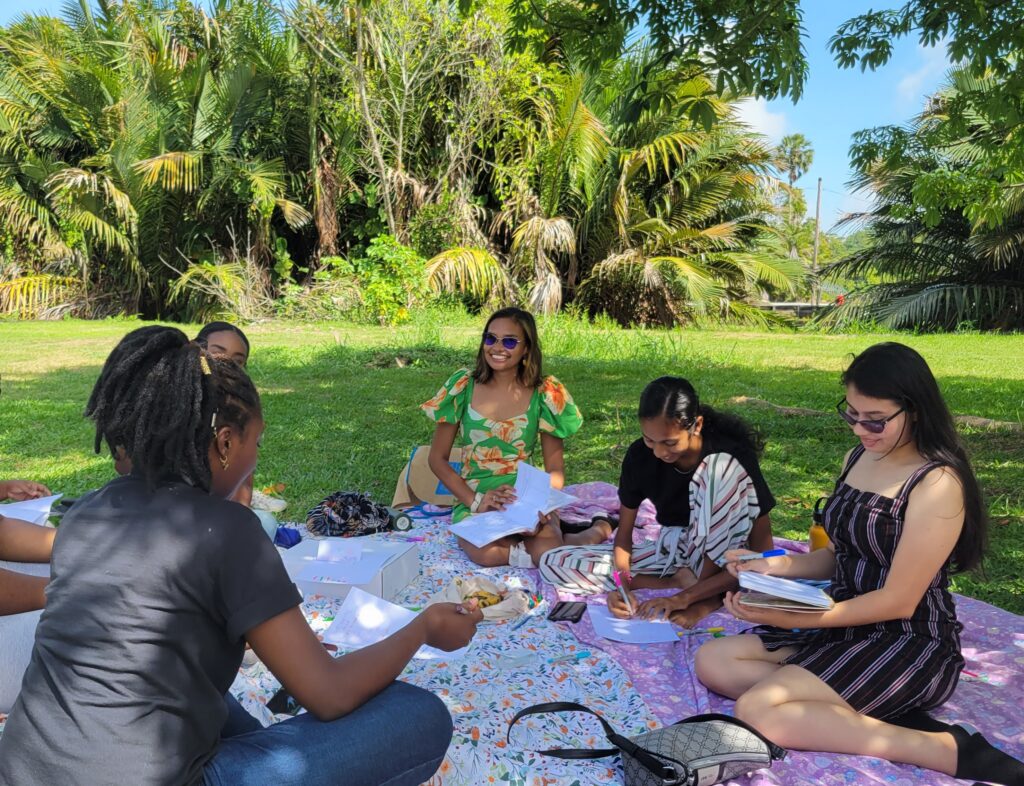
Across the Caribbean, women and youth are repeatedly named as key stakeholders in climate policy, yet still experience limited participation in actual decision-making.
Christine, who has worked in both government and civil society, says that while “inclusion” is a buzzword in proposals, it rarely translates into shared power. “At the global level, everyone agrees youth and women should be included,” she says. “But in practice, projects are still written without those most affected leading them. We’re invited to the table, but not always heard.”
Her frustration echoes across the region. From Saint Lucia to Grenada to Belize, community groups, especially those led by women and young people, continue to operate without stable funding or disaster budgets. The Caribbean Policy Development Centre (CPDC)’s recent research across five Caribbean countries revealed that fewer than one in three community organizations include women in financial decision-making roles related to disaster preparedness, and only about 25% have active youth representatives involved in climate or disaster response planning.
This shows that those most affected by climate shocks are often left out of the systems meant to protect them. Yet, across the Caribbean, there is still little public information on how gender barriers shape access to disaster risk finance or insurance. That lack of visibility makes it harder to design financial protection that truly works for everyone.
Caribbean Gender and Social Inclusion Specialist from Dominica, Elishah St. Luce, points to Hurricane Maria as a good example of climate impacts on vulnerable people in Dominica. “A lot of elderly women couldn’t leave shelters for long periods of time after Maria,” she says. “Some had lost their homes completely, and without insurance or income, they simply couldn’t rebuild.”
She cautions, however, against treating “women and youth” as one uniform category. “Not all women experience disasters the same way,” she explains. “A single mother without childcare, a rural farmer, or an indigenous woman each faces different barriers. Even among youth, a young man who left school early will face different recovery challenges than a university student.”
Elishah stresses that understanding these intersections, of age, gender, income, and ethnicity, is key to fair disaster planning. “We cannot paint disproportionate impacts with a broad brush,” she says. “Fair recovery means understanding that not everyone starts from the same place.”
Both Christine and Elishah paint a shared picture of what a truly resilient Caribbean could look like — one that listens first, plans with care, and invests in people, not just infrastructure.
For Christine, rebuilding resilience begins with remembering what we already know. “We have ancestral and Indigenous wisdom about living with the environment,” she says. “Resilience means being good ancestors, protecting nature so it can keep protecting us.” Her vision is rooted in justice and design: building communities where accessibility, inclusion, and care are treated as the foundations of development, not as afterthoughts.
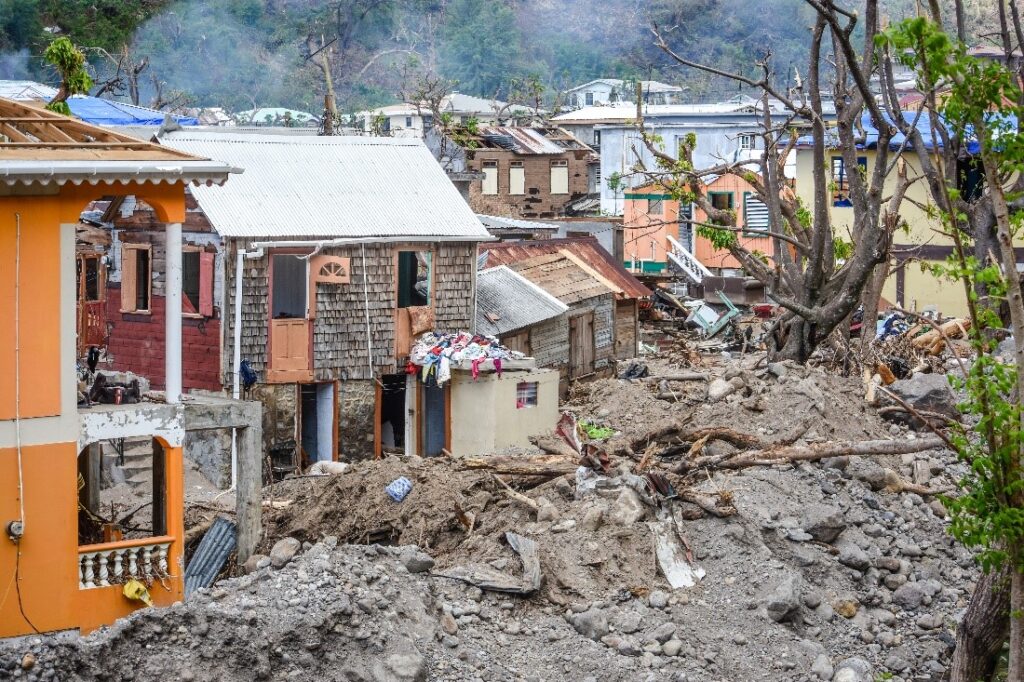
Elishah adds that reimagining resilience means doing the harder, slower work of meeting people where they are, especially those who have been left out of the formal systems. “We need to rebuild the networks that used to hold our communities together,” she says. “Women’s and youth groups were once the bridge between policy and people. We’ve lost many of them, and that loss has made us more vulnerable.”
Their reflections echo a larger truth emerging across the region: resilience cannot exist without social cohesion and local ownership. That’s why new regional models, like meso-level Climate and Disaster Risk Finance and Insurance (CDRFI), are not just about payouts or policies. They’re about rebuilding trust in local systems. By channeling funds through community groups, cooperatives, women’s groups, and credit unions, meso-level CDRFI strengthens the exact kind of social fabric Christine and Elishah describe.
Caribbean resilience, then, is not only about disaster response or economic recovery. It’s about restoring the networks of care that allow families to stand back up after every storm, the same networks women and young people have quietly sustained for generations.
And so, our region must no longer ask whether women and youth should be at the center of resilience planning. It’s whether we are willing to build the systems that make their leadership possible.