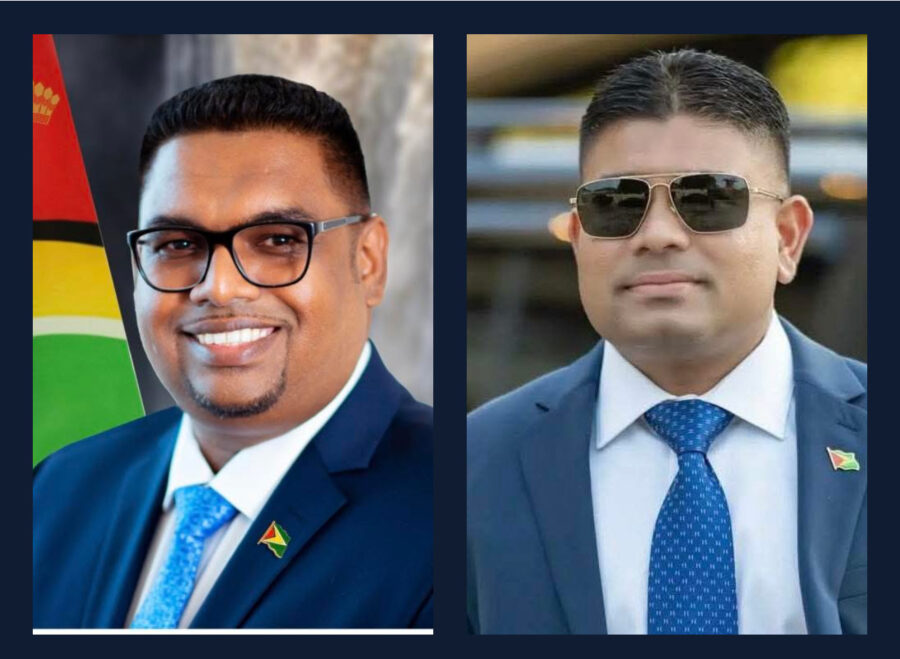
By Mark DaCosta- In a swift turn of events, two prominent figures in our nation’s business landscape, Nazar and Azruddin Mohamed, are now facing extradition to the United States. Their detainment, linked to serious allegations of gold smuggling, tax evasion, and financial misconduct, has triggered conversations not only about the charges themselves but also about the broader political ramifications of their arrest. Three days before Azruddin was due to potentially assume the role of Leader of the Opposition, he was apprehended in a manner many found strikingly unceremonious, handcuffed and placed into a police vehicle despite his cooperation with authorities.
As news of their arrests unfolds, the implications are far-reaching. The Attorney General’s Chambers confirmed that a formal extradition request had been initiated by the U.S. government, relating to an indictment unveiled in October 2025. This indictment carries a formidable list of charges, including wire fraud, money laundering, and customs violations, all linked to an alleged scheme involving an astonishing US$50 million in gold exports and significant evasion of taxes. The sequence of events appears to have stemmed from a long-running investigation by American authorities into gold export practices in our country, dating back to the mid-2010s, which was supported by cooperation from local law enforcement agencies.
The two Mohameds allegedly conspired to deceive the Government of our nation, exploiting tax structures and falsely declaring customs information to facilitate the illegal movement of over 10,000 kilogrammes of gold. The case has now been expedited under the amended Fugitive Offenders Act, further highlighting the intricate legal framework involved in the extradition process. However, amidst the procedures lies a tangled web of local and international power dynamics.
Notably, the apprehension of Azruddin Mohamed comes at a politically charged juncture. Many were anticipating his inauguration as a significant opposition leader, representing the We Invest in Nationhood (WIN) party, which secured a commendable 16 seats in the National Assembly. Speculation now arises: could this arrest be a strategic move aimed at stifling a burgeoning opposition that could challenge the entrenched rule of the People’s Progressive Party (PPP)? Political analysts and commentators have raised questions about the timing of the arrests and whether they align too conveniently with international interests. Might it be in the interest of the United States to maintain a strong PPP government, given its advantageous agreements with ExxonMobil concerning our nation’s oil extraction and use?
The PPP, often critiqued for its relationship with ExxonMobil, is perceived by many as having granted excessively beneficial arrangements that serve foreign interests more than those of our citizens. As Azruddin’s potential ascendance to the opposition’s leadership could have served as a vital counterbalance to the PPP’s governance, some wonder if the arrest serves a dual purpose — targeting alleged criminal activity while also sidelining a political threat to the current administration.
Furthermore, many citizens have voiced their frustration with the prevailing political climate. The current opposition leader’s lackluster performance has only heightened calls for a more potent figure to challenge the PPP’s unrestrained control. Could the U.S. be attempting to ensure that such opposition remains weak and fragmented? As thoughts dwell on the ramifications of this arrest, it is essential to consider the external influences at play and the potential for deeper political manipulation.
As the situation develops, the balance of power within our nation remains in flux, with the outcome of these legal proceedings potentially reshaping not only the political landscape but also the relationships governing our nation’s economic assets. The future journey of the Mohameds is now closely watched, but the questions linger — what are the precise implications of this high-profile extradition, and who truly stands to benefit from the unfolding saga? Only time will tell as our country grapples with the intersection of crime, politics, and international relations in an increasingly complex environment.