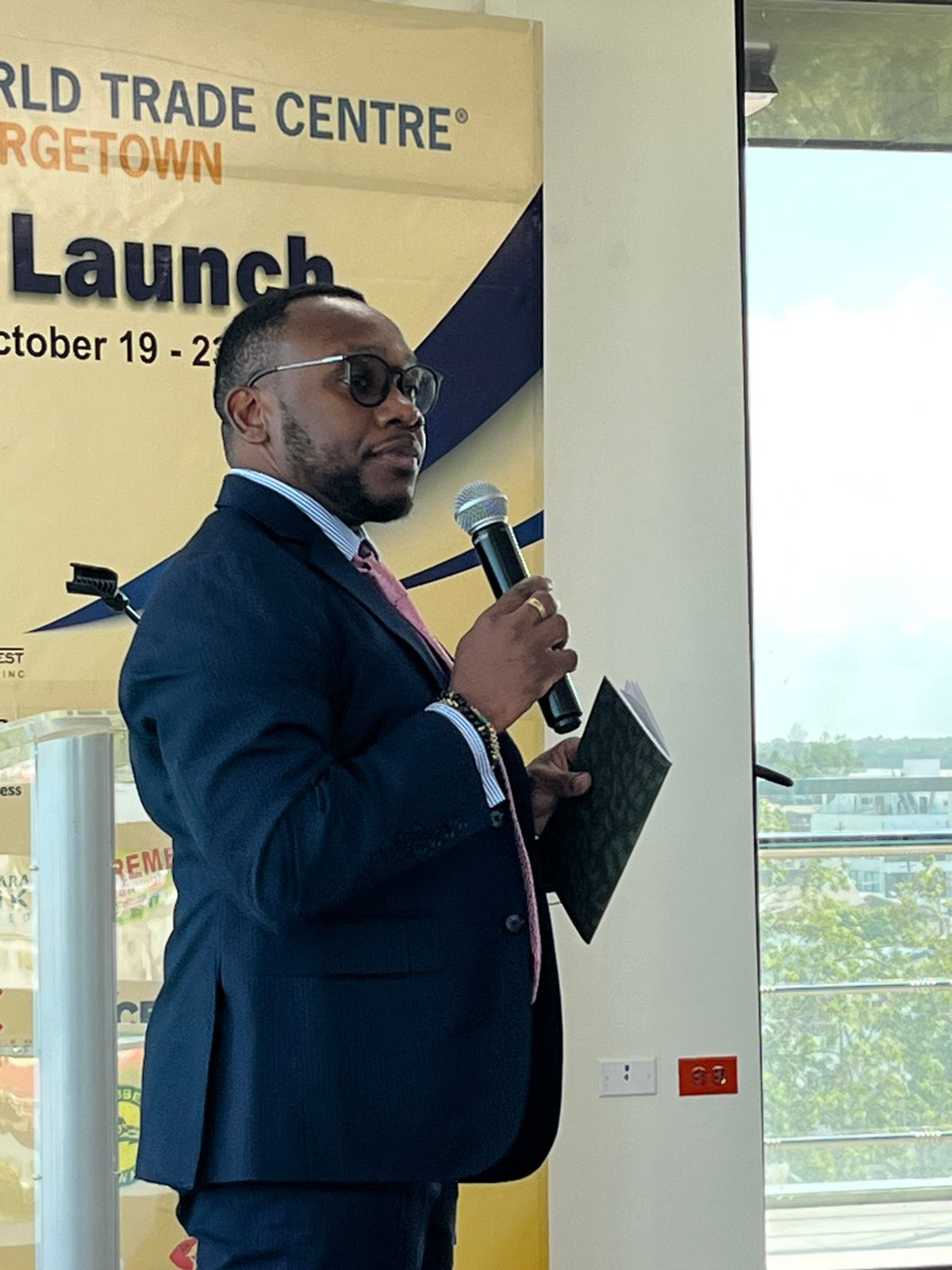
As global trade systems face mounting disruption and geopolitical uncertainty, Caribbean states are accelerating efforts to strengthen regional integration, diversify trade partners, and build economic resilience, according to Joel Richards, Trade Policy and Legal Specialist at the CARICOM Secretariat.
Speaking during a seminar hosted by the World Trade Centre Georgetown (WTCG) as part of its Business Week activities, Richards said that while technological innovation is reshaping industries worldwide, small economies like those in the Caribbean must also navigate a parallel wave of disruption, one that challenges traditional trade frameworks and global governance systems.
“All around us there is disruption, some good, some bad,” Richards said. “Technological change like artificial intelligence and digital platforms are transforming how we live and work, but trade disruption, such as protectionist policies and weakened global rules, poses real risks to smaller economies.”
Drawing on his near seven years of experience as a negotiator at the World Trade Organization (WTO) in Geneva, Richards underscored the importance of maintaining a rules-based multilateral trading system to ensure fairness and predictability for developing countries.
“For small states like ours, rules matter,” he emphasised. “We rely on a global system that provides security, transparency, and predictability. Without it, the playing field tilts sharply against us.”
He explained that the erosion of the WTO’s dispute settlement system has made it harder for countries to challenge unfair trade practices, leaving smaller economies exposed to larger powers.
“The dismantling of that system means we’ve lost a key mechanism for enforcing fairness,” he said. “That’s why CARICOM continues to champion the restoration and reform of the WTO process.”
Richards also outlined ongoing initiatives within CARICOM to modernise the regional integration framework and advance the Community Industrial Policy, which aims to build industrial capacity and encourage innovation-driven growth. He said the revised Treaty of Chaguaramas, which provides for the free movement of goods, services, capital, and people, remains central to this effort.
“Our region can only be competitive if we treat our collective markets as one,” he said. “Production integration … where firms source inputs from across member states, is essential to building scale and efficiency.”
The industrial policy, recently endorsed by CARICOM trade ministers, will focus on innovation, value-chain integration, and production linkages across the region, Richards said.
Richards also noted that despite the external challenges, the region is taking proactive steps to adapt to change from fostering innovation and developing digital economies to strengthening trade diplomacy.
“We know the world has changed,” he said. “Our task is to make sure that CARICOM changes with it, to be more resilient, more connected, and better prepared for the global economy we’re now living in.”
The seminar formed part of World Trade Centre Georgetown’s ongoing initiative to connect Guyanese enterprises with international trade experts and foster deeper collaboration between regional institutions and the private sector.