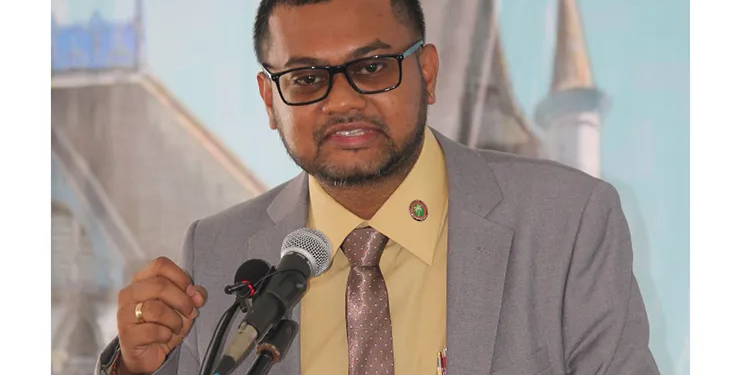
In a trilogy of sharply worded opinion pieces, political commentator and former Guyana Gold Board official GHK Lall has taken direct aim at the People’s Progressive Party (PPP) Government, arguing that it is deeply entangled in the scandal surrounding indicted businessmen Nazar “Shell” Mohamed and Azruddin Mohamed, and cannot simply deflect responsibility.
In his latest column, “The PPP Govt can deflect, it can’t disown”, Lall reacted to the revelation that United States (U.S.) authorities seized over US$5.3 million worth of gold from the Mohameds on June 11, 2024 — the same day OFAC sanctions were announced. He called the news “shocking and staggering,” particularly since it occurred well into the PPP’s current term in office.
“Whatever it says, even in the slightest, at its lightest, it reveals so much, it turns many postures upside down,” Lall wrote.
He estimated the shipment represented over 1,600 ounces of gold, raising questions about which state agencies were involved or complicit in its facilitation. Drawing from his experience at the Gold Board, Lall recalled longstanding issues of reused export seals, the quiet rehiring of dismissed staff, and institutional silence in the face of corruption.
“There is a mystery of who did see, but pretended not to, and those who saw but looked away, said nothing,” he noted.
PPP’s Ties to the Mohameds: Friendship, Favors, and Fallout
Businessman Azruddin Mohamed has long claimed close ties with the People’s Progressive Party (PPP), including financial contributions both during its time in opposition and since its return to government in 2020. One public symbol of this relationship was President Irfaan Ali’s use of a luxury vehicle owned by Mohamed during his swearing-in ceremony, reportedly bearing the presidential seal. Mohamed later alleged that both President Ali and Vice President Bharrat Jagdeo facilitated the importation and customs clearance of his Lamborghini, a claim that sparked national controversy.
He released what he says are WhatsApp messages exchanged with Ali, showing the president advising that he pay GY$25 million in duties instead of G$50 million, and later stating the “matter [was] sorted.” President Ali has denied any involvement, calling the allegations false and maintaining that no undervalued invoice was ever accepted by customs authorities. The PPP has rejected Mohamed’s claims, urging him to produce verifiable evidence.
Friendship, Protection — Then Indictment
In earlier op-eds titled “When Friendships Rupture, When Cooperation Becomes Collusion” and “Grand jury indictments of two Guyanese say so much“, Lall delved deeper into the political relationships that surrounded the Mohameds, questioning how such alleged criminal activity could thrive without high-level protection.

“How do two Guyanese of such alleged pervasive criminal activities happen to be friends of presidents, ministers, powerful public servants, including police officers?”
The indictments cover the years 2017 to 2024, implicating both the current and previous administrations. Lall accused officials of turning a blind eye to gold smuggling, even after public allegations, and questioned why the government only appeared to take action once Azruddin Mohamed entered politics.
“Why cooperation for politics, and not when national economics, as alleged, was jeopardised?”
Oil Politics and the Breaking Point
Lall suggests that Azruddin Mohamed’s political stance — particularly his willingness to question the ExxonMobil oil contract — marked a turning point. He claims this may have aligned the interests of the PPP and the U.S. Government against the Mohameds.
“In one sentence, I believe that Azruddin Mohamed sealed his political and personal future,” he wrote.
He posits that the government’s insistence on the “sanctity of contract” with Exxon ensures its own survival — and that the younger Mohamed’s challenge to that arrangement proved politically fatal.
The Bigger Question: Who Will Be Held Accountable?
Lall concludes that despite attempts to shift blame or revive old accusations against him personally, the PPP cannot escape scrutiny.
“The PPP clique has indicted itself. Try indicting me,” he declared.
His columns raise serious concerns about the depth of political protection, the state’s regulatory weaknesses, and the timing of international cooperation. Most of all, they challenge Guyanese citizens to think critically:
“Guyanese should have some of their own [thoughts],” he urged, “and ask the right questions.”