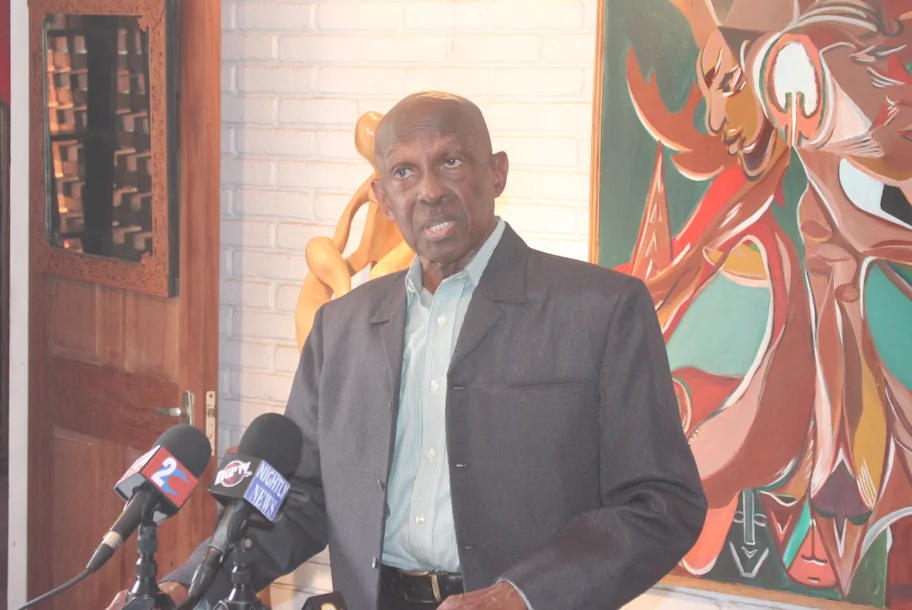
Former Mayor of Georgetown and long-serving public servant, Hamilton Green, has issued a sharp rebuke of President Irfaan Ali’s recent vision to transform Georgetown into a “sustainable Garden City,” calling it yet another example of central government bypassing City Hall and undermining democratic governance.
In a strongly worded letter published in the media, Green criticised the lack of consultation with the Mayor and City Council (M&CC), which he says holds constitutional responsibility for the city’s administration. “Failure to consult is a breach of the essence of a viable democracy,” Green wrote, warning that national plans made without engaging local authorities are not only disrespectful, but also potentially unlawful.
“History of Frustration”
Green recounted previous efforts to improve the capital’s infrastructure, particularly the 1990s initiative led by Professor Akbar Khan, a renowned town planner whose development report was approved by City Hall. However, he claims the recommendations were “frustrated by the central [People’s Progressive Party] PPP government”, reflecting what he views as a longstanding pattern of interference and sabotage.
He cited the resignation of Campton Young, a devout Christian and respected official, who allegedly stepped down due to torment by central authorities. This, Green said, was followed by the imposition of an Interim Management Committee (IMC) — “under what law, of course, is another matter,” he noted dryly.
Lottery Proposal Hijacked
Green also highlighted his attempt to establish a municipal lottery as a solution to chronic underfunding. While the government initially rejected the idea—citing religious opposition—Green revealed that the very same proposal was soon adopted by the central government, with all profits diverted to the state, and not a cent to the M&CC.
“Sam Hinds is alive, and he can attest to the accuracy of my statement,” Green noted, referring to the then Prime Minister who led discussions on the matter.
Systemic Undermining
The former mayor didn’t stop there. He accused the Ministry of Local Government of appointing “unqualified persons” to key positions within the council, who routinely ignored council decisions in favour of ministerial directives. Even simple proposals — such as increasing municipal fines or establishing a municipal court — were stonewalled.
“Every effort, every initiative was frustrated by the PPP government,” Green stated, adding that his tenure as mayor was repeatedly undercut despite being dubbed “Action Green” for his proactive leadership.
A Call for Real Change
Despite his deep criticisms, Green expressed cautious optimism that a shift in the government’s attitude could pave the way for genuine collaboration and city development.
“Hope springs eternal in the human breast,” he quoted poet Alexander Pope, before concluding: “So I say no more.”
President Irfaan Ali’s proposal to “revitalise” Georgetown has been met with sharp criticism for its failure to meaningfully involve the Mayor and City Council—an omission that many see as undermining local governance. Veteran trade unionist Lincoln Lewis argues that bypassing City Hall isn’t just poor procedure; it violates constitutional principles of democratic participation. Lewis points out that under Articles 13, 75, 76, and 77 of the Constitution, local democratic organs are legally empowered to make binding decisions and manage community development.
Moreover, though President Ali’s government unveiled plans to “restore” and “rescue” Georgetown—backed by major investments in infrastructure, recreation spaces, clean‑ups, and heritage preservation—critics note the absence of clear mechanisms to integrate City Council’s role in these projects. Many fear that without municipal input, the proposals risk becoming top‑down interventions that ignore local needs and democratic accountability. In sum, for a strategy that champions inclusion and sustainability to succeed, it must start with respecting the institutions constitutionally charged with governing the city.
The former mayor’s intervention serves as a reminder that while visions of urban revitalisation may be welcomed by stakeholders like the Tourism and Hospitality Association of Guyana (THAG), true transformation must be grounded in democratic principles and respect for local governance.