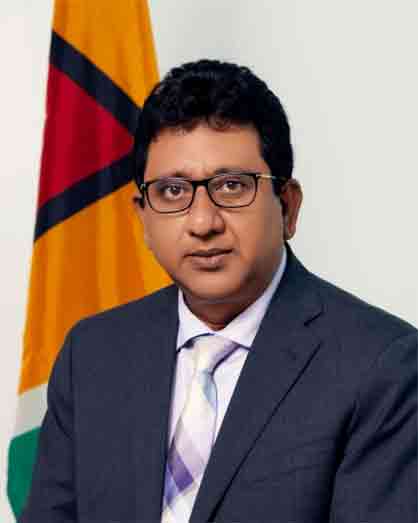
Facing mounting public backlash over deteriorating school conditions, particularly in Guyana’s hinterland, the People’s Progressive Party (PPP) government has launched an emergency taskforce to address widespread utility failures across the education system. The move follows growing scrutiny from incoming Opposition Leader Azruddin Mohamed, whose exposure of dire conditions at in the nation’s public schools has placed significant political pressure on authorities to act.
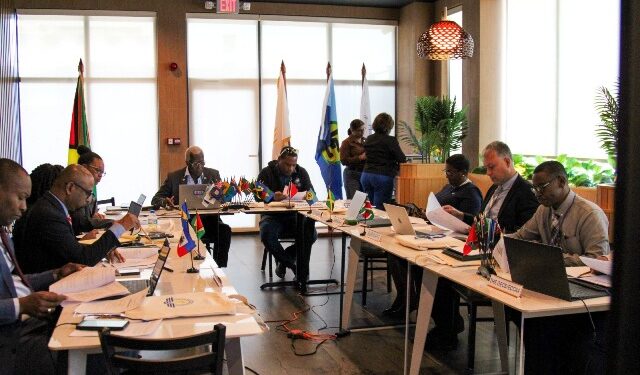
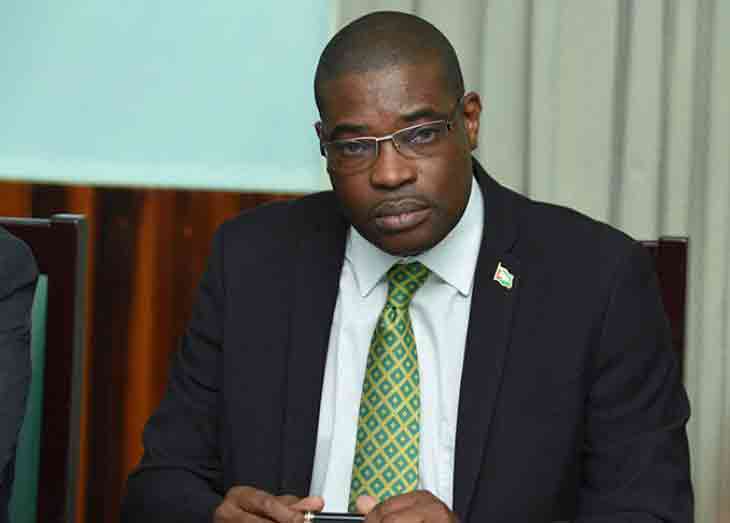
On Thursday, Education Minister Sonia Parag and Minister within the Ministry of Public Works, Deodat Indar, convened a high-level emergency meeting at the Ministry of Education’s Brickdam headquarters. The result was the formation of a new inter-agency rapid-response taskforce aimed at confronting water and electricity shortages in schools across all ten administrative regions.
Attending the session were senior officials including Permanent Secretary Shannielle Hoosein-Outar, Chief Planning Officer Mischka White-Griffith, Deputy Chief Education Officers Tiffany Harvey and Marti DeSouza, Buildings Unit Head Gerron Parker, and technical experts from Guyana Water Inc. (GWI).
Officials disclosed that investigations are underway into what they claim may be deliberate sabotage of hinterland water distribution networks- a reason viewed with skepticism by the public that has grown accustomed to government not being transparent.
While those probes continue, the taskforce is expected to begin immediate infrastructure repairs, reinforce security at critical utility points, and accelerate the construction of water reservoirs to serve more than 250 remote and satellite communities, especially crucial during dry-season months.
The ministers also reviewed reports detailing utility failures in schools from Region One to Region Ten. Minister Indar promised to resolve all power and water issues under his remit within six weeks. Minister Parag said the Education Ministry will coordinate closely with other agencies to restore functionality, emphasising that “the welfare of our students and teachers remains our top priority.” Both pledged that every measure would be taken to ensure classrooms remain safe, operational, and conducive to learning.
However, critics argue the government’s response is more reactive than proactive and largely driven by public pressure stemming from revelations by Mohamed.
In recent weeks, Mohamed has publicly condemned the deteriorating state of education in the hinterland, spotlighting two particularly troubling examples. At Matthew’s Ridge Secondary School in Region One, nearly 200 students are enrolled but only two teachers remain. The school has been forced to implement split sessions. Grades 7 to 9 attend half days while Grades 10 and 11 attend full days, something Mohamed says, “severely undermines educational quality compared to coastal and more urban schools.”
Conditions at Wailang Community School in Region Eight are even more dire. The school lacks formal recognition by the Ministry of Education, employs just one Community Support Officer to manage nine classes, and suffers from a lack of basic furniture, teaching materials, sanitation, and access to the school feeding programme. Students sit on rickety chairs or bare floors, with no running water and no power storage capacity despite installed solar panels.
Mohamed was blunt in his criticism: “The children of Wailang are not asking for special treatment; rather, they want equal access to education.”
His sharp commentary, combined with extensive media coverage, has forced the administration to respond swiftly. While government officials present the taskforce as a strategic and necessary move to protect students, opposition figures and civil society groups say the action was long overdue and unlikely to have occurred without public exposure and mounting political pressure.