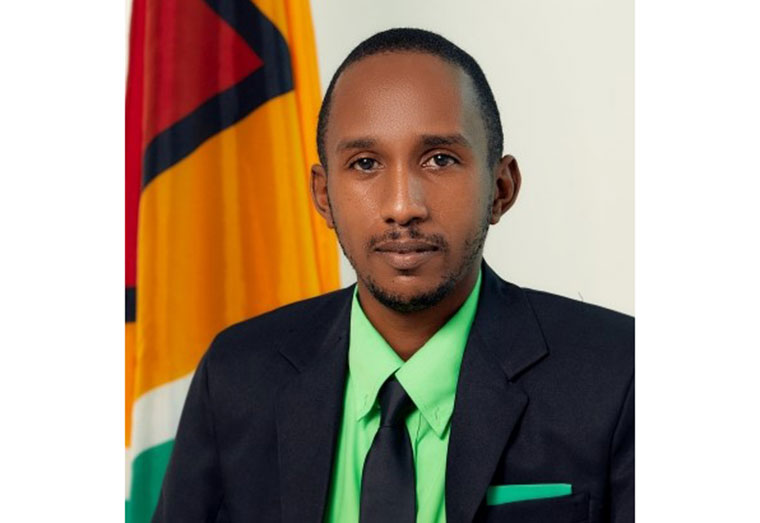
By Mark DaCosta- The recent resignation of a prominent member of the People’s National Congress Reform (PNCR) signals a critical juncture in the evolution of the opposition landscape within our nation. This departure comes amid mounting tensions between the PNCR and the ruling People’s Progressive Party (PPP), casting doubts on the effectiveness of the opposition’s strategy.
The essence of the news revolves around the resignation of the PNCR’s Chairman, Sherwayne Holder, whose decision has sent shockwaves through the party’s ranks and raised questions about the direction of the opposition. As the PNCR grapples with internal discord, this resignation highlights broader issues within the party and its struggle to mount a cohesive challenge against the PPP’s dominance.
The resignation of the Chairman, a pivotal figure in the PNCR’s structure, has sparked intrigue and concern among party members and supporters alike. His tenure, marked by significant challenges and controversies, has culminated in a decision that many insiders claim stems from a fractious relationship within the party leadership. In an official statement, he expressed, “The time has come for me to step aside and allow new leadership to emerge.” This statement has not only amplified speculation about his reasons for departure but also left party stalwarts reflecting on the PNCR’s current prospects and future direction.
The PNCR has faced considerable obstacles since the last general elections, where, according to GECOM’s declaration, the PPP secured a decisive victory. Under the leadership of the PPP, our nation’s political landscape has been marred by persistent allegations of corruption and mismanagement, which the opposition has struggled to effectively capitalise on. The current situation raises vital questions regarding the PNCR’s capacity to galvanise the electorate and present a united front against these issues. Discontent and uncertainty have festered within the ranks, as challenges regarding leadership, strategy, and vision become increasingly pronounced.
The Chairman’s exit has prompted critical discussions about the leadership dynamics within the PNCR. Many members feel that the party has lost its path in engaging with the concerns of ordinary citizens, leading to a growing disconnect between the party elite and their grassroots supporters. Frustrations have been mounting over the ability to devise strategies that effectively counter the overwhelming influence of the PPP in shaping public policy and opinion.
With the resignation occurring in a charged political atmosphere, the PNCR must now address fears about its ability to lead a viable opposition in our country. As party members contemplate their next steps, questions linger about who will fill this significant role and how they will navigate the tumultuous waters of Guyana’s political environment. Loyalty to the party and a clear vision for progress are paramount for any candidate stepping into this critical position.
The perception of division within the PNCR, especially following such a momentous change, may undermine public confidence in the opposition’s capabilities. Analysts speculate that the PPP may exploit this disruption to consolidate its power further, deepening the challenges faced by the PNCR and other opposition factions. As the ruling party continues to promote its agenda, the ability of the PNCR to adapt and galvanise its base will be put to the test in the months ahead.
The political stakes are high, and time will tell if the PNCR can rebound from this setback. The resignation of its Chairman not only marks an alarming moment for the party itself but also serves as a stark warning to all those who value robust democratic discourse in our nation. As citizens, we hope for an opposition that can rise to the occasion, prioritising the interests of our people over personal and internal schisms. The challenge remains for the PNCR to reclaim the trust of its supporters and hold the PPP accountable for its governance.
If the PNCR intends to remain a meaningful player in our political theatre, urgent introspection and decisive action will be necessary to pave the way toward a united front that effectively represents the citizens of our country. The weight of responsibility rests heavily on party leadership and its members to ensure that political representation is not merely a question of survival but a commitment to reform and accountability.