Guyana’s proposed US$2B-plus, 100-megawatt Artificial Intelligence (AI) data centre is being presented as a transformative leap into the global digital future. But this promise collides uncomfortably with the country’s persistent electricity blackouts, unreliable water service, and fragile infrastructure. The question then becomes: How can a nation that cannot yet guarantee basic utilities support one of the most resource-intensive technological systems in the world?
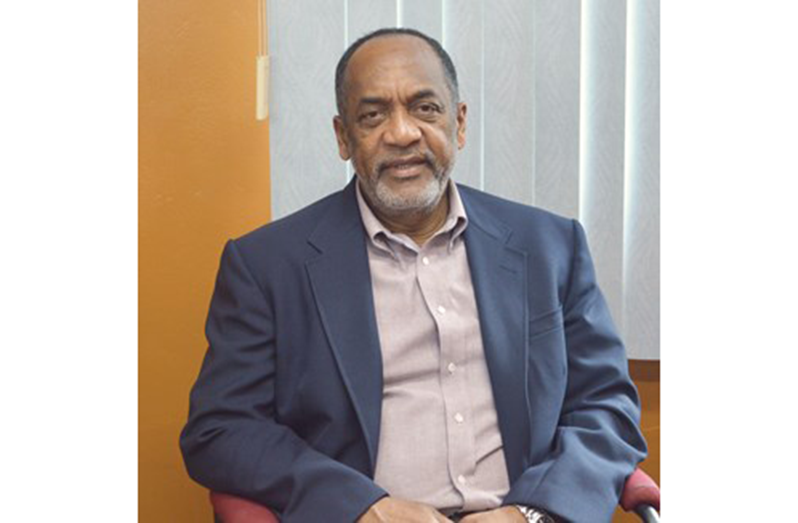
These concerns echo in the recent Kaieteur News column by Karen Abrams, MBA, AA, Doctoral Candidate, and Founder and Director of STEMGuyana, who draws on her experience as a Director of Operations Risk Management, where she led a team responsible for business continuity planning across three geographically dispersed data centres. She recalls a fundamental principle that guided her work:
“Redundancy protects nations, not just networks.”
Abrams warns that once infrastructure becomes mission-critical, failure is not merely inconvenient—it is damaging. Her assessment is sobering given the scope of Guyana’s plan. A 100MW AI facility is massive by global standards. Industry estimates show that 1MW powers approximately 1,000 US homes, leading Abrams to note:
“A 100MW AI centre therefore draws about the same electricity as 80,000 to 100,000 households.”
This is an alarming comparison for a nation where blackouts are routine and grid instability has become a part of daily life. Guyana’s oil wealth has not yet translated into dependable electricity for its people—yet the proposed data centre would require uninterrupted power on a scale never before seen locally.
Water requirements deepen the concern. With many Guyanese households facing discolored, inconsistent, or unsafe tap water, Abrams highlights the enormous cooling demands of such facilities:
“Traditional water-cooled data centres often use between 3 and 5 million gallons of (pristine) water per day at this scale.”
This raises an immediate question: how can Guyana allocate millions of gallons of pristine water daily to cool servers when entire communities struggle to access clean water for drinking and cooking?
Abrams also points out that Guyana would use only a fraction of the centre’s capacity even with full national digitization:
“Domestic demand would likely use only a fraction of 100MW. That suggests the business model must rely on hosting regional or international workloads.”
Hosting foreign data brings heavy responsibility. Outages at the 2023 Microsoft Azure facility in Australia and the 2021 OVHcloud fire in France demonstrate the consequences of single-site failures. As Abrams states bluntly:
“Single-site AI data centres carry concentrated risk.”
Global practice favours distributed models—multiple smaller centres across different regions—precisely to avoid catastrophic outages. Guyana’s one-site mega-project appears to diverge sharply from that standard.
And beyond construction, continuous reinvestment will be required. AI data centres depend on expensive Graphics Processing Units (GPUs) like NVIDIA’s H100, and as Abrams notes:
“These chips are on rapid upgrade cycles, often every 24–36 months.”
This means the project could lock Guyana into hundreds of millions in recurring costs, long after the initial US$2B expenditure.
It is here that deeper national questions emerge—questions that go beyond engineering and reach into governance, economic justice and public accountability. If Guyana cannot yet provide consistent electricity, clean water, and reliable services for its own population, how can it sustain one of the world’s most power-hungry infrastructures? And if it cannot, then society must ask whether this project could become yet another costly smokescreen—another white elephant planned with fanfare but doomed by neglect, inefficiency or mismanagement.
Guyanese history includes troubling precedents. The Skeldon Sugar Factory—once promoted as the saviour of the sugar industry—collapsed into one of the country’s most costly infrastructure failures, exceeding US$200 million at a time when that figure surpassed the national budget. The Amaila Falls Hydropower Project, estimated at more than US$840 million, remains unrealised despite years of political promises and significant public spending. Across the country, incomplete or underperforming megaprojects stand as reminders of how public funds have often been drained without delivering meaningful benefits to citizens.
Now, amid unprecedented oil revenues but persistent inequality, the stakes are even higher. A recent Inter-American Development Bank (IDB) report found that 65 percent of the population lives in poverty and 32 percent in abject poverty. Against this backdrop, society must ask whether billions allocated to an AI megaproject—built on shaky infrastructural foundations—would be better invested in human development, modernising public utilities, improving schools and hospitals, and lifting families out of poverty.
These are not questions meant to resist progress; they are questions meant to ensure that progress is real, equitable and sustainable. Guyana’s resources belong to its people, and the people have both the right and the responsibility to scrutinize how those resources are used. As the country stands at the edge of a massive technological transformation, public vigilance is not optional. It is necessary to safeguard the future.
Abrams herself, while supportive of technological ambition, emphasises that success depends on rigorous planning:
“With a comprehensive plan for redundancy, clear sustainability targets, and transparent long-term financing, this project could anchor a new era of digital strength for Guyana.”
But without transparency, without guarantees of reliability, and without answers to the fundamental concerns being raised, Guyanese citizens must remain watchful. They must question, inquire, and demand accountability—because the cost of another failed mega-venture would not just be measured in dollars, but in lost national opportunity.
To this end it is important to determine whether billions be spent on a high-risk, technically demanding AI megaproject when so many citizens are struggling to meet basic needs? Shouldn’t a country with unprecedented oil revenue focus first on human development, lifting families out of poverty, ensuring quality schools, strong healthcare, safe water, and modernized infrastructure?
These are questions that must be asked—not to resist progress, but to safeguard the nation’s future. Guyana’s resources belong to its people, and the people have a right—and responsibility—to scrutinise how those resources are deployed. Large-scale projects must not be judged by their glossy presentations or futuristic promises, but by whether they are built on solid foundations and whether they improve the quality of life for the society they are meant to serve.
A country’s pursuit of technological heights must not lose sight of the ground realities faced by its citizens. Informed engagement, public scrutiny, and transparent decision-making are essential if Guyana is to avoid repeating the costly mistakes of the past. The path forward, therefore, must be guided by the requisite rigour and accountability.