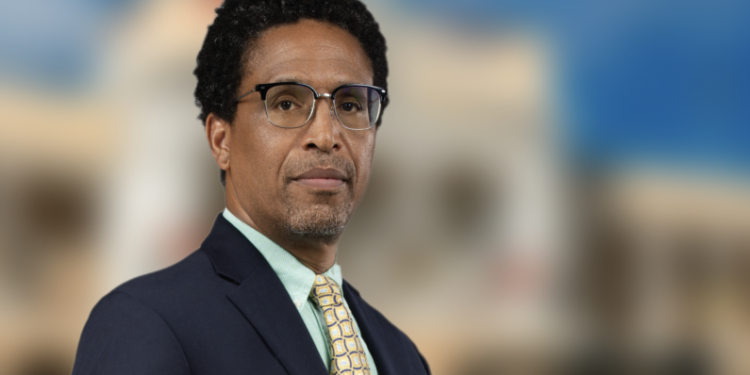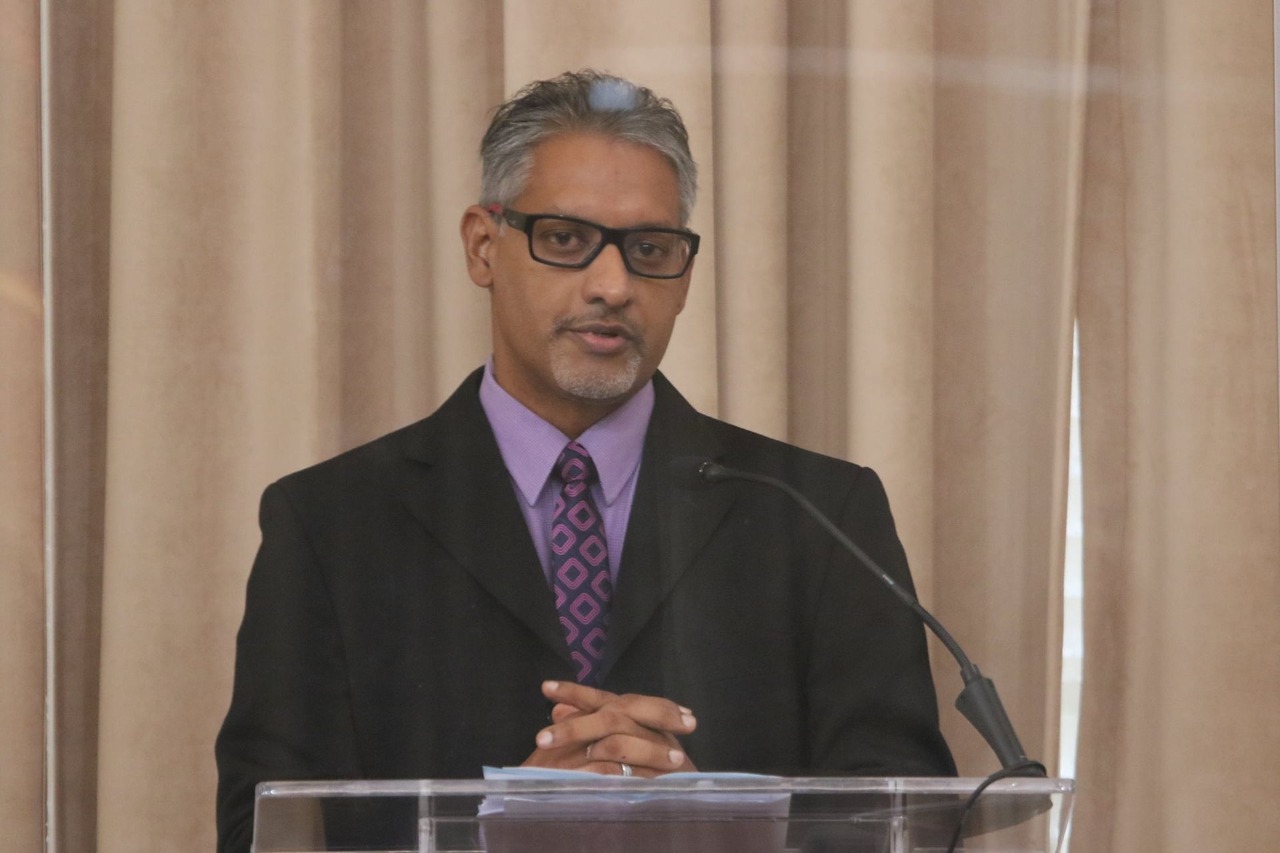
Suriname’s offshore seismic survey has drawn scrutiny from Dr. Vincent Adams, former Head of the Guyana Environmental Protection Agency (EPA) and retired senior officer of the United States Department of Energy, who warns it could tap into Guyana’s oil reserves beneath the maritime border.
Dr. Adams brings decades of intensive training and field experience, having designed and drilled wells, spent extended periods on oil rigs, and made key decisions while directing drilling operations. His background gives him a rare perspective on both the technical and strategic implications of offshore exploration.
The study covers about 2,000 square kilometers off Saramacca and Coronie, with water depths of 20 to 50 meters. It is a joint effort between Staatsolie, China’s BGP Offshore, and the Norwegian-American firm TGS. The BGP Prospector vessel will tow eight six-kilometer-long streamers to map subsurface geology over two months. Staatsolie says the project follows environmental guidelines and includes a Marine Mammal Mitigation Plan, developed with input from local communities.
Dr. Adams warns the real concern lies below the surface. “The strong possibility exists that Suriname could produce oil from Guyana’s reservoirs through directional drilling crossing our geographical boundaries,” he said.
The risk is heightened by the long-standing border disputes between Guyana and Suriname. The two countries have disagreed over both land territory in the New River Triangle and offshore maritime zones. While a 2007 ruling by an international tribunal largely settled the maritime boundary in favour of Guyana, granting sovereign rights over contested offshore areas, the land boundary remains unresolved.
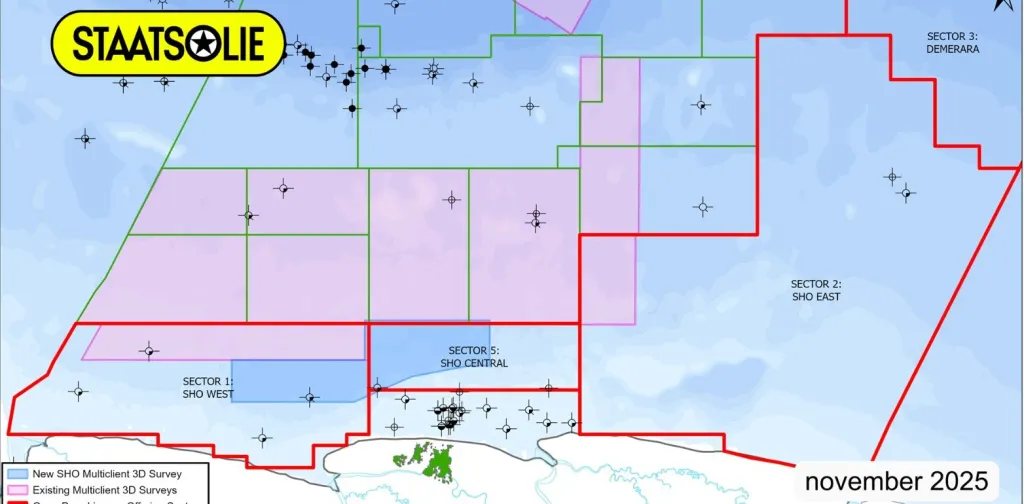
Dr. Adams traces the concern back to a 2020 meeting in Suriname with top Staatsolie officials, Surinamese ministers, Guyana’s Ambassador to Suriname, the late Ambassador Elisabeth Harper, and energy expert Dr. Mark Bynoe. He raised the risk of directional drilling on Suriname’s blocks bordering Guyana’s Stabroek reservoir. “A well surface location could appear on the Suriname side but turn horizontally under the border into the Stabroek reservoirs,” he explained.
He says the response from Staatsolie was evasive, and later correspondence showed disputed territory mapped as part of Suriname. “No further correspondence took place. I asked Ambassador Harper to keep diplomatic channels open and briefed [then Foreign Secretary] Carl Greenidge on it. Unfortunately, it appears to have gone nowhere, which I see as another demonstration of our incompetence and fecklessness driven by our mantra of ‘non-confrontation and combativeness,’” he says. Dr. Adams is referring to the stance of the People’s Progressive Party (PPP) government, following the A Partnership for National Unity and Alliance for Change (APNU+AFC) coalition administration.
He stresses that the real issue Guyana faces “is not about Suriname’s seismic surveys, but ….the strong possibility of [Suriname] producing oil from Guyana’s reservoirs through directional drilling that crosses our geographical boundaries beneath the ground.”
The two-month survey continues, but Dr. Adams’ warnings highlight a deeper issue for the region. Offshore energy development is not just about investment—it is about sovereignty, regional stability, and guarding shared natural resources.