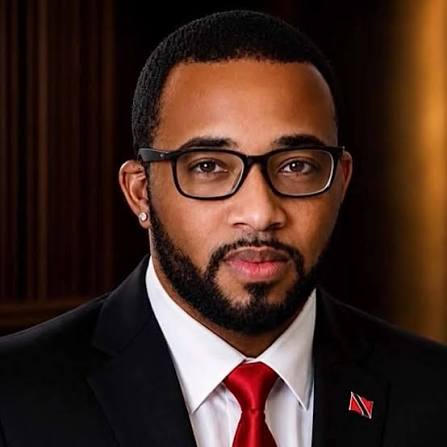
Trinidadian political strategist and consultant Pearce Robinson has questioned the constitutional legitimacy of the presidential Commission of Inquiry (COI) into the MV Barima tragedy, arguing that perceived conflicts of interest and the inquiry’s structure threaten public confidence before hearings have meaningfully begun.
In an opinion piece published on his social media platform, tited –The Conflicts Of Interest At The Heart Of The Mv Barima Commission– Robinson said the Commission “begins its work under a constitutional cloud,” contending that legitimate concerns arise from the backgrounds of some commissioners, the manner of their appointment and the Executive’s extensive control over the inquiry.
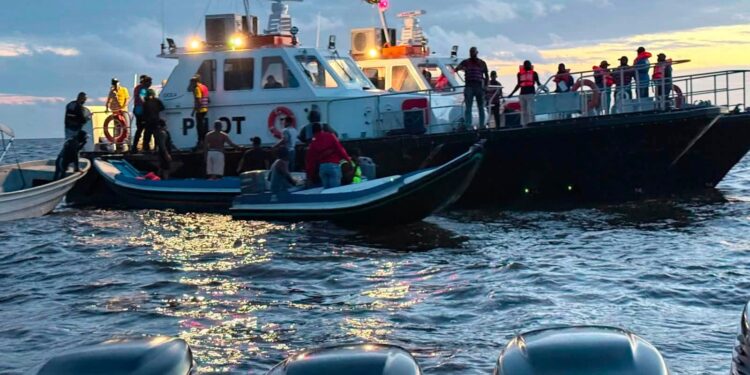
The Commission was established by President Irfaan Ali following the July 18 sinking of the MV Barima, one of Guyana’s worst maritime disasters. The Transport and Harbours Department vessel initially departed Georgetown with the Government reporting that it carried 133 people—116 passengers and 17 crew members—before capsizing en route to Port Kaituma, Region One.
Days later, however, the Government revised that figure, stating that 179 people had been aboard. Despite the revised total, the actual number of passengers and crew remains unknown, making the passenger manifest one of the major issues expected to be examined by the Commission.
The disaster claimed dozens of lives and prompted an international search-and-recovery operation. The Government has since decided to leave the vessel on the seabed, citing expert advice that salvaging it could compromise the investigation and disturb human remains believed to still be trapped inside. The decision has been met with criticism from relatives of victims and members of the public, who argue that recovering the wreck could preserve crucial evidence needed to determine the cause of the disaster and establish accountability.
Opposition Leader Azruddin Mohamed has publicly offered to finance and facilitate the recovery of the vessel, stating that he has already initiated contact with specialists capable of carrying out the operation. The Government has not publicly responded to that offer.
The five-member Commission comprises former Belize Attorney General and Justice Godfrey Smith (Chairman), Trinidad and Tobago maritime attorney Nyree Dawn Alfonso, marine engineering expert Dr. Andrzej Jasionowski, Egyptian maritime surveyor Captain Hamada Fouda, and Guyanese Rear Admiral (ret’d) Hayden Pritchard.
Independence under scrutiny
Robinson argued that because the Commission is investigating possible failures by public authorities, its independence must be beyond question.
“The constitutional question is straightforward. Why were commissioners carrying identifiable political associations selected for an inquiry whose authority depends upon visible political independence?” he wrote.
He pointed to Justice Smith’s previous roles as Belize’s Attorney General, Minister of Foreign Affairs, Minister of Defence and an elected politician, as well as his appointment by President Ali to chair the Commission of Inquiry into Guyana’s disputed 2020 General and Regional Elections.
Robinson also noted that Alfonso reportedly served as an election agent for Trinidad and Tobago’s governing United National Congress during the country’s 2025 general election.
While stressing that the issue is not one of personal integrity, Robinson argued that constitutional law requires public inquiries to avoid not only actual conflicts of interest but also perceived conflicts.
“A commissioner may perform every duty conscientiously while the circumstances surrounding an appointment nevertheless create legitimate constitutional concern,” he wrote.
He further questioned the repeated appointment of Justice Smith by the Ali administration, arguing that it raises concerns about “institutional proximity” between the Executive and those chosen to investigate matters of major public importance.
According to Robinson, describing the Commission as “international” does not resolve those concerns.
“Nationality and independence are separate constitutional questions,” he said, arguing that foreign commissioners may still have political or institutional associations capable of influencing public perception.
Appointment process questioned
Robinson also criticised the lack of transparency surrounding the appointment process, noting that the Government has not disclosed whether declarations of interest were obtained, whether alternative candidates were considered, whether professional bodies or the parliamentary Opposition were consulted, or whether victims’ families and civil society organizations had any role in selecting commissioners.
He argued that the Executive occupies multiple roles in the inquiry, having appointed the commissioners, established the Terms of Reference, retained control of many relevant records, employed potential witnesses and ultimately deciding whether the Commission’s recommendations will be implemented.
“The same branch of government therefore occupies multiple constitutional positions within the inquiry,” he wrote, describing the arrangement as creating an “obvious structural conflict of interest.”
Robinson also referenced recommendations made by Transparency Institute Guyana Inc. (TIGI) before the Commission began its work. TIGI called for the participation of the International Maritime Organisation (IMO), the recusal of Public Works Minister Juan Edghill, Minister within the Ministry of Public Works Deodat Indar and senior Maritime Administration Department officials, and greater involvement by independent civil society organisations.
According to Robinson, those proposals were intended to reduce “the appearance that the State was investigating itself.”
Expertise acknowledged
Despite his criticisms, Robinson acknowledged that the Commission possesses significant technical expertise.
He said Dr. Jasionowski, Captain Fouda and Rear Admiral Pritchard bring internationally recognised maritime experience, while Justice Smith and Alfonso contribute considerable legal expertise.
“Those qualifications equip the Commission to understand highly technical evidence. They do not resolve the constitutional concerns surrounding conflicts of interest,” Robinson wrote, adding, “Expertise answers the question of capability. Independence answers the question of legitimacy.”
Robinson called for broad Terms of Reference that examine vessel inspections and certification, maintenance records, seaworthiness assessments, MARAD’s regulatory oversight, procurement and maintenance decisions, emergency preparedness, compensation arrangements, ministerial knowledge and the treatment of affected families.
Drawing lessons from the Commission of Inquiry into the Mahdia Secondary School dormitory fire, he argued that accountability depends not only on the publication of a report but also on implementation, legislative oversight and continued public scrutiny.
He also urged that affected families be given meaningful participation in the proceedings through independent legal representation, timely disclosure of information and the opportunity to propose witnesses and lines of inquiry.
Robinson concluded that the Commission faces three constitutional tests: personal conflicts of interest, operational independence and its structural relationship with the Executive.
“The MV Barima Commission of Inquiry was established to determine how a national tragedy occurred and where responsibility lies,” he wrote. “Before it reaches those questions, another question already confronts it. Has the State established a Commission whose own composition and structure satisfy the constitutional standard of independence expected of an inquiry examining executive conduct?”