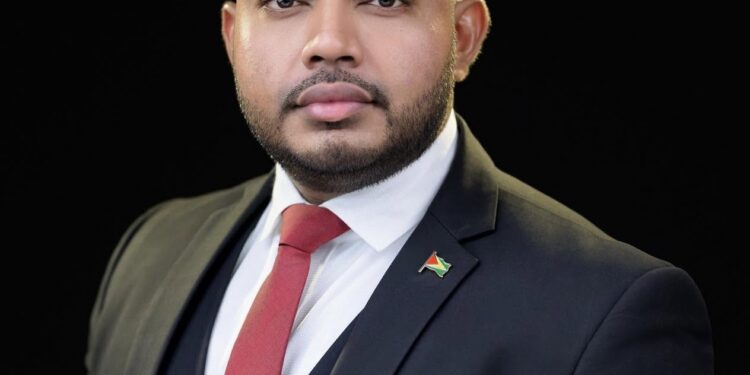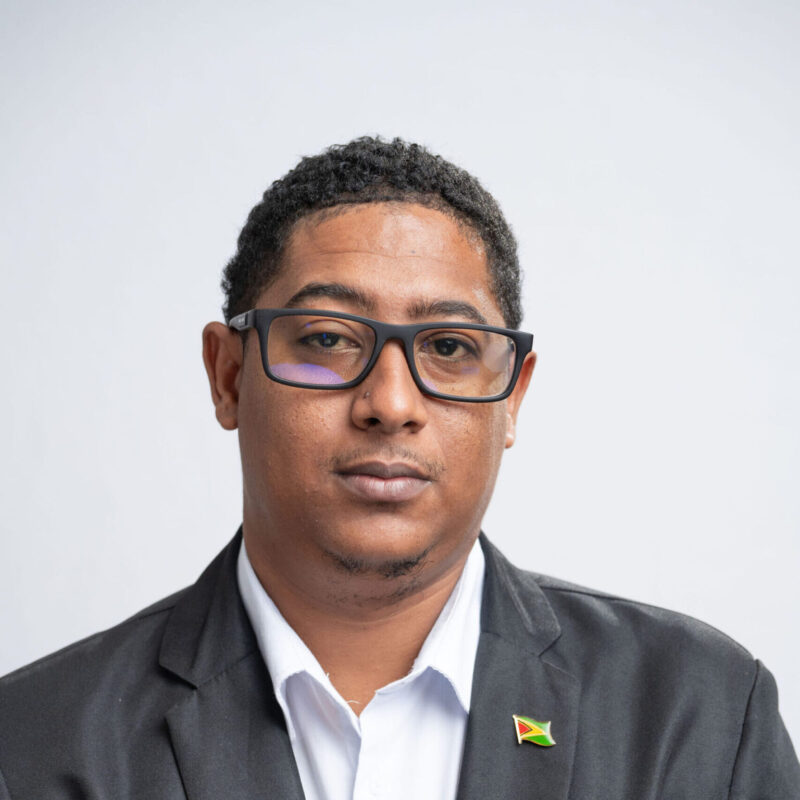
Alliance for Change (AFC) candidate Bryan Nobrega has contrasted the spending records of the People’s Progressive Party/Civic (PPP/C) administration and the former A Partnership for National Unity + Alliance for Change (APNU+AFC) coalition government, questioning why Guyanese are not seeing major improvements in living standards despite the country now being ranked as the world’s fastest-growing and one of the richest oil economies.
In a letter today, Nobrega outlined that between 2015 and 2019, the APNU+AFC — operating in a non-oil economy — approved a total of $1.268 trillion in national budgets: $221 billion in 2015, $230 billion in 2016, $250 billion in 2017, $267 billion in 2018, and $300 billion in 2019. During its tenure, the coalition raised the income tax threshold annually, increased the minimum wage, and granted sliding-scale pay rises to public servants that favoured lower-income earners.
“Without access to a single dollar of oil revenue, the coalition reduced income tax rates from 33⅓% to 28%, giving all Guyanese a 5⅓% tax break and leaving more money in the hands of working people,” Nobrega said.
By contrast, Nobrega noted that between 2020 and 2025, the PPP/C government — now benefiting from massive oil revenues — will have approved $4.541 trillion in budgets: $329 billion in 2020, $383 billion in 2021, $552 billion in 2022, $781 billion in 2023, $1.114 trillion in 2024, and $1.382 trillion in 2025.
With over $3 trillion more than the coalition years, Nobrega argued that Guyanese should be enjoying a significantly better standard of living. “Yet the reality is the opposite — skyrocketing food prices, widening inequality, and families barely getting by,” he said.
He criticised the PPP/C administration for channelling much of the additional spending into “infrastructure and concrete projects” while everyday needs remain unmet. “We cannot eat roads and concrete,” Nobrega stressed, adding that the recent cut in income tax from 28% to 25% was “a mere 3%” and “too little, too late” ahead of elections.
Calling for leadership that “puts the people first,” Nobrega urged policies that uplift the poor, strengthen the middle class, and narrow the gap between the wealthy and the struggling.
“Guyanese deserve better, and better must come,” he concluded.